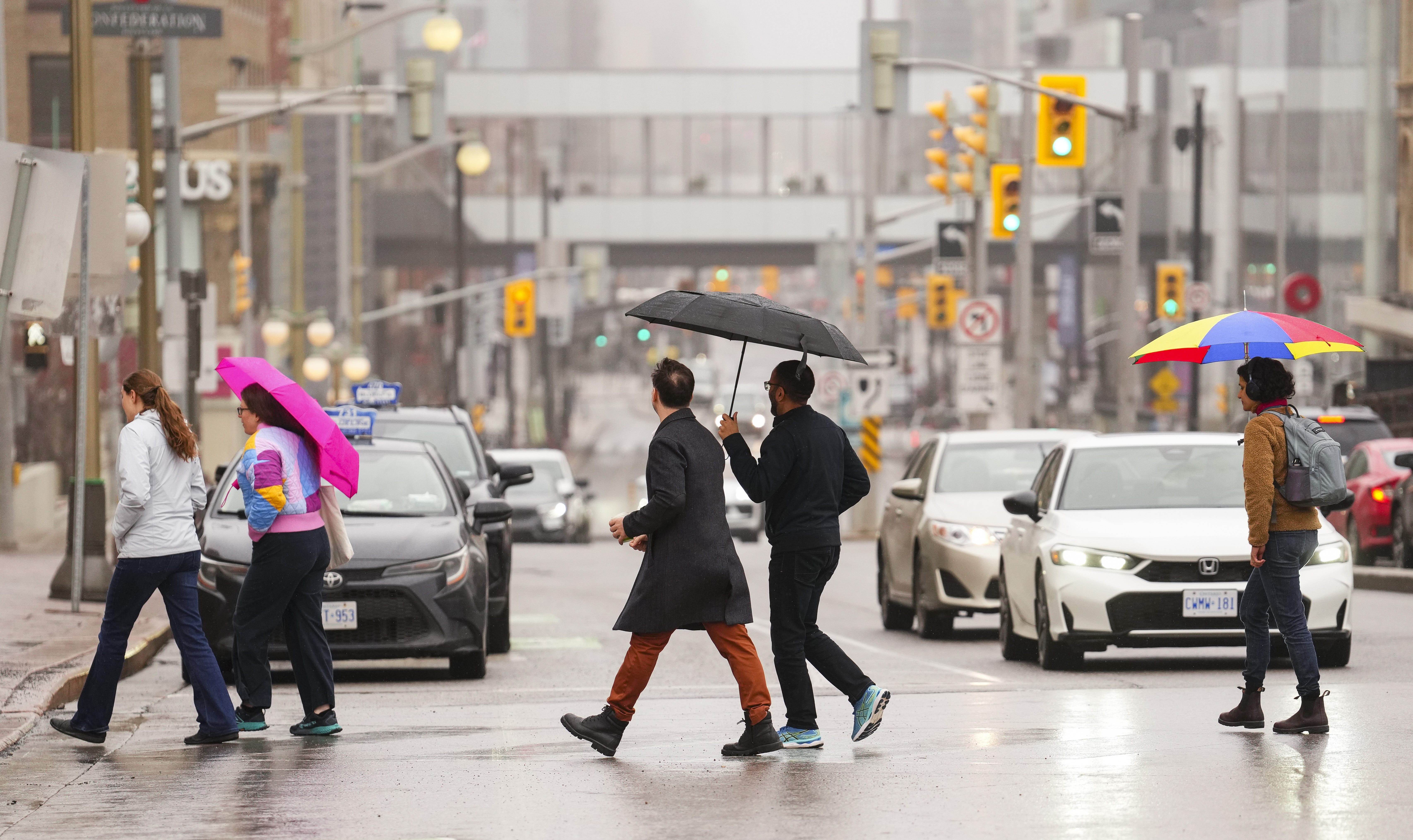
Sarah stands in the lobby of a glass-and-steel monolith in downtown Ottawa, clutching a lukewarm coffee and watching the digital floor indicator crawl. It is 8:12 AM. In the old world, the one that existed before the silence of 2020, this was a mundane moment. She had a desk. She had a drawer with a spare pair of shoes and a framed photo of her dog. She had a sense of place.
Today, she has an app on her phone and a rising sense of dread.
The app says there are no more desks available on the 4th floor. Or the 5th. Or the 6th. She is a policy analyst for a federal department tasked with managing national infrastructure, yet she currently lacks the basic infrastructure of a chair and a surface. Sarah is a "hot-desker" in a government that decided, during the height of the remote-work era, that real estate was an inefficiency to be pruned. The federal government shed nearly 4.5 million square feet of office space, betting on a future that stayed behind a webcam.
They bet wrong.
When the mandate came down for public servants to return to the office three days a week, the math stopped working. You cannot fit a gallon of water into a pint glass, no matter how much you optimize the pour. Across the capital, thousands of workers are discovering that the "return to work" is actually a high-stakes game of musical chairs where the music stops precisely at 8:00 AM.
The Ghost of Efficiency Past
For years, the Treasury Board looked at half-empty cubicles and saw dollar signs. Under the "GCworkplace" initiative, the goal was modernization. It sounded progressive. It promised open concepts, collaborative zones, and a footprint that wouldn't drain the taxpayer. The logic was simple: if an employee is only in the office 40% of the time, why pay for a desk that sits empty for the other 60%?
Logic, however, rarely accounts for the human need for stability.
Consider the "assigned-to-unassigned" ratio. In many departments, the government moved toward a 1.5-to-1 or even 2-to-1 ratio of employees to desks. This works beautifully on a spreadsheet. It fails miserably on a Tuesday morning in mid-April when every team lead schedules a "mandatory in-person collaboration day."
Suddenly, the "modern" office feels less like a hub of innovation and more like a crowded airport terminal during a blizzard. People are working from cafeteria tables. They are perched on stools in "breakout zones" designed for ten-minute chats, trying to draft complex legal briefs while a colleague three feet away discusses a weekend hiking trip. The noise isn't just a distraction. It is a tax on the brain.
The Invisible Stakes of a Missing Drawer
We underestimate the psychological weight of the "third place." Sociologists often talk about the home (the first place) and the social hub (the third place), but the second place—the office—served a specific function in the human psyche. It was a container for a specific version of ourselves.
When you strip away the assigned desk, you strip away the cues that tell the brain it is time to produce. Instead, the worker spends the first forty-five minutes of their day in a state of low-level survivalist stress. Where will I sit? Is there a monitor? Does this keyboard work? Who is sitting next to me?
This isn't about entitlement or a refusal to adapt. It is about the friction of existence. Every minute Sarah spends hunting for a USB-C cable that hasn't been looted from a workstation is a minute she isn't analyzing bridge safety.
The physical space is shrinking, but the headcount is not. Between 2019 and 2023, the federal public service grew by roughly 28%. We have more people than ever trying to squeeze into a shrinking map. The result is a paradox: a government that wants its people back in the room but forgot to keep the room.
The Quiet Collapse of the Watercooler
We were told that the return to office was about "spontaneous collaboration." The idea is that you’ll bump into a colleague in the hallway and solve a multi-million dollar procurement glitch over a chance encounter.
The reality? People are hiding.
Because the office is now a crowded, loud, and unpredictable environment, workers are wearing noise-canceling headphones like armor. They sit in rows of unassigned desks, staring at screens, often still communicating with the person three desks over via Microsoft Teams because the open-concept layout makes talking out loud feel like an intrusion.
The spontaneous collaboration has been replaced by the "scramble for the quiet room." These small, glass-walled pods are the most coveted real estate in the city. If you secure one, you guard it like a fortress. You take your lunch there. You take your five back-to-back Zoom calls there. You stay there until your eyes blur, because the moment you step out, someone else will claim the territory.
The Cost of the "Lease-First" Logic
The financial argument for downsizing was supposed to be the "robust" solution to a bloated budget. But real estate isn't just an expense; it’s an asset that dictates culture. When a department lets a lease expire to save $2 million a year, but loses $5 million in productivity because its senior analysts are spent and burnt out from the daily logistics of finding a chair, who actually won?
There is a certain irony in the fact that the very departments responsible for the nation’s logistics are currently struggling with the logistics of their own hallways.
We are seeing a clash between two eras of management. The first era believes that presence equals performance. The second era believes that flexibility is the only way to retain talent in a digital age. By forcing the first while failing to provide the physical requirements for the second, the system is grinding its gears.
The Sensory Reality of the New Office
Walk into a modern government floor now. You won't smell the familiar scent of old paper and lukewarm coffee. You'll smell the sharp, chemical tang of disinfectant wipes because every worker has to "sanitize" their temporary station at the end of the shift. You see rows of lockers—gray, cold, and anonymous—where workers must stow their entire professional lives every evening.
Everything is transient.
This transience breeds a lack of ownership. If it isn't your desk, you don't care if the monitor is dusty. You don't care if the chair squeaks. You are a guest in your own workplace, a nomad in business casual.
The tension isn't just about space; it’s about respect. There is a message being sent when an employee is told their work is vital to the nation, but not vital enough to warrant a dedicated three-square-foot patch of carpet. It suggests that the worker is a component, a modular part to be plugged into any available slot, rather than a human being who flourishes in a stable environment.
The Breaking Point
The pressure is mounting. Union grievances are rising. Talent is eyeing the private sector, where "hybrid" often means "we actually thought about how this works."
Sarah eventually finds a spot. It’s a narrow ledge in a repurposed storage area that now passes for a "flex-zone." There is no second monitor. The lighting is a harsh, flickering fluorescent that hums in B-flat. She opens her laptop, and for a moment, she forgets what she was supposed to analyze.
She is too busy trying to ignore the person two feet to her left, who is currently eating a tuna sandwich and loudly arguing with a landlord over the phone.
This is the new frontier of public service. It is a world of "optimized" footprints and "agile" environments that, in practice, feel like a slow-motion collapse of professional dignity. We are learning, the hard way, that efficiency is not the same thing as effectiveness. You can save all the money in the world on rent, but if your people feel like ghosts in the machine, the machine eventually stops turning.
Sarah looks at the gray locker at the end of the hall and realizes she doesn't even know which one is hers anymore. She wonders if she even belongs to the building, or if she’s just another piece of data waiting for a place to land.