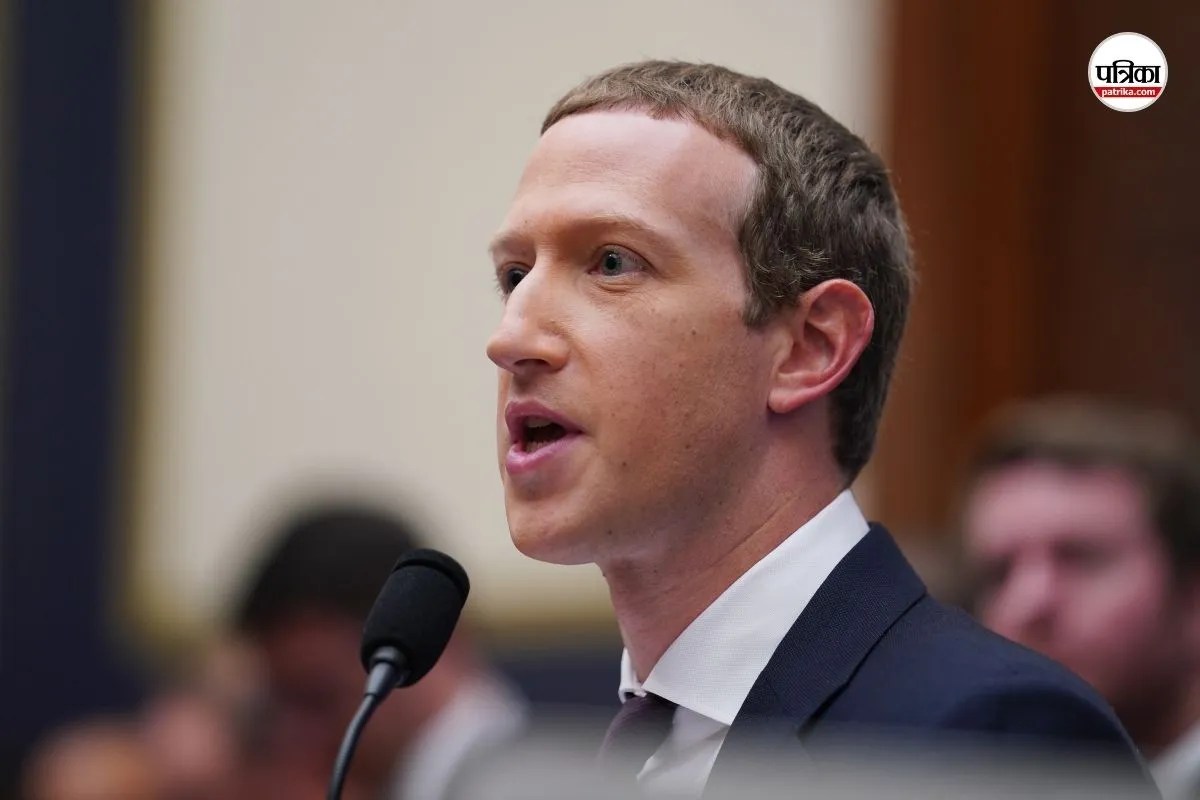
The ink was barely dry on the digital blueprints of Llama 3 when the air in Beijing’s regulatory offices turned cold. For months, Meta had been playing a high-stakes game of geopolitical chess, attempting to position its most powerful artificial intelligence models as the "open" alternative to the walled gardens of Google and OpenAI. Mark Zuckerberg wasn’t just selling code; he was selling a philosophy. He wanted the world to build on Meta’s foundation. He wanted ubiquity.
But China just flipped the table. If you liked this article, you should look at: this related article.
To understand why a bureaucratic "no" from Beijing matters to a developer in Bangalore or a startup founder in San Francisco, you have to look past the stock tickers. This isn't just about a failed deal or a blocked merger. It is about who owns the logic of the future. When China blocked Meta’s latest attempts to deepen its footprint through strategic partnerships and hardware integrations, they weren't just protecting their borders. They were drawing a line in the sand that separates two entirely different versions of reality.
The Architect’s Dilemma
Consider a hypothetical developer named Chen. Chen works in a sleek high-rise in Shenzhen. For years, Chen has relied on Western open-source frameworks. It’s efficient. It’s global. But lately, when Chen logs into his terminal, the tools he uses feel like borrowed time. For another look on this development, check out the recent coverage from Gizmodo.
When the Chinese government puts a leash on a giant like Meta, Chen’s world shrinks. He realizes that the "Global Village" of technology is actually a series of gated communities. If Meta cannot find a way to integrate its Llama models into the Chinese ecosystem—whether through server deals or local cloud partnerships—Chen is forced to use domestic alternatives like Baidu’s Ernie or Alibaba’s Qwen.
On the surface, this sounds like simple competition. It isn't.
Every AI model carries the DNA of its creators. It carries their biases, their linguistic nuances, and their cultural boundaries. By blocking Meta’s expansion, China is ensuring that its digital evolution remains culturally and politically isolated. It is a biological rejection of a foreign entity. Meta wanted to be the soil in which the next generation of Chinese tech grew. Beijing decided they would rather grow their own dirt.
The Invisible Toll
The headlines focus on the "Big Deal" that fell through. They talk about market share and missed revenue. These are the easy things to measure. What we rarely talk about is the friction.
Innovation thrives on the lack of friction. When you can take a piece of code written in California and deploy it instantly in Shanghai, the world moves faster. When those bridges are burned, we enter an era of "Splinternet" 2.0. This isn't just about blocked social media apps anymore; it’s about the very weights and measures of intelligence.
Imagine if every country had its own version of the Pythagorean theorem. Imagine if gravity worked differently depending on which side of a border you stood. That is the trajectory we are on. By halting Meta’s momentum, the Chinese regulatory apparatus has signaled that they value control over compatibility. They are willing to sacrifice the speed of global AI integration to ensure that the "brains" of their machines are built entirely at home.
A Game of Mirrors
Zuckerberg’s strategy has always been about being the "standard." If everyone uses Llama, then Meta defines the rules. It’s a brilliant, if aggressive, play for soft power. If you provide the engine, you don't care who builds the car.
But China has its own engines.
The rejection of Meta’s deal is a moment of profound clarity for the tech industry. It exposes the myth of the "borderless" AI. We like to think of code as pure math, something that exists above the petty squabbles of nations. It doesn't. Code is power. And in the current climate, power is not shared; it is hoarded.
The tension here isn't just between two companies or two governments. It is between the dream of a unified digital intelligence and the reality of a fractured, suspicious world. Meta’s failure to close this gap in China isn't a failure of their technology. Llama 3 is, by most accounts, a masterpiece of engineering. It is a failure of diplomacy in an age where technology is diplomacy.
The Cost of Isolation
There is a quiet, creeping cost to this kind of protectionism. When a market as massive as China’s disconnects from a global standard like Meta’s AI, the "standard" itself becomes weaker. It loses the input of millions of brilliant minds. It loses the diversity of data that comes from a different hemisphere.
Conversely, China risks building in a vacuum. History is littered with examples of technologies that withered because they refused to talk to the rest of the world. But the Chinese government is betting that their internal market is large enough, and their talent pool deep enough, to create a self-sustaining loop. They aren't afraid of being alone; they are afraid of being dependent.
The Terminal Screen
Back in Shenzhen, Chen stares at his monitor. He sees two paths. One leads to a global community where ideas flow freely but are subject to the whims of Silicon Valley billionaires. The other leads to a state-sanctioned, high-walled garden that offers security and local relevance but feels increasingly like an island.
This is the human heart of the "Meta-China" story. It’s not about a CEO’s net worth or a regulatory fine. It’s about the person sitting at the keyboard, wondering if the tools they learn today will be illegal tomorrow.
The bridge Meta tried to build wasn't just made of data; it was made of trust. And right now, trust is the scarcest resource on the planet. The collapse of this deal is a signal that the era of the "Global Tech Giant" is hitting a ceiling. From here on out, you are either with us or against us. There is no middle ground in the silicon trench.
We are watching the world divide itself into two different operating systems for reality. One is being written in English, in sun-drenched offices in Menlo Park. The other is being written in Mandarin, under the watchful eyes of the state in Beijing. They don't speak to each other. They don't understand each other. And as Meta found out the hard way, they aren't allowed to.
The silicon curtain has fallen. It is heavy, it is cold, and it is built to last.