Big Tech loves a good redemption arc.
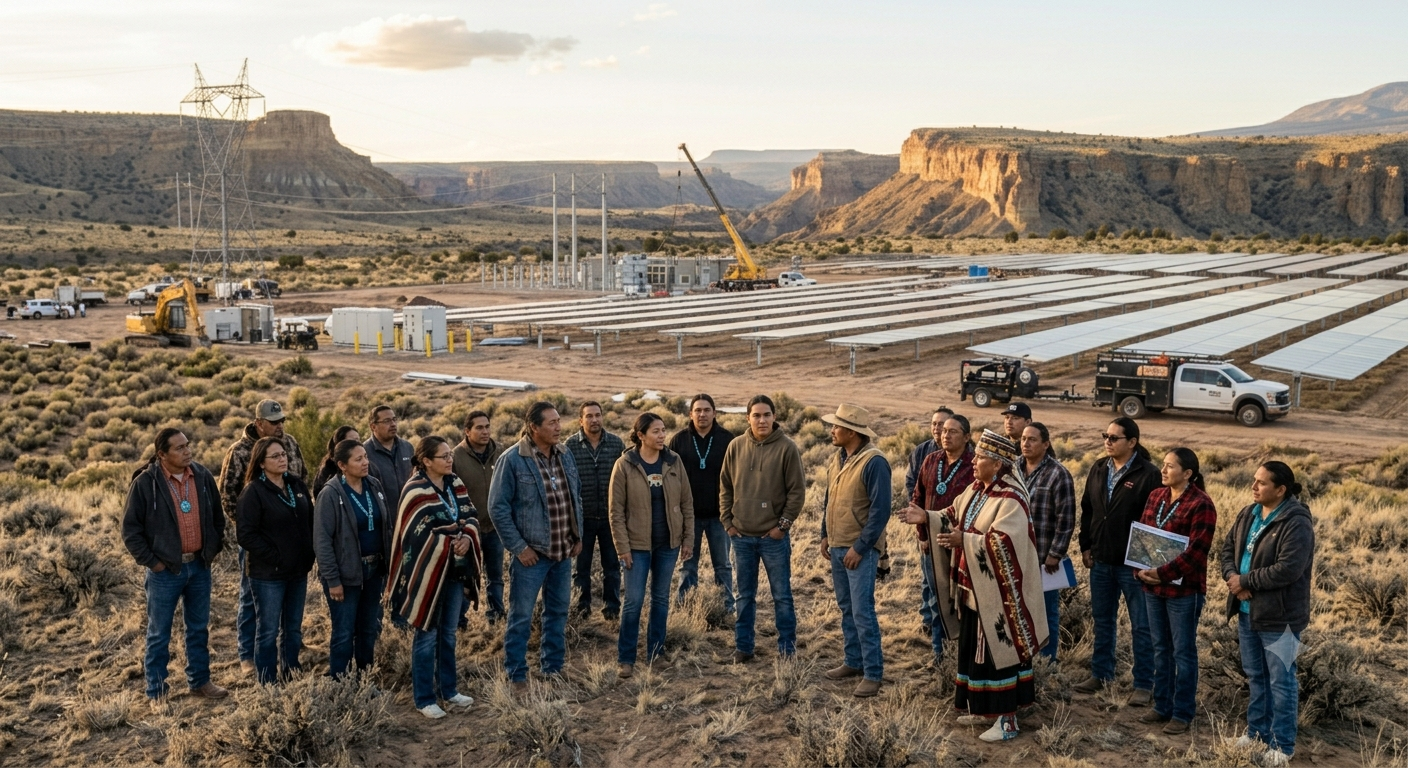
The latest narrative making the rounds tells a beautiful story: a Native American tribe, once dependent on the dirty, volatile extraction of oil and gas, bravely pivots its desert land to host a massive solar farm. The energy generated will power a shiny new Meta data center. The press releases write themselves. It sounds like a win-win-win for corporate responsibility, indigenous sovereignty, and the planet.
It is a fantasy.
If you strip away the public relations paint, you find a troubling economic reality. This deal is not a blueprint for tribal self-sufficiency, nor is it a masterclass in green energy transition. It is a highly calculated corporate extraction strategy that locks a sovereign nation into another cycle of resource dependence while solving Big Tech’s catastrophic grid capacity problem.
The tech industry is running out of power. This is not about saving the planet; it is about finding cheap acreage and regulatory path-of-least-resistance to keep the data centers humming.
The Illusion of the Carbon-Neutral Pivot
Let us look at the fundamental mechanics of utility-scale solar on tribal lands. The consensus view assumes that replacing an oil derrick with a photovoltaic panel is a net-positive trade for a community's economic future.
It is not.
Oil and gas extraction, for all its undeniable environmental downsides, is a high-yield, labor-intensive industry. It generates continuous royalty streams and creates sustained, high-paying local jobs. Solar farms do the exact opposite.
A solar project requires a massive influx of labor during its brief construction phase. Hundreds of workers descend on the desert, lay down panels, and string up high-voltage lines. Then, the construction crews pack up and leave.
What remains? A massive, fenced-off footprint of silicon and glass that requires almost zero operational headcount. A few technicians visit occasionally to wash dust off the panels or replace a faulty inverter. The long-term employment generation for the local community is effectively zero.
Furthermore, the financial structure of these deals rarely favors the landowner in the long run. Tech giants do not buy this land; they sign long-term Power Purchase Agreements (PPAs) and lease the acreage. They lock in rock-bottom energy pricing for 20 to 25 years.
Meanwhile, the tribe loses control of a vital geographic asset. They exchange the volatile but highly lucrative upside of commodities for fixed, inflation-vulnerable lease payments.
I have watched companies deploy this exact playbook across the American Southwest. They find rural or sovereign entities with vast land assets, pitch them on the vague promise of "becoming leaders in the green economy," and walk away with cheap power while leaving the host community with a sterile landscape that cannot be used for housing, agriculture, or traditional practices for a quarter-century.
The Grid Capacity Crisis Big Tech Is Hiding
To understand why Meta is heading deep into the desert, you have to look at the macroeconomics of the electrical grid.
The tech sector is facing an existential bottleneck. The explosion of compute-heavy applications and massive data storage needs has pushed existing regional grids to the brink of collapse. Northern Virginia—the data center capital of the world—is choking on power constraints. PJM Interconnection, the regional transmission organization, is staring down massive capacity shortfalls.
Tech companies cannot build data centers fast enough to satisfy Wall Street, but they cannot get the power drops required to turn them on.
The Real Corporate Motive
| Factor | What the PR Says | What the Balance Sheet Shows |
|---|---|---|
| Land Acquisition | Supporting tribal sovereignty and land stewardship. | Bypassing strict municipal zoning laws and securing cheap acreage. |
| Energy Procurement | Driving the global transition to renewable energy. | Offsetting massive data center consumption to meet arbitrary ESG targets. |
| Economic Impact | Building a sustainable future for the local community. | Securing fixed-rate PPAs to hedge against rising utility costs. |
Sovereign tribal land offers a massive shortcut. The regulatory framework is completely different from dealing with state or municipal zoning boards. By partnering with a tribe, a tech giant can often bypass years of local bureaucratic red tape, environmental lawsuits from suburban NIMBYs, and complex eminent domain battles over transmission lines.
The "green" aspect of this is a secondary benefit—a corporate marketing shield. The primary driver is speed-to-market for data infrastructure.
Dismantling the Myth of "Additionality"
Whenever a tech company announces a major solar or wind deal, they heavily lean on the concept of additionality: the claim that their investment directly brings new renewable energy to the grid that would not have existed otherwise.
This is a accounting trick.
The desert solar farm might generate hundreds of megawatts of clean energy during peak daylight hours. But data centers run 24 hours a day, 7 days a week, 365 days a year. The sun does not shine at midnight.
When the solar output drops to zero, where does Meta’s data center get its power? It pulls from the regional grid. And what fuels that grid when solar is offline? Natural gas and coal.
By building massive solar arrays in remote desert regions, tech companies flood local markets with daytime electricity, often depressing power prices when the sun is high. But they do nothing to solve the baseline power crisis. They force local utilities to keep fossil-fuel plants on standby to back up the data centers when the weather changes.
The tribe bears the physical burden of the infrastructure—thousands of acres of disrupted desert ecosystems—while the actual reliability of the local energy grid becomes more fragile.
The High Price of Free PR
If you want to build true economic sovereignty for a community, you do not lease away its assets to a trillion-dollar multinational corporation so they can check a box on their sustainability report.
True economic power comes from ownership of the value chain. If a tribe wants to pivot from oil and gas to renewables, the strategy should be to build, own, and operate the generation assets themselves, selling power directly to the wholesale market or municipal utilities at a premium, rather than acting as a low-cost landlord for a silicon valley giant.
Instead, these deals turn sovereign nations into resource colonies for the digital age. In the 19th and 20th centuries, outside interests came for the timber, the coal, and the oil. In the 21st century, they are coming for the sun and the space to put the panels. The commodity has changed, but the extractive dynamic remains identical.
Stop celebrating the monetization of pristine desert ecosystems for corporate carbon accounting. Meta gets its data center power, the shareholders get their green-certified conscience, and the local community gets a fenced-off desert full of imported glass.