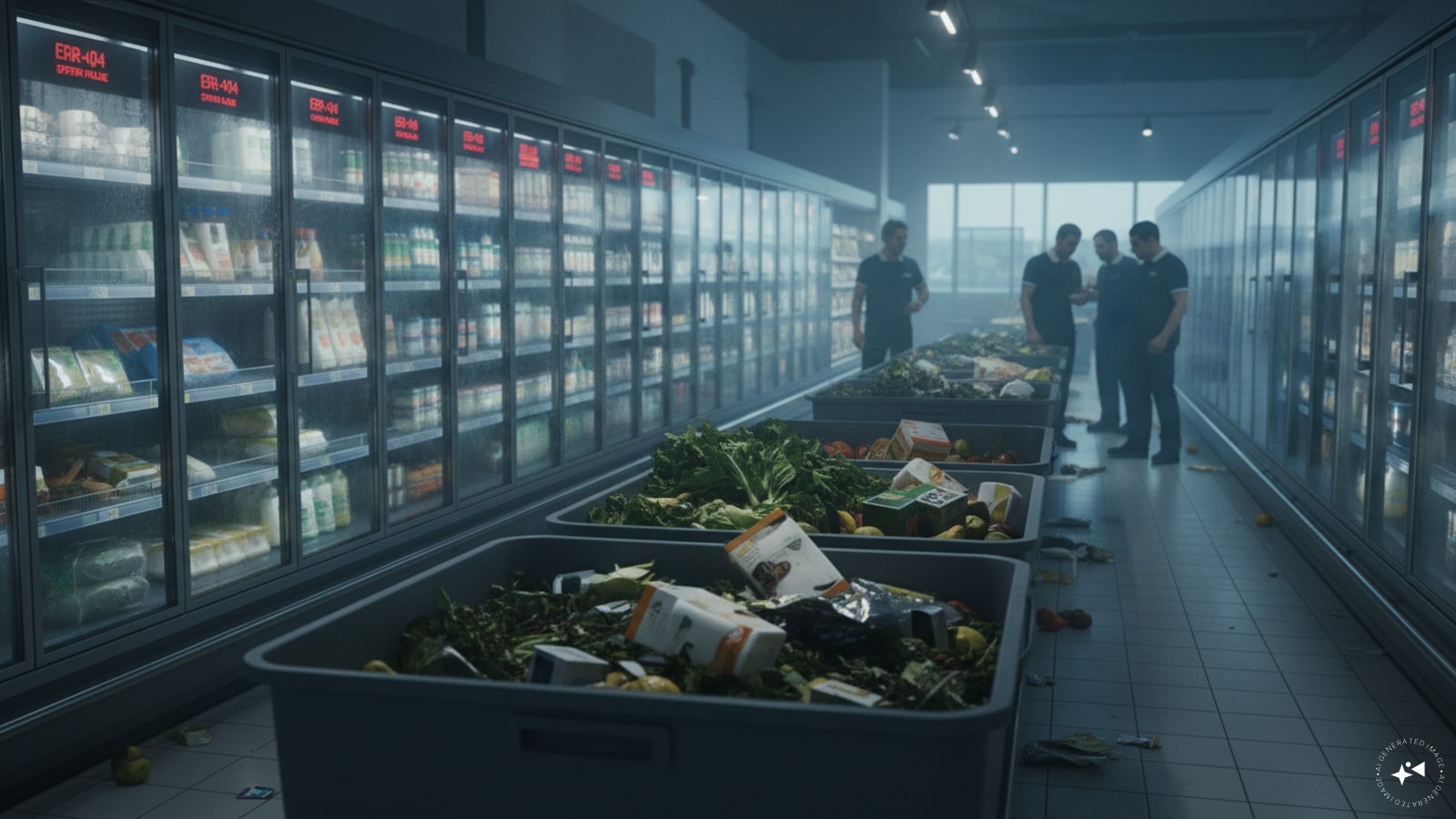
Security failures aren't usually this hot. Last year, hundreds of grocery stores across France suffered a bizarre and terrifying digital assault. Attackers didn't steal credit cards or lock down checkout registers for ransom. Instead, they breached the remote management systems of commercial refrigeration units and cranked the thermostats up to 50 degrees Celsius.
Imagine walking down the dairy aisle of your local supermarket only to find yogurt bubbling, meat spoiling in a wave of artificial desert heat, and thousands of dollars of inventory melting away in real time. This wasn't a glitch. It was a targeted sabotage campaign exposing how fragile our physical food supply chain really is when connected to the internet.
We live in a world obsessed with smart infrastructure. Every freezer, ventilation shaft, and lighting grid now plugs into centralized cloud platforms for efficiency. But convenience breeds vulnerability. When grocery chains hand over environmental controls to automated networks without hard physical overrides, they're inviting disaster.
The Anatomy of a Remote Heating Attack
Commercial refrigeration systems are marvels of modern engineering, designed to maintain strict sub-zero or chilled temperatures around the clock. These units rely on Industrial Internet of Things software to monitor compressor performance, adjust cooling cycles, and alert technicians when a gasket fails or a temperature spikes.
Hackers bypassed standard perimeter defenses by targeting third-party vendor credentials and weak authentication gateways. Once inside the facility management network, the intruders didn't just turn off the cooling compressors. They actively inverted the temperature setpoints. They forced heating elements or defrost cycles into overdrive, driving interior cabinet temperatures up to 122 degrees Fahrenheit.
When you digitize the physical world, you hand the keys over to anyone who can guess the password or exploit an unpatched API endpoint.
The psychological impact on store managers was immediate. Staff arrived at work to the pungent smell of spoiled produce and chemical warnings flashing across control panels. Entire inventories of fresh meat, dairy, and prepared foods had to be hauled away to industrial dumpsters.
Why Retail Supply Chains Are Sitting Ducks
Supermarkets operate on razor-thin profit margins. Corporate IT budgets often prioritize point-of-sale security over physical environmental controls because registers handle cash and compliance mandates carry heavy fines. Refrigeration units, by contrast, are treated as mechanical appliances that happen to have an Ethernet cable attached.
This separation of duties creates massive blind spots. Facilities teams understand compressors and freon levels, but they rarely grasp network segmentation or multi-factor authentication. IT teams understand firewalls and endpoint protection, but they rarely think about milk turning sour. Attackers exploit this exact organizational disconnect.
Most commercial buildings rely on Building Management Systems running outdated firmware with default administrator passwords. Vendors often leave remote desktop ports open for routine maintenance and forget to close them. Once an external threat actor slips through an unencrypted maintenance portal, lateral movement across the store network takes minutes.
The Cost of Convenience Over Security
Efficiency metrics drive modern retail. Centralized dashboards allow a single technician in Paris to monitor temperatures across four hundred stores in rural France. That centralized visibility represents a massive single point of failure.
- No Local Isolation: Many store systems lack local hardware switches that prevent remote overrides past safety thresholds.
- Outdated Protocols: Legacy industrial control systems often lack encryption for internal data packets.
- Third-Party Risk: HVAC and refrigeration maintenance is outsourced to subcontractors whose laptops act as Trojan horses.
When convenience trumps safety architecture, you get 50-degree fridges.
Moving Past the Internet of Vulnerable Things
Fixing this mess requires a radical shift in how we build physical infrastructure. We can't simply bolt security onto legacy systems designed thirty years ago.
Manufacturers need to bake hard safety limits directly into firmware. A refrigerator controller should physically reject any command that pushes internal storage temperatures into ranges that spoil food or endanger equipment, regardless of what the cloud dashboard says. Software can be hacked, but mechanical thermal cutoffs require physical tampering.
Network segmentation is no longer optional. Refrigeration units belong on isolated local area networks with zero direct exposure to the public internet. If remote monitoring is required, it must travel through encrypted zero-trust tunnels requiring hardware-based multi-factor verification.
Store managers also need basic cyber hygiene training. They must know who has physical access to control rooms and understand why plugging an unauthorized diagnostic laptop into the store switch is a bad idea.
Until retail executives treat environmental controls with the same security rigor as credit card processing databases, physical infrastructure remains an easy target. The next attack might not just spoil your groceries. It could shut down the entire block. Stop treating physical appliances as dumb iron. They're computers now, and they need defending.