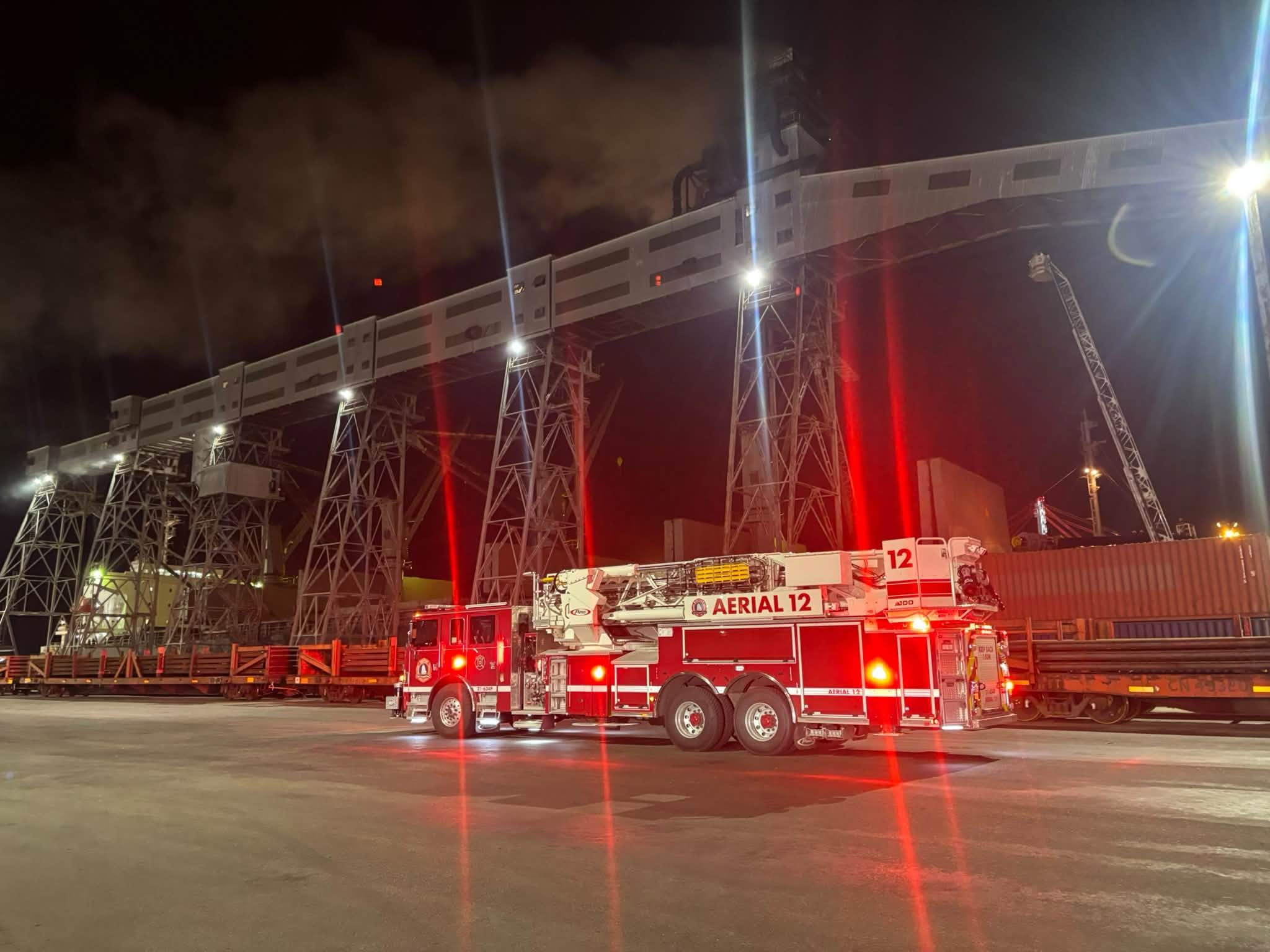
When flames broke out at the Halifax Grain Elevator on Monday evening, October 26, 2026, around 7:15 p.m., crews didn't walk into a simple house fire. They walked into a towering waterfront complex packed with fine agricultural dust, elevated conveyors, and tight enclosures. By the time Halifax Regional Fire & Emergency declared the fire under control around 10:30 p.m. to 10:40 p.m., it had escalated to a three-alarm response involving roughly 20 apparatus.
A basic news brief tells you the timeline and that the blaze stayed put in the south conveyor system's dust handling equipment and hopper infrastructure. That's fine if you only want the headline. If you actually care about industrial safety, port operations, or why grain facilities scare seasoned firefighters, the real story sits underneath the timeline. Also making headlines in this space: Why Every Israeli Election Still Turns Into a Referendum on Bibi Netanyahu.
Looking across the facility in that aerial view makes the scale obvious. Massive grain bins, rail corridors, and elevated shipping galleries sit right next to active harbor piers and city streets. When fire hits high above ground in a dust-handling line, gravity, wind, and enclosed chutes turn a localized spark into a high-stakes puzzle. More information regarding the matter are explored by TIME.
What Happened at the Halifax Grain Elevator Fire
According to municipal updates from Halifax Regional Municipality, firefighters arrived shortly after 7:15 p.m. on October 26, 2026, at the facility on Marginal Road in Halifax's south end. Flames were visible in the dust management system well above ground—roughly 135 feet up—where fine particles are routinely captured and moved.
Escalating to a three-alarm response meant pulling in roughly 20 firefighting, command, safety, and support units so crews could rotate safely, supply water at height, and watch adjacent structures. The fire was contained to the south conveyor system's dust handling equipment and hopper infrastructure, without spreading into neighboring buildings, and was brought under control late that night before being turned over to investigators to determine the origin and cause.
Honestly, containment in a dust system is no small feat. Once fire gets inside ducts, hoppers, or conveyors coated with organic dust, smoke and embers can travel out of sight long before flames show through steel or concrete. Working alongside on-site facility staff mattered here too—local operators know which chutes hold product, which lines can be shut down, and how air moves through the structure.
Why Dust Systems Are the Real Nightmare in Grain Facilities
People sometimes picture a grain elevator fire as a giant pile of wheat or barley burning like a campfire. It rarely works like that. Whole grain kernels are dense and slow to burn. Fine grain dust is the opposite.
Grind dry wheat, soybeans, or barley down to microscopic particles, suspend them in air inside an enclosed duct or hopper, and add an ignition source. Now you're dealing with combustible dust. Fire safety engineers talk about the dust explosion pentagon—five elements needed for a dust explosion: fuel, oxygen, dispersion in air, confinement, and an ignition source. Knock out even one of those five, and a violent explosion can't happen.
Even when a fire doesn't turn into a full-blown explosion, dust collection hardware is a prime flashpoint. Collectors, filters, and hoppers exist to pull floating dust out of the air so workers can breathe safely and keep fugitive dust off ledges. Yet that very concentration of dry fines makes the system sensitive to heat, friction, or smoldering material carried in from a belt or leg.
A primary flash or small fire inside equipment isn't always the worst part by itself; the real danger is when pressure or disturbance lifts settled dust from beams and ledges into a wider cloud.
Common Ignition Triggers Nobody Can Afford to Ignore
In grain handling, dust is a constant companion. That means safety programs spend huge energy hunting down ignition sources before they meet a cloud.
- Overheated bearings and friction: A misaligned conveyor belt or dry bearing running hot against metal housings can build enough heat to ignite buildup.
- Hot work: Welding, cutting, and grinding near dusty chutes or bins remain classic triggers when sparks slip past shields or hot metal lingers.
- Smoldering product: Grain that heats up from moisture or spoilage can carry hot spots into transfer points and hoppers.
- Electrical faults and static: Poor grounding, worn wiring, or static discharge in dry conveying lines can supply the spark.
Notice how none of those causes require magic or mystery. They're mechanical and operational details. When maintenance slips—even a little—risk climbs fast.
How Grain Elevators Move Product and Where Hazards Hide
To see why a fire 135 feet up in a conveyor or dust line is so challenging, it helps to look at how an elevator functions. Facilities like the Halifax terminal—which receives and ships grain and specialty crops by truck, rail, and vessel with a storage capacity of 5.15 million bushels (140,215 tonnes), according to the Halifax Port Authority—rely on vertical lifts and horizontal transfer lines to move massive volume efficiently.
That diagram illustrates a typical elevator layout rather than the Halifax site specifically, and it makes the mechanics clear. Grain comes in, gets lifted vertically through elevator legs, moves along conveyors, and generates dust at transfer points and collection lines. Every transfer chute, belt transition, and dust collector is a place where air turbulence kicks up fines.
Fighting a fire at height adds another layer. Water has to be pumped or lifted to upper levels, crews have to navigate industrial catwalks and tight enclosures, and responders must balance cooling the fire with avoiding pressure spikes or water damage to critical grain-handling gear.
What Safety Standards Say About Preventing Dust Fires
Across North America, grain and agricultural processing facilities lean on strict frameworks—such as OSHA's grain handling standard (29 CFR 1910.272) in the United States alongside NFPA standards, including NFPA 660 (which consolidated combustible dust rules, including agricultural and food processing provisions formerly under NFPA 61). Fire codes and industry guidance consistently point to the same core pillars.
- Keep settled dust down: Housekeeping isn't cosmetic. Dust builds up on beams, cable trays, ledges, and motor housings—not just floors—and needs regular removal without blowing clouds into the air with compressed air.
- Monitor equipment continuously: Bearing temperatures, belt alignment, vibration, and proper dust-collector airflow catch trouble before a glowing ember turns into an open flame.
- Control hot work tightly: Written permits, dust clearing around the work zone, and thorough fire watches during and after repairs prevent avoidable sparks.
- Engineer isolation and venting: Properly sized explosion venting, suppression, and isolation valves help keep a localized event from marching through interconnected ducts and hoppers.
Is zero risk realistic in a busy marine and rail grain terminal? No. Grain dust is part of the job. Still, data compiled by Purdue University on U.S. grain dust explosions—recording nine incidents in 2024 with two injuries and no fatalities, and a roughly 8.6-per-year ten-year average—shows that while fatal outcomes have dropped over time, incidents still happen regularly and carry steep repair and downtime costs.
There's also a practical tension in everyday operations. Shutting down conveyors or dust collectors to inspect or clean them stops product movement, and ports run on tight schedules. Cutting corners on shutdowns or sweeping dust straight into equipment instead of removing it properly can backfire badly. Good safety culture isn't paperwork on a shelf; it's backing operators when they call a stop because a bearing smells hot or a collector isn't pulling right.
Practical Steps for Facility Teams and Concerned Neighbors
If you run or work at a grain, feed, or bulk-handling facility, start with your basics this week:
- Walk the upper levels, transfer points, and dust-collection hoppers with a flashlight and check for fine dust layers on overhead ledges rather than relying on floor sweeps alone.
- Review bearing temperature checks, belt-alignment routines, and hot-work permit sign-offs with shift supervisors to spot shortcuts early.
- Confirm that your emergency plan and site layout are shared with local fire departments so crews know access routes, shutoffs, and high-elevation hazards before an alarm sounds.
If you live near an industrial port or grain elevator and want reliable updates during an incident, stick to official municipal alerts and local fire service releases—like the Halifax Regional Municipality incident updates—and keep clear of active staging zones and smoke plumes until officials give the all-clear.