Silence has a weight. In rooms where life has been violently extinguished, that weight presses against the walls, clinging to the furniture, whispering in the tiny gaps between floorboards. But sometimes, the silence is manufactured. Sometimes, the quiet in the room is not the aftermath of an irreversible tragedy, but the carefully orchestrated acoustic of a lie.
Consider the rope.
To the untrained eye, a loop of hemp or nylon suspended from a fixture tells a devastating, definitive story. It speaks of unbearable midnight sorrows, of whispered goodbyes, of a mind snapping under pressures too heavy to bear. It offers an immediate, horrifying closure. People want closure. The human brain craves narrative arcs, even tragic ones, because an ending—however brutal—is easier to process than a jagged, open question.
Yet, physics does not lie. Gravity does not improvise.
When investigators step into a room where a life has ended, they do not just look. They interrogate the space. They measure the angle of suspension. They analyze the bruising patterns, the microscopic transfer of fibers, the subtle inconsistencies between the position of a body and the mechanical reality of how a body falls. They listen to the quiet screaming of physical evidence.
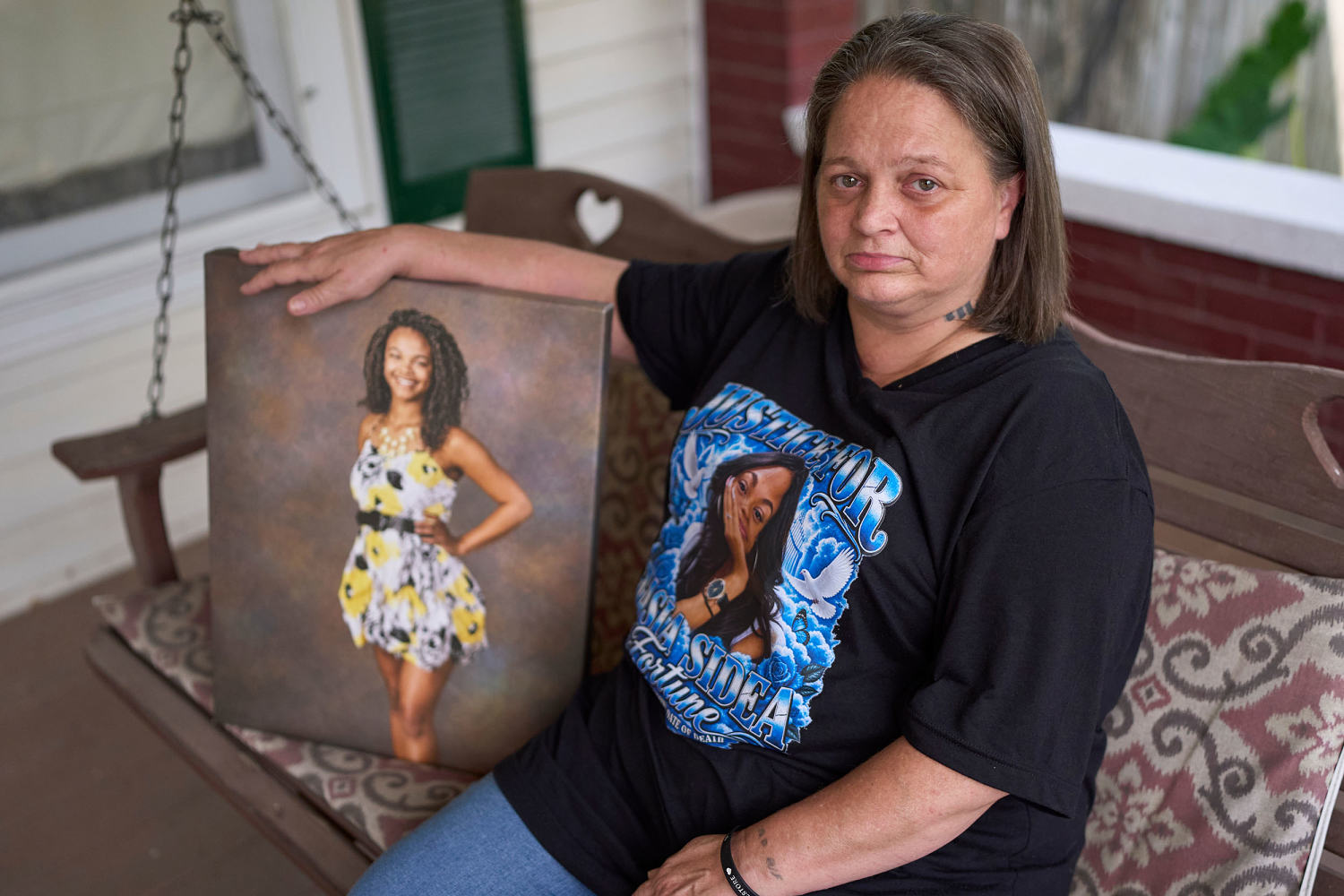
In the case of Tasia Fortune, that physical evidence refused to whisper. It shouted.
What initially presented itself as a despairing final act began to fracture under the cold, clinical glare of forensic scrutiny. The scene was wrong. The angles did not match. The ligature marks told a story of external force, of struggle, of a terrible choreography executed by hands that did not belong to the victim. It was staged. A tableau of suicide constructed to hide the footprints of homicide.
And now, the walls of that deception are collapsing. A third person has been arrested.
Three individuals. Three sets of choices. Three separate lives now entangled in a web of complicity, cover-up, and the relentless, grinding machinery of justice.
How does a lie of this magnitude get built?
To understand, you have to peer into the psychology of panic. People who commit crimes of violence rarely possess the architectural genius required to conceal them. In movies, staged scenes are masterpieces of criminal engineering, executed with cold precision. In reality, they are acts of desperation born of fear. They are chaotic. They leave loose threads, misplaced items, and forensic footprints that glow under ultraviolet light like neon signs pointing directly to guilt.
Imagine the room hours after Tasia's death. Imagine the frantic whispers. The whispered calculations of self-preservation. Someone suggesting the rope. Someone else securing it, misaligning the furniture, trying desperately to align the physical environment with a predetermined script. They believed they were writing history. They believed the official narrative would settle over the room like a heavy, impenetrable blanket.
They forgot about time. They forgot about forensic pathology. Most importantly, they forgot that a life extinguished leaves an echo that reverberates far beyond the four walls of a single room.
In small communities and bustling cities alike, the death of a young person sends shockwaves through the relational fabric of society. Friends become detectives. Neighbors look twice at shadows moving behind windows. Grief curdles into suspicion, and suspicion hardens into resolve. The people who loved Tasia Fortune did not accept the initial punctuation mark placed at the end of her story. They asked questions. They pushed for answers. They refused to let her memory be flattened into a convenient, quiet statistic.
Detectives answered that persistence.
The investigation into a staged death is an exercise in archaeological excavation. Every interview is a layer of earth brushed away. Every cell phone record, every text message, every corroborated alibi acts as a shard of pottery hinting at the wider vessel of truth. When police announced the third arrest, it was not merely a procedural milestone. It was a testament to the fact that secrets have an expiration date.
Conspiracy requires solidarity. Solidarity requires absolute trust among the guilty. And absolute trust is a fragile commodity when prison doors loom on the horizon.
As the net tightens, the cracks appear. The first person arrested feels the crushing weight of bearing the primary blame. The second person realizes loyalty has an economics, and protection stops when the cost becomes life imprisonment. By the time the third handcuffs click into place, the narrative has completely unraveled. The co-conspirators discover too late that a staged scene is not a fortress; it is a cage of their own making.
There is a profound haunting in the phrase "the hanging was staged."
It alters the very definition of malice. It moves beyond the sudden, hot flash of rage that characterizes many violent crimes. Staging requires deliberation. It demands time to think, time to plan, time to look at a motionless body and calculate how to deceive the world. It requires a chilling detachment. That realization is what chills the community to its core. The betrayal was not just the act itself, but the cynical engineering that followed.
Yet, justice moves forward, deliberate and unyielding.
Every arrest peels back another layer of the falsehood. The truth is no longer hidden in the shadows of that room. It is standing in the light, undeniable and stark.
Tasia Fortune deserved better than the narrative written for her by those who sought to erase her life and mask their own deeds. She deserved a future of unwritten chapters, of laughter, of ordinary Tuesday afternoons and uncomplicated tomorrows. Those were stolen.
But what cannot be stolen is the truth.
The arrests mount. The evidence accumulates. The courtroom doors wait. And in the quiet aftermath of discovery, the manufactured silence of the lie gives way to the deafening roar of accountability. The stage is dismantled. The actors are unmasked. What remains is only the unvarnished reality of what happened, waiting for the final, righteous gavel to fall.