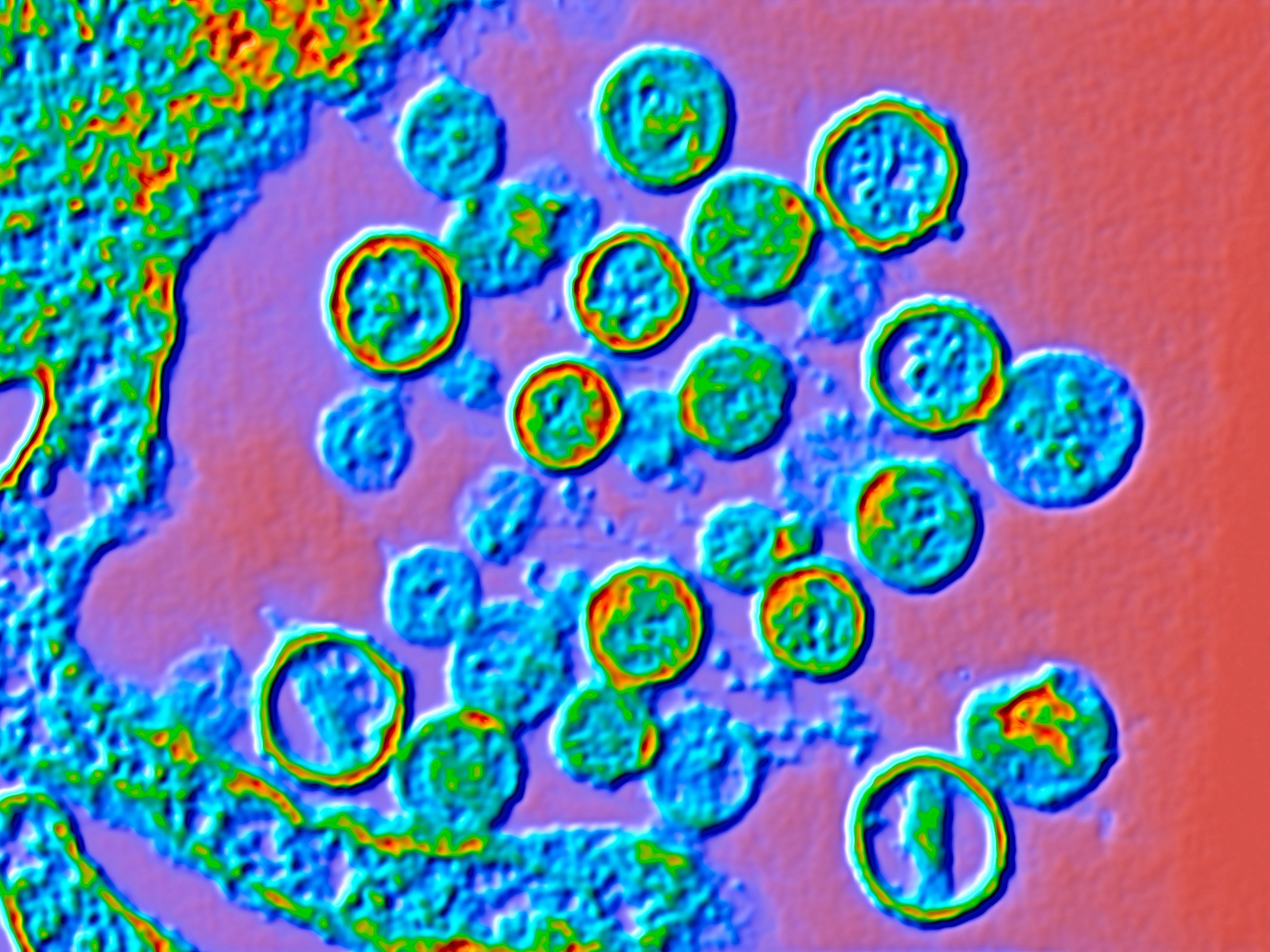
The MV Hondius is currently a floating laboratory of epidemiological anxiety, cutting through the Atlantic toward Spain’s Canary Islands while the world’s health authorities scramble to bridge a week-long gap in containment. What began as a luxury "end of the world" expedition from Ushuaia, Argentina, has devolved into the first recorded hantavirus outbreak on a marine vessel. This is not a drill in theoretical biology; it is a live-fire exercise in how a rare, South American pathogen can exploit the forced intimacy of a cruise ship to leap between humans—a feat the virus rarely achieves in the wild.
Three people are dead. Eight more are confirmed or suspected cases. While the World Health Organization (WHO) is quick to signal that this is "not the next COVID," their calm belies a frantic international search for 29 passengers who walked off the ship at Saint Helena on April 24, long before the word "hantavirus" was whispered in the corridors. Those passengers, hailing from a dozen different countries, are the primary vectors of concern, potentially carrying a silent, six-week incubation clock in their bloodstreams as they return to cities from London to Zurich. For a different perspective, check out: this related article.
The Breach at Tristan da Cunha
The most harrowing oversight in this timeline occurred at Tristan da Cunha, the world’s remotest inhabited archipelago. Mid-April, while the Hondius was already harboring its first dying passenger, the ship’s manifest was cleared for a shore excursion. Residents of the tiny, 200-person settlement boarded the vessel for trade and socializing, while passengers—including at least one man now suspected of carrying the virus—descended upon the island's only school.
The risk here isn't just about the numbers; it is about the Andes virus strain. Unlike the more common hantaviruses found in North America that require direct contact with rodent waste, the Andes variant has a demonstrated, albeit rare, ability for human-to-human transmission. By the time the Hondius dropped anchor, the "rodent-to-human" origin story had already been superseded by a "human-to-human" reality. The islanders of Tristan, who rely on a single ship from Cape Town every few months for survival, are now under a shadow of observation that their rudimentary medical facilities are wholly unequipped to handle. Related reporting on this matter has been provided by WebMD.
Anatomy of a Pathogen on Deck
The clinical progression of hantavirus is a brutal, two-act play. It begins with what doctors call a "prodromal phase"—vague, flu-like symptoms, fever, and muscle aches that any traveler might dismiss as sea-sickness or fatigue. Then, with terrifying speed, it shifts into Hantavirus Pulmonary Syndrome (HPS).
Capillaries in the lungs begin to leak, not because the virus is attacking the tissue directly, but because the body’s immune system overreacts with such violence that it effectively drowns the patient from the inside. On a ship like the Hondius, isolated in the South Atlantic with limited mechanical ventilation and no ICU-grade oxygen supplies, a diagnosis of HPS was a death sentence for the first victims.
The investigative trail leads back to a birdwatching excursion in Argentina before the April 1 departure. A Dutch couple, among the first to fall ill, likely inhaled aerosolized viral particles from the droppings of long-tailed pygmy rice rats while trekking. But the virus didn't stop with them. It moved to cabin mates. It moved to those who shared close quarters during the three-week voyage across the Southern Ocean.
The Canary Islands Stand-off
As the vessel nears Tenerife, a political storm is shadowing the biological one. The Spanish central government has authorized the ship to anchor in the Canary Islands, but regional authorities are in a state of open revolt. Fernando Clavijo, President of the Canary Islands, has demanded emergency meetings with Prime Minister Pedro Sánchez, citing the "unacceptable risk" to a tourism-dependent economy still scarred by the 2020 lockdowns.
Spain’s Ministry of Health maintains that the ship will not dock. Instead, it will remain at anchor for a "shipboard quarantine," a maritime practice that dates back to the Black Death but remains one of the few effective tools against a virus with no known cure or vaccine. The plan involves a high-stakes evacuation: 14 Spanish nationals will be airlifted directly to the Gómez Ulla military hospital in Madrid, a facility designed for high-consequence pathogens.
The Failure of the 45 Day Window
The true failure of the Hondius outbreak is the lack of a "red flag" system for South American expeditions. Argentina has seen a spike in hantavirus cases—over 100 since mid-2025—yet cruise operators were not required to implement enhanced screening for passengers coming from high-risk rural areas.
The WHO’s recommendation for a 45-day monitoring period is technically sound but practically impossible to enforce once passengers have dispersed. We are currently in the "gray zone" where those who disembarked in Saint Helena or Ascension Island are reaching the end of their incubation periods. One passenger has already surfaced in a Zurich hospital; another died in a South African emergency room after a flight from Saint Helena.
This is the reality of modern viral transit. You can be infected in a forest in Patagonia, board a ship at the "end of the world," and bring a deadly respiratory pathogen to the most isolated community on Earth before you even feel a chill. The Hondius isn't just a ship; it is a warning that our geographical barriers are thinner than the hull of a polar cruiser.
Health officials are now prioritizing the tracking of every individual who touched that deck between April 1 and May 4. They aren't looking for a pandemic, but they are looking for the next "Case Zero" in a dozen different cities. The window to contain the Andes strain is closing, and the results of that failure are currently steaming toward the Spanish coast at 15 knots.


