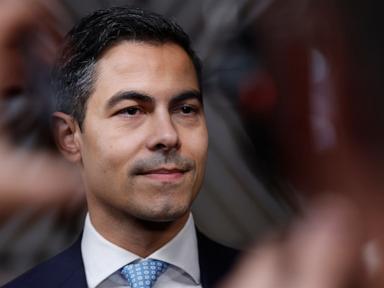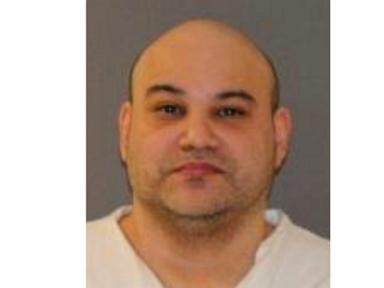
Two states. Two death chambers. One grim Thursday in July 2023.
When Oklahoma and Texas scheduled executions on the exact same day—including the case of a Texas father convicted of beheading his three young children—most news outlets treated it like a standard wire blotter. They ran the bare facts, listed the crimes, and moved on to the next cycle. That misses the real story. If you actually look at how capital punishment operates in the American Southwest, you realize these back-to-back executions reveal deep systemic fractures in how we handle severe mental illness, clemency, and lethal injection protocols.
I've spent years tracking appellate dockets and death row litigation across the Fifth and Tenth Circuits. Honestly, the gap between how the public thinks an execution works and what actually happens in those final 48 hours is massive. People assume the appeals process is a neat, linear checklist. It isn't. It's a chaotic, eleventh-hour scramble where procedural bars often outweigh actual clinical evidence.
Let's break down the reality of these cases—specifically looking at John Allen Rubio in Texas and Jemaine Cannon in Oklahoma—and what their scheduled executions tell us about the state of capital punishment today.
The Case of the Texas Father Who Beheaded His Three Children
In March 2003, police in Brownsville, Texas, walked into a nightmare. John Allen Rubio and his common-law wife, Angela Camacho, had killed their three children—Julissa Quesada, 3, John Esthefan Rubio, 1, and Mary Jane Rubio, just two months old. The children were suffocated, stabbed, and decapitated.
It's the kind of crime that immediately shuts down any rational conversation about mercy. When people read that headline, their gut reaction is simple. Put him to death.
Yet if you dig into the trial transcripts from Cameron County, a much more disturbing picture emerges. Rubio didn't wake up one morning and decide to commit a calculated murder for financial gain or revenge. He had a documented, lifelong history of severe psychosis, brain damage, and extreme poverty. According to court records and testimony from psychiatric experts, Rubio genuinely believed his children were possessed by evil spirits and that the world was ending. He told investigators he thought killing them would save their souls from eternal damnation.
During his 2010 retrial—his first conviction was overturned because prosecutors improperly used taped statements from Camacho—defense attorneys presented extensive evidence of Rubio's cognitive impairments and severe mental illness. Even one of the prosecutors involved in the case later expressed reservations about executing someone so profoundly detached from reality.
Why Severe Mental Illness Rarely Stops an Execution in Texas
You might assume the U.S. Supreme Court bans executing people with severe mental illness. It doesn't.
Under Atkins v. Virginia (2002), states can't execute individuals with intellectual disabilities. Under Ford v. Wainwright (1986) and Panetti v. Quarterman (2007), a prisoner must understand why they're being executed and the connection between their crime and the punishment. That's a remarkably low bar. As long as a prisoner knows the state is going to kill them for murdering someone, the Eighth Amendment doesn't stop the needle—even if the person suffers from active paranoid schizophrenia or brain trauma.
In Rubio's case, his legal team fought for years to prove he wasn't competent to be executed and that his trial counsel failed to adequately investigate his neurological damage. Texas courts repeatedly rejected those claims. In fact, Rubio's execution date was set, withdrawn, and reset multiple times over two decades. Every time a warrant gets signed in Huntsville, the legal machinery kicks into overdrive, forcing defense lawyers to file desperate stays of execution based on procedural technicalities rather than the core question of whether executing a profoundly psychotic man serves any legitimate penological purpose.
What Was Happening Across the Red River in Oklahoma
While Texas was preparing its death chamber in Huntsville, Oklahoma was gearing up for its own execution in McAlester.
Jemaine Cannon was sentenced to death for the 1995 murder of Sharonda Clark in Tulsa. Cannon had escaped from a prison work center before fatally stabbing Clark, a mother of two, in her apartment. Unlike Rubio's case, which centered heavily on severe psychosis, Cannon's appeals focused on claims of self-defense and intense scrutiny over Oklahoma's lethal injection protocol.
Oklahoma has the highest per-capita execution rate in the United States. It also has one of the most troubled track records when it comes to actually carrying them out.
If you remember the botched execution of Clayton Lockett in 2014, or Richard Glossip's nine scheduled execution dates, you know Oklahoma's Department of Corrections has struggled to maintain basic medical competence in the death chamber. Following a string of mishaps—including using the wrong drugs during Charles Warner's execution in 2015—Oklahoma placed a six-year moratorium on capital punishment. When they resumed executions in late 2021, the problems didn't magically disappear. Inmates like John Grant convulsed and vomited on the gurney after receiving midazolam, a sedative that critics argue doesn't reliably prevent the excruciating pain of the second and third drugs in the cocktail.
The Reality of the Three-Drug Protocol
Most people think lethal injection is like going under anesthesia for routine surgery. You fall asleep, and your heart stops. That's a myth.
Oklahoma uses a three-drug protocol:
- Midazolam to induce unconsciousness.
- Vecuronium bromide to paralyze every muscle in the body, including the diaphragm.
- Potassium chloride to stop the heart.
Here's the catch. Midazolam isn't an anesthetic. It's a benzodiazepine, similar to Valium. It doesn't block pain. If the midazolam fails to render the inmate deeply unconscious, the vecuronium bromide acts as a chemical veil. The prisoner experiences the sensation of suffocating and the searing, liquid fire of potassium chloride coursing through their veins, yet they can't move a muscle, blink, or scream.
When Cannon faced execution in Oklahoma, his attorneys were fighting against a backdrop of federal litigation challenging this exact protocol. Even though a federal judge upheld Oklahoma's method in 2022, medical experts and defense lawyers continue to document signs of pulmonary edema—fluid filling the lungs, creating the sensation of drowning—in autopsies of executed inmates.
Why States Schedule Simultaneous Executions
It feels jarring when two neighboring states schedule executions on the exact same day. Is it coordinated? No. It's purely a byproduct of how state courts and governors manage their dockets.
In Texas, trial court judges set execution dates after the Texas Court of Criminal Appeals and federal courts deny initial appeals. Once a judge signs a death warrant, the clock starts ticking—usually giving the prisoner at least 90 days' notice. Texas executes more people than any other state, so Huntsville's death house runs like a grim assembly line.
Oklahoma operates differently. In 2022, after lifting its moratorium, the Oklahoma Court of Criminal Appeals took the unprecedented step of scheduling 25 executions over a two-year period—roughly one every month. The state Attorney General's office literally asked the court to space them out because the Department of Corrections staff were experiencing severe psychological burnout and logistical strain from preparing for back-to-back killings.
When you have two hyper-active death penalty states operating on independent legal calendars, overlapping execution dates are statistically inevitable.
The Clemency Illusion in Texas and Oklahoma
Whenever an execution date approaches, headlines always mention the state's parole board and the governor. People assume these are meaningful safety valves. In practice, they're almost entirely ceremonial.
Let's look at the numbers. Since reinstating the death penalty in 1976, Texas has executed nearly 600 people. During that entire span, the Texas Board of Pardons and Paroles has recommended clemency in a capital case only a handful of times—most notably for Henry Lee Lucas in 1998 (whose confession was proven fake) and Thomas Whitaker in 2018 (after his father, the surviving victim of the crime, begged the board to spare his son's life). Under Texas law, the governor cannot commute a death sentence without a positive recommendation from the board. The governor can only grant a single 30-day reprieve.
Oklahoma's Pardon and Parole Board has historically been slightly more willing to recommend clemency, especially in cases involving severe mental illness or doubts about guilt, such as Julius Jones in 2021. Even then, the governor holds the final veto power and routinely rejects the board's recommendations. For Jemaine Cannon, the board voted 3-2 against recommending clemency, effectively sealing his fate before the gurney was even wheeled out.
What Most Media Coverage Completely Misses
When wire services run a 400-word blurb about executions in Oklahoma and Texas, they flatten complex human tragedies and massive constitutional questions into two-sentence summaries. They tell you what the inmate did in 1995 or 2003, and they tell you what time the pronouncement of death occurred.
They rarely mention the hidden costs and collateral damage:
- The Financial Drain: Executing a prisoner costs taxpayers significantly more than sentencing them to life without parole. Studies in both Texas and Oklahoma consistently show that capital trials, mandatory appeals, and specialized death row housing run into the millions per case—money stripped directly from victim services, public defenders, and local policing.
- The Trauma to Corrections Staff: We talk about victims' families and inmates, but nobody talks about the prison guards who have to strap a human being to a gurney, insert IV lines, and watch them die. Former execution team members in both states have spoken out about suffering from severe PTSD, substance abuse, and depression.
- The Arbitrariness of Geography: Whether you get the death penalty for a horrific crime depends almost entirely on the county where it happened. In Texas, Harris County (Houston) and Dallas County account for a massive percentage of executions, while other counties rarely seek death because they can't afford the trial costs.
How to Track Death Row Cases Accurately
If you want to understand what's actually happening in capital cases rather than relying on sensationalized headlines, stop reading surface-level news aggregators. Go straight to the primary records.
Start with the Death Penalty Information Center (DPIC). They maintain an updated, searchable database of every scheduled execution, stay, and commutation across the country, complete with links to the underlying court filings. If a case is out of Texas, check the Texas Department of Criminal Justice (TDCJ) death row roster, which lists each inmate's offense summary, prior occupation, and scheduled execution date. For Oklahoma, the Oklahoma Court of Criminal Appeals public docket lets you read the actual motions filed by defense attorneys and the state Attorney General in real time.
Read the clemency petitions when they become public. You won't find sanitized summaries there—you'll find the raw psychiatric evaluations, trial transcripts, and letters from jurors who often say they never would have voted for death if they had known the full story at the time of trial.