Flames don't check if you're a local resident or a vacationing tourist holding a rolling suitcase. When a severe wildfire tore through the mountainous and coastal zones near Athens, it forced thousands of people to drop everything and run.
Yet, the human evacuation stories only cover half the panic. Behind closed doors, chained to courtyards, or lost in the thick smoke, hundreds of domestic pets and wild animals faced the sudden inferno alone.
The Chaos on the Frontlines
The blaze moved fast. Burning across five separate fronts at its peak, the fire scorched over 100 square kilometers (39 square miles) of land in West Attica. High winds and scorching temperatures turned ordinary pine forests into tinderboxes.
Local authorities issued mandatory evacuation orders, sending locals and tourists scrambling toward safety. But in the panic, evacuation logistics rarely account for animals. People fleeing for their lives sometimes had to make impossible choices, or their frightened pets bolted into the brush before owners could catch them.
That is where grassroots volunteer networks stepped into the vacuum.
The Grassroots Animal Rescue Operation
While official firefighting crews battled the walls of fire with aircraft and water drop helicopters, civilian animal welfare groups mobilized quickly. In Megara, about 40 kilometers west of Athens, rescue organizers like Elena Dede from Dogs Voice coordinated teams to scour abandoned zones.
The numbers are staggering. Volunteers saved more than 280 animals—mostly dogs—from the scorching heat and advancing smoke in that sector alone.
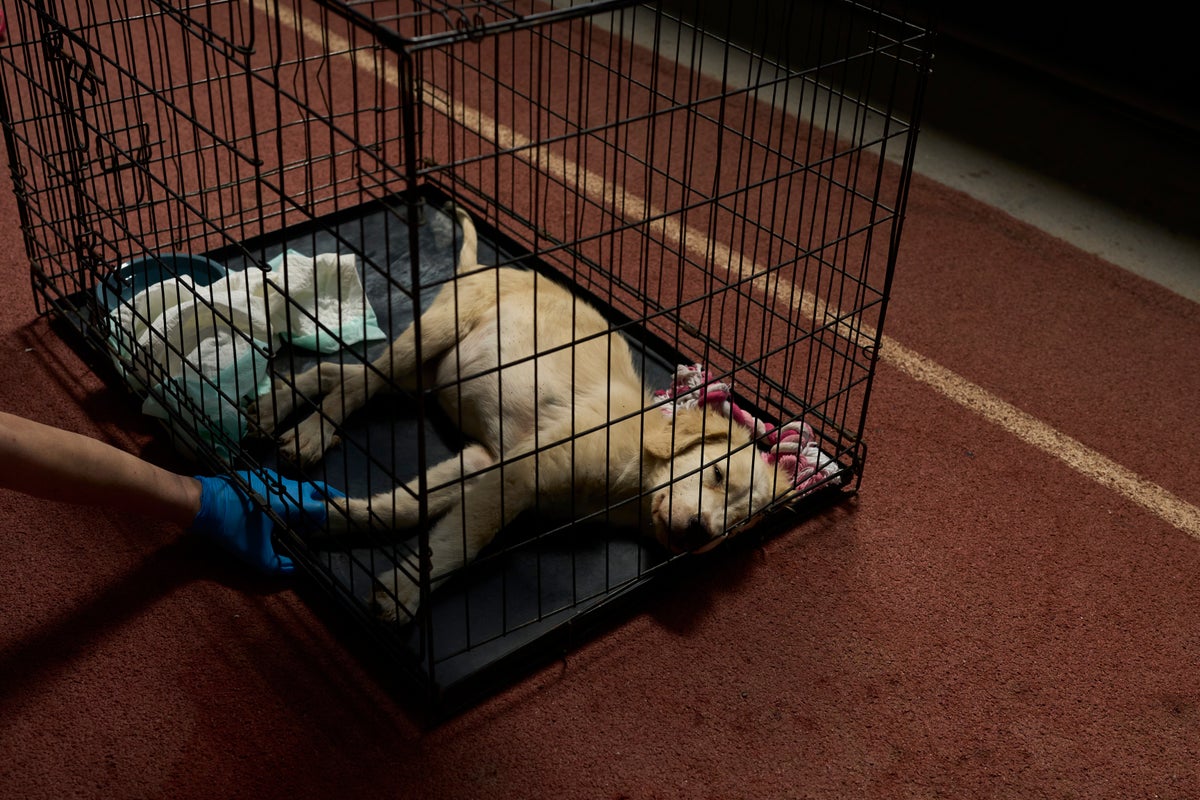
Rescued animals needed immediate medical triage. Groups converted a local indoor sports stadium into a temporary animal care center. Inside, collapsible wire cages lined the basketball courts. Veterinarians treated burned paws, smoke inhalation, and dehydration, handing out metal water bowls and rubber play balls to comfort traumatized pups.
Puppies like Sasa—an alert, floppy-eared mixed breed—spent days in these temporary shelters waiting for containment lines to lift and owners to step forward.
Why the System Keeps Failing Vulnerable Animals
Natural disasters expose structural flaws in emergency response. Richard Parr, director of the U.K.-based Center for Wild Animal Welfare, points out a glaring deficiency in how modern nations handle climate emergencies.
Right now, animal rescue remains entirely ad hoc. It relies on private individuals, donations, and small charities putting their own lives at risk. Official disaster response frameworks treat domestic pets and wildlife as an afterthought, leaving a massive gap between the scale of modern wildfires and available resources.
Advocates are pushing for a dedicated European Union animal rescue service with proper funding. As summers grow hotter and dry spells lengthen across Southern Europe, fires like the one in West Attica aren't statistical anomalies anymore. They're recurring annual catastrophes.
If you travel to fire-prone regions or live in them, don't wait for an emergency alert to plan for your pets. Keep a go-bag ready with extra leashes, carriers, and medical records. When the smoke rolls in, nobody else is coming for them.
More than 110 animals rescued as West Attica wildfires continue to spread across Greece
This footage shows local volunteers and veterinary teams rescuing stranded animals from the advancing wildfire zones in West Attica.
http://googleusercontent.com/youtube_content/1