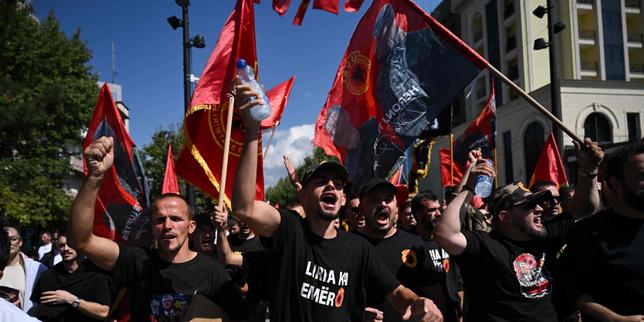
When the Kosovo Specialist Chambers in The Hague handed down a twenty-five-year prison sentence to former president Hashim Thaçi, it didn't just close a massive legal file. It triggered a profound political shockwave across the Balkans. To much of the international community, the ruling represents an uncompromising step toward accountability for the 1998–1999 war. To many ethnic Albanians in Kosovo, where Thaçi remains a revered founding father of their independence, the judgment feels like a historical inversion of victim and aggressor.
You can't understand the fury on the streets of Pristina without looking at how Thaçi's life mirrors the modern history of Kosovo itself. He went from leading the guerrilla fighters of the Kosovo Liberation Army (KLA) to signing a declaration of independence in 2008. Now, he sits behind bars convicted of war crimes alongside three other former independence leaders. Let's break down what actually happened during this landmark trial, why the verdict has deeply polarized the region, and what comes next for a fragile nation.
Inside the Hague Verdict
The trial wasn't a rushed affair. It dragged on through thousands of pages of transcripts, hundreds of witness testimonies, and years of legal wrangling. Presiding judges convicted Thaçi on four counts of war crimes, including arbitrary detention, cruel treatment, torture, and murder.
The court focused heavily on how the KLA operated during the height of the conflict with Serbian forces. Prosecutors argued—and the panel ultimately agreed—that senior KLA leaders formed a joint criminal enterprise. Their target wasn't just armed opponents; it included anyone perceived as a collaborator with Serbian security forces, along with rival political figures.
Judge Charles Smith pointed out during the sentencing that the victims endured brutal conditions in makeshift detention facilities. While Thaçi's defense team insisted that the KLA lacked a strict hierarchical command structure capable of controlling rogue fighters, the judges rejected that argument. They ruled that Thaçi's role as the head of the KLA's Political Directorate gave him substantial authority, making him a key player in implementing policies that led directly to these abuses.
Hero or War Criminal Two Radically Different Realities
Truth is often the first casualty of an armed conflict, and the perception of Hashim Thaçi exposes a gaping chasm between international law and domestic reality.
In Western capitals, the tribunal is viewed as a necessary mechanism to ensure that victors are held to the same standards as the vanquished. Impunity destroys the credibility of democratic institutions. If war crimes happen, accountability must follow, regardless of whether the perpetrator fought for a righteous cause.
Walk through the streets of Pristina, however, and you'll hear a very different story. Posters of Thaçi and his co-defendants have lined city walls, accompanied by digital countdown clocks tracking the verdict. To ordinary citizens who survived the brutal ethnic cleansing campaigns orchestrated by Slobodan Milošević’s regime, the KLA represents their salvation. Seeing their liberation leaders tried and sentenced by an international court feels deeply unjust. Critics of the tribunal argue that it creates a false moral equivalence between a population fighting for survival against state-sponsored terror and the occupying forces committing atrocities.
Current Prime Minister Albin Kurti publicly slammed the ruling, even while recognizing that Thaçi's political downfall alters domestic power dynamics. Kosovo remains one of Europe's poorest countries, burdened by high unemployment, stagnant economic growth, and ongoing diplomatic stalemates with Serbia. This trial isn't just about history; it dictates how the country navigates its political future today.
The Broader Fallout for Regional Stability
You might wonder how this affects relations between Kosovo and Serbia. The short answer is: it complicates an already explosive situation.
Belgrade views the convictions as validation that KLA abuses were widespread. Meanwhile, nationalist politicians in Serbia continue to push their own narratives while dodging domestic accountability for the far larger scale of violence inflicted on ethnic Albanians.
Moreover, Thaçi's legal troubles aren't completely over. He still faces separate proceedings regarding allegations of witness intimidation and offenses against the administration of justice. His defense team has thirty days from the written judgment to file an official notice of appeal, meaning the legal battle will drag on for months, if not years.
The European Union and the United States continue to push both sides toward normalization, but domestic outrage over the Hague's decision makes political compromise toxic for local leaders. When courts punish national heroes, the public retreats into defiance.
Kosovo's path forward requires balancing the painful demands of international justice with the raw, lived trauma of its people. The legal battle in The Hague is finished for now, but the political fallout across the Balkans is only beginning.


