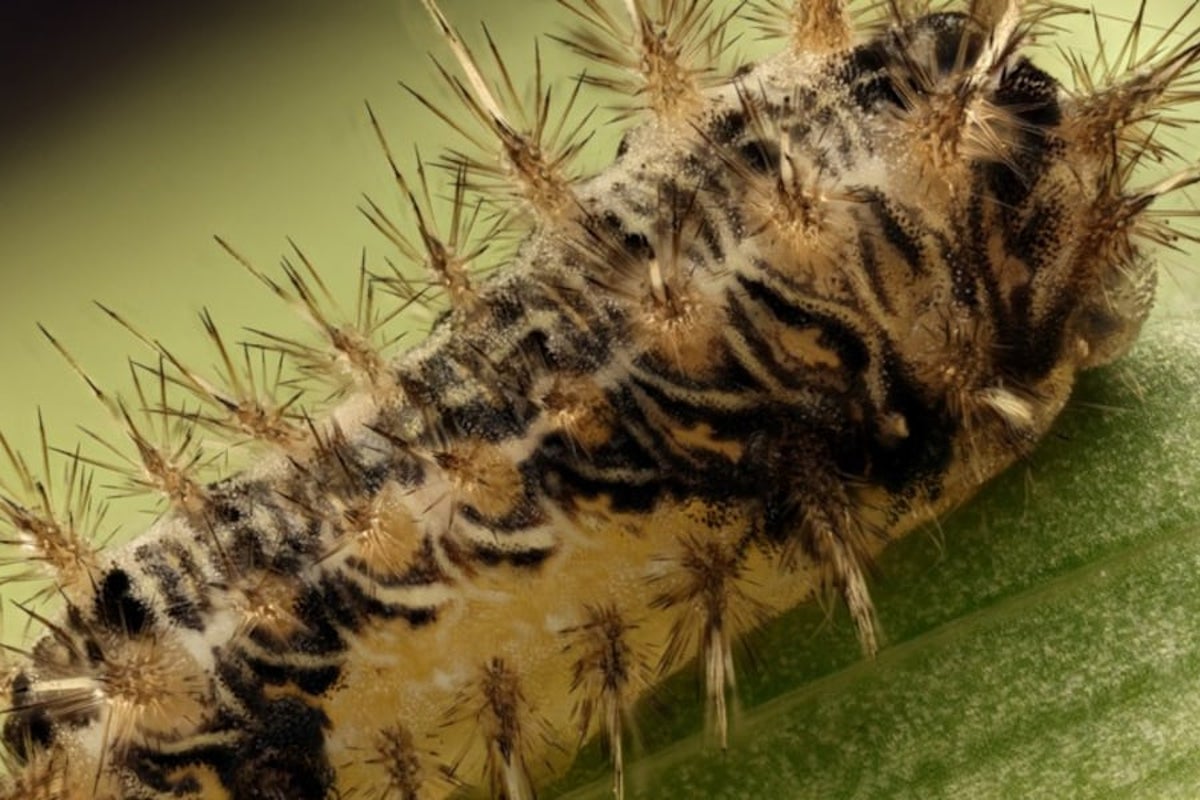
You walk out to your garden on Oahu's Windward side to trim some ti leaves or tend to your prized areca palms. Suddenly, a sharp, burning sensation pierces your hand. It feels like you just got scraped by microscopic shards of fiberglass coated in acid. You look down, but you see absolutely nothing.
Welcome to the reality of the nettle caterpillar outbreak hitting Hawaii right now.
These invasive bugs are making a massive, painful comeback across the islands in 2026. Homeowners, nursery owners, and landscape workers are getting stung left and right. The culprit is Darna pallivitta, commonly known as the stinging nettle caterpillar. They're small, stealthy, and completely ruining the peace of tropical backyards.
To fight back, state officials aren't spraying massive blankets of chemicals. Instead, the Hawaii Department of Agriculture is fighting bugs with bugs. They've ramped up the release of thousands of specialized, microscopic parasitic wasps in a bid to stop the spread before the summer peak.
It sounds wild. Releasing more insects to fix an insect problem feels like the classic story of an ecological disaster waiting to happen. But this isn't a reckless gamble. It's a calculated, highly researched effort to restore balance. Here is exactly what is happening on the ground, why these caterpillars are so dangerous, and what this wasp warfare means for your backyard.
The Pain Behind the Invasive Nettle Caterpillar
If you haven't encountered one of these creatures yet, count yourself lucky. The stinging nettle caterpillar doesn't look like your average fuzzy backyard bug. It grows to about an inch long, sporting a dark stripe down its back and rows of venomous, spine-covered knobs called scoli.
These spines act like tiny hypodermic needles. The moment your skin brushes against them, they break off and release a heavy dose of histamine-laced toxins.
The result is instant misery. The sting causes an intense, burning itch that quickly blows up into swollen, red welts. For most people, the worst of the pain lasts a few hours, but the resulting rash and irritation can linger for weeks. If you have a history of severe allergic reactions, these encounters can quickly land you in an urgent care clinic.
What makes them especially frustrating for local gardeners is their camouflage. They love to hide on the undersides of leaves or right at the base of plants. When you brush past a branch, the caterpillar often drops straight to the dirt, leaving you screaming in pain without any idea what actually hit you.
A Massive Threat to Hawaii Multi Million Dollar Green Industry
This isn't just an annoyance for residents enjoying their lanais. The invasion strikes at the heart of Hawaii's agricultural economy. The stinging nettle caterpillar is incredibly destructive, feeding on over 70 different plant species across 30 distinct plant families.
They have a massive appetite for monocots. That means they target things like coconut palms, areca palms, fishtail palms, mondo grass, and ti plants.
The nursery and cut-flower industries are taking a brutal hit. Local growers deal with strict export regulations and low tolerance for pest damage. When young caterpillars hatch, they feed on the surface of the leaves, creating a translucent windowpane effect. As they grow larger, they chew from the outside edges inward, completely stripping the foliage until nothing is left but the tough midribs.
A nursery infestation can ruin entire shipments of ornamental plants, devaluing crops that feed into an industry valued at tens of millions of dollars. Because the eggs are flat, translucent, and laid in long rows under the leaves, they are almost impossible to spot during casual inspections. They move silently through cargo and nursery shipments, which is exactly how they spread across the major islands after first being spotted near Hilo back in 2001.
Enter the Parasitic Wasp
When a pest spreads this fast, traditional pesticides often fail. Spraying broad-spectrum chemicals kills off everything, including the beneficial insects that are actually trying to help your garden. It's expensive, temporary, and bad for the local environment.
That brought state entomologists to a tiny savior named Aroplectrus dimerus.
This is a tiny, stingless parasitic wasp native to Taiwan. Scientists spent years evaluating this insect in strictly contained quarantine facilities before approving its official release years ago. The goal was simple: ensure the wasp only cares about eating the invasive nettle caterpillar and won't touch Hawaii's native moths or butterflies.
The strategy is a classic example of classical biological control. These wasps do not sting humans. They don't care about your food, and you won't even notice them flying around. Their entire existence revolves around tracking down the stinging nettle caterpillar.
When a female wasp finds a caterpillar, she deposits her eggs directly onto its body. As the wasp larvae hatch, they feed externally on the caterpillar, eventually killing it before it can transform into a reproductive adult moth. Over the past four months alone, agricultural officials deployed these natural enemies across ten distinct communities to suppress the latest spikes.
The Complicated Reality of Biocontrol
Using one insect to wipe out another is never a simple, smooth victory. Nature always finds a way to throw a wrench into the gears. Recent scientific evaluations showed that field parasitism rates on Oahu averaged around 19 percent over a multi-year tracking period. That's a solid dent in the population, but it's not a complete wipeout.
The situation got trickier with the discovery of a hyperparasitoid called Pediobius imbreus.
This is a secondary parasite. It's essentially a tiny wasp that attacks the beneficial wasp larvae. It turns out this secondary invader has been attacking nearly 27 percent of the Aroplectrus dimerus pupae in certain areas, lowering the overall efficiency of the state's biological control efforts.
This ecological chess match is why the Department of Agriculture has to constantly breed and release fresh waves of the beneficial wasps. It's a game of numbers. By flooding infested neighborhoods with thousands of new wasps, officials help the beneficial insects outpace both the caterpillars and the secondary parasites trying to hold them back.
How to Protect Your Yard Right Now
If you live in an active outbreak zone like the Windward side of Oahu, you can't just sit back and wait for the wasps to do all the heavy lifting. You need to take immediate steps to safeguard your property and your skin.
First, adjust your landscaping habits. Nettle caterpillars thrive in unmanaged, weedy areas and dense foliage. Keep your yard trimmed and clear out weeds that provide easy hiding spots. Pay close attention to ti leaves and ornamental palms.
Second, be smart about outdoor lighting. The adult version of this pest is a small, dull-brown moth with distinct white diagonal markings on its wings. These moths fly at night and are highly attracted to bright lights. Minimize your outdoor night lighting, or position bug zappers well away from your prized garden plants. To maximize a zapper's effectiveness, place a bucket of soapy water directly underneath it to catch the disoriented moths that fall.
If you suspect an infestation and choose to remove them manually, look out for your safety. Wear thick gloves, long sleeves, and heavy pants. Look closely at the undersides of leaves. If you find them, pick them off carefully and drop them straight into a bucket of soapy water to drown them.
Avoid using harsh, broad-spectrum chemical sprays in your yard if you can. Doing so wipes out the very population of stingless wasps that the state is spending thousands of dollars to establish in your neighborhood. If you must use a spray, opt for Bacillus thuringiensis (Bt). This is a naturally occurring bacterium that targets caterpillars specifically when they eat the treated leaves, leaving the beneficial wasps completely unharmed.
Monitor your plants regularly. If you spot a massive surge or see these stinging pests in an area where they haven't been reported before, call the state's pest hotline at 643-PEST right away. Tracking the spread is the only way authorities know exactly where to send the next batch of wasps.