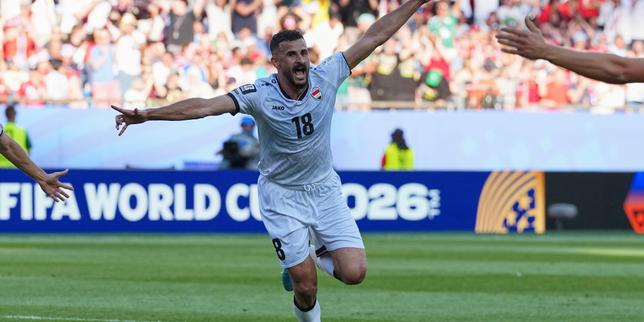
The smell of deep-heat rub and damp grass in a stadium tunnel is the same whether you are playing in Paris or Doha. It clings to the concrete. It gets into the throat. For the eleven men waiting in the tunnel, wearing a shade of blue that carries the weight of a nation’s hyper-critical gaze, that smell is where the noise dies down and the reality settles in.
France is preparing to face Iraq in their second group-stage match of the World Cup. On a spreadsheet, or a betting slip, this looks like a foregone conclusion. One side features global icons, million-dollar legs, and tactical systems refined in the pressure cookers of Madrid, London, and Paris. The other represents a footballing ecosystem rebuilt through sheer willpower, navigating decades of geopolitical upheaval just to stand on the same grass.
But football has a nasty habit of ignoring spreadsheets.
When Les Bleus step onto the pitch, they are not just playing against the eleven men in front of them. They are playing against their own history of complacency. To understand what is truly at stake in this second match, you have to look past the tactical boards and into the fragile psychology of a favorite.
The Trap of the Quiet Group Stage
Every major tournament has a ghost story. For France, that story is often about the games everyone assumed they would win by walking out of the changing room.
Think back to the opening matches of tournaments past, where star-studded French squads looked at an opponent with a lower FIFA ranking and subconsciously eased off the gas. It is a human flaw. When you are told you are the best in the world every single day by agents, brands, and journalists, a part of your brain believes it. You start to think that 80% effort will suffice.
Then the whistle blows.
An underdog doesn't play with tactical elegance; they play with a furious, suffocating desperation. They compress the space. They tackle with a ferocity that borders on the reckless. They turn a football match into a street fight. If the favorite doesn't match that emotional intensity within the first ten minutes, panic sets in. The passes become hurried. The superstars start arguing with each other. The clock becomes an enemy.
The French coaching staff knows this monster intimately. They have spent the days leading up to the Iraq match trying to kill any hint of arrogance in the camp. It is a delicate coaching art. You must keep the players confident enough to express their natural genius, but anxious enough to track back and defend a counter-attack at full sprint in the 89th minute.
Rebuilding from Dust
To truly appreciate the invisible stakes of this match, you have to look across the halfway line. The Iraqi national team is not here to be a footnote in France’s tournament narrative.
Consider a hypothetical young midfielder from Baghdad, let's call him Ahmed. Ahmed didn't grow up in a state-of-the-art academy with heated pitches and nutritional scientists. He grew up playing on concrete lot fields where the biggest obstacle wasn't a defender's press, but the logistical nightmare of a city recovering from conflict. For players like Ahmed, the national jersey is not a commercial vehicle. It is a shield. It is a rare, precious moment where their country is spoken about on the global stage for something beautiful.
The last time Iraq made it to this stage was 1986. Forty years of waiting, of near-misses, of playing "home" qualifiers in neutral countries because of security concerns.
When the Iraqi players look across the tunnel at the French superstars, they do not see gods. They see an opportunity to change how their families, their neighborhoods, and their entire nation are perceived by the world for ninety minutes. That kind of motivation is impossible to quantify. It doesn't show up in a player's heat map or passing accuracy metrics. But it allows a midfielder to run an extra three kilometers when his lungs are burning.
The Tactical Chessboard in the Heat
France enters this second game needing to solidify their identity. The opening match of any tournament is about survival; the second is about intent.
The French manager faces a classic dilemma. Does he rotate the squad to keep his star forwards fresh for the knockout rounds, or does he field a full-strength lineup to kill the game early and send a message to the rest of the tournament? History suggests that breaking up a winning momentum too early can be fatal. The bench players are hungry, yes, but the delicate chemistry between the midfield anchors and the front three requires minutes to crystallize.
Iraq will likely set up in a low block. A wall of red jerseys defending the penalty box, daring France to break them down.
This is where the game becomes a test of patience. If France tries to force the ball through the middle, they will play directly into a trap. The Iraqi defense relies on central congestion, looking to trigger quick, vertical counter-attacks the moment a French midfielder misplaces a pass. The key for Les Bleus lies on the wings. They must stretch the pitch, using their full-backs to create overloads and dragging the Iraqi central defenders out of their comfort zone.
It requires a specific type of discipline. The kind that doesn't look glamorous on a highlight reel. It means making the same thirty-yard run into the corner twenty times, knowing you might only get the ball twice.
The Weight of the Blue Jersey
There is a unique pressure that comes with being French and playing football. The public expectation is binary: you are either a genius or a disgrace. There is rarely an in-between.
For the younger players in this French squad, this match is a crucible. It is easy to look brilliant when you are playing alongside five world-class teammates against a European giant where the spaces are predictable. It is much harder when the space is suffocating, the tackles are flying in, and the crowd is roaring for an upset. A mistake in this match doesn't just jeopardize three points; it destroys a young player's confidence under the unforgiving lens of the French media.
The veterans understand this. You can see it in the way they carry themselves during the warm-up. They are the ones talking constantly, pulling the teenagers aside, calming the nerves. They know that a World Cup is not won in the final; it is won in these quiet, dangerous group games where the glamour fades and the raw work begins.
The sun begins to set over the stadium, casting long, dramatic shadows across the pristine green grass. The officials gather in the center circle. The anthems begin.
On one side, La Marseillaise rings out, a song born of revolution and fierce national pride, sung by men who carry the footballing expectations of Western Europe. On the other side, Mawtini rises from eleven men who have survived a different kind of revolution entirely, carrying the hopes of a region that has waited forty years for this exact moment.
The referee looks at his watch. He raises the whistle to his lips. The talking stops, the tactical previews become irrelevant, and twenty-two men prepare to find out exactly what they are willing to suffer for.
A single ball sits on the center spot, waiting to decide whose story matters more.