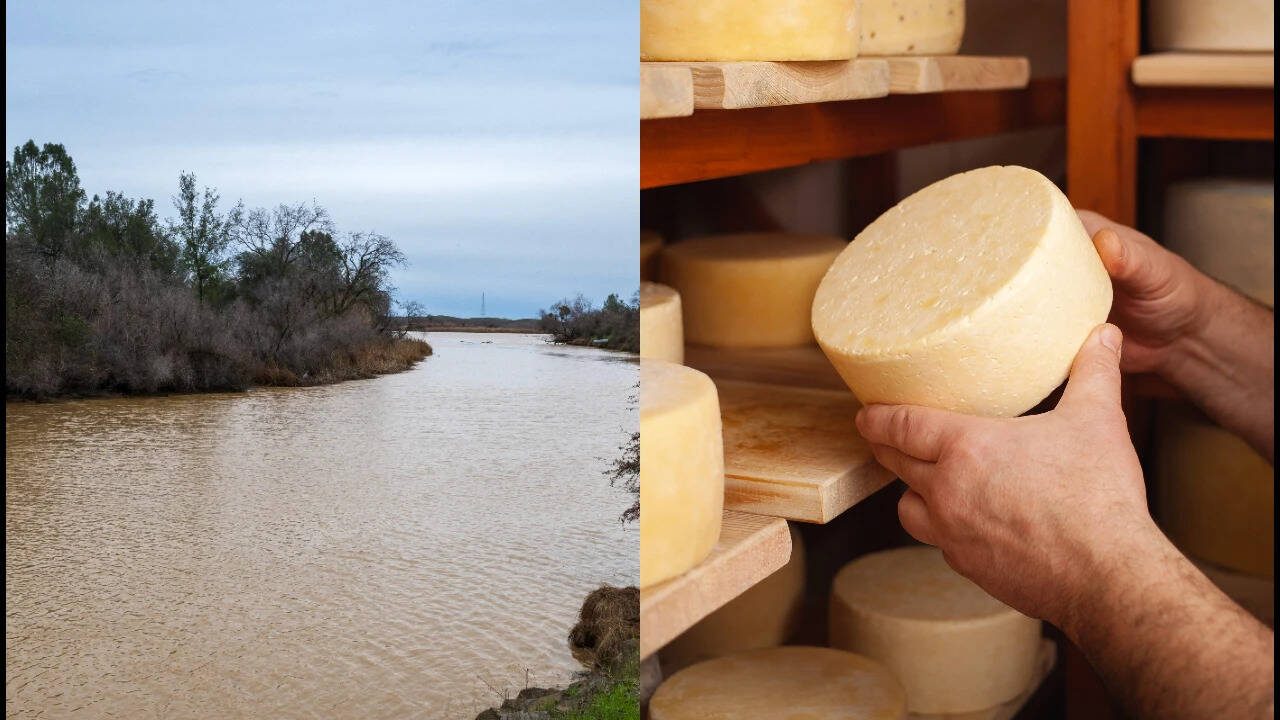
The physical scars left by decades of industrial agriculture on the California landscape do not heal overnight. When Joseph Gallo donated thousands of acres of his dairy ranch to the public trust in 1982, he likely viewed the move through the lens of legacy and land management. He could not have known that it would take over four decades to reverse the mechanical imprints left by the dairy industry on the San Joaquin River.
The recent completion of the Grasslands Floodplain Restoration Project serves as a stark reminder of how deeply agricultural infrastructure altered the state’s natural hydrology. For over 70 years, a section of the river had been effectively severed from its primary lifeblood: the floodplain. While the donation provided the raw land, the actual work of ecological repair faced a grueling timeline, hampered by permitting bureaucracy and the sheer difficulty of undoing half a century of environmental suppression.
Modern industrial dairy operations often prioritize efficiency—narrowly defined by output—over ecological health. Historically, this meant constructing levees to corral cattle, which unintentionally acted as walls against the natural ebb and flow of the San Joaquin River. These structures did not merely partition space for livestock; they systematically disabled the natural water filtration and aquifer recharge systems that have supported the Central Valley for millennia.
The effort to undo this damage highlights a recurring issue in American conservation. Private land donations are frequently heralded as triumphs, yet the burden of ecological restoration often rests on a fragmented system of state funding and public-private partnerships. The Grasslands project required fifteen years of engineering and environmental maneuvering. It involved breaching levees that had long served their purpose for the dairy operation but stood as monuments to a fragmented approach to water management.
Water is a commodity in California, and its movement is dictated by rigid legal frameworks. Reconnecting a river to its floodplain sounds like a straightforward engineering task, but it requires navigating complex water rights and state-level safety regulations. When water finally moves across these 220 acres of restored habitat, it represents more than just a win for local biodiversity. It is a functional test of whether the state can prioritize natural systems during periods of scarcity and surplus alike.
The reliance on salmon as an indicator species here is telling. If the zooplankton populations thrive in these flooded reaches, it provides a critical food source for juvenile Chinook salmon. This is a fragile chain of dependency. If the water temperatures spike or the timing of the floods misses the migratory window of the fish, the entire endeavor loses its primary ecological driver. Restoration is not an act of setting the clock back; it is an act of intervention that requires constant monitoring and calibration.
Beyond the technicalities, these projects expose the tension between agricultural heritage and modern environmental necessity. We have arrived at a moment where we must choose between the convenience of legacy infrastructure and the long-term viability of our water systems. Abandoned levees are not just dirt and rock; they are decisions made by previous generations that current planners are forced to live with.
The financial reality of these interventions is equally sobering. Tens of millions of dollars are funneled into these efforts, often sourced from public propositions and conservation grants. While the outcome—a more resilient, flood-prone landscape—is objectively positive, the price tag suggests that the true cost of industrial-scale agricultural expansion was never fully accounted for in the original balance sheets of those dairy empires.
We are seeing a slow shift. The focus has moved from merely acquiring land to the active, hands-on management of that land. This requires scientists and engineers to treat the ground like a machine that has been improperly maintained for decades. The work is dirty, expensive, and slow, lacking the immediate gratification of a ribbon-cutting ceremony.
As the river once again spills into these historic floodplains, the real success will not be measured by the ceremony that celebrated the project’s completion. It will be measured by whether the water remains in the soil long enough to recharge the aquifers and whether the salmon stocks show measurable improvement over the next ten years. The return of these natural rhythms is a test of our collective patience. We are attempting to fix a broken system with tools that were only recently sharpened, working against a clock that was set in motion long ago. The river has found its way home, but the struggle to maintain that path is only beginning.