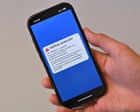
At 2:00 pm AEST on Monday, July 27, millions of mobile phones across Australia will emit an un-silenceable 10-second siren sound accompanied by screen vibrations and a mandatory pop-up broadcast. This nationwide test marks the public debut of AusAlert, the federal government’s newly minted emergency broadcast framework set for full deployment in October. Delivered directly via cell towers rather than standard SMS, the test requires no action from citizens and bypasses traditional phone settings, sounding even on devices set to silent or Do Not Disturb.
Yet beneath the official assurances of improved disaster readiness lies a complex, troubled rollout. Behind the scenes, federal emergency coordinators face intense friction with state officials, significant technical gaps in regional coverage, and an acute safety risk for vulnerable populations.
The Shift From Clunky SMS to Tower Broadcasting
To understand why federal authorities are pushing AusAlert so aggressively, one has to examine the failure points of Australia’s legacy warning infrastructure.
For over a decade, authorities relied on Emergency Alert Australia, a system anchored in point-to-point SMS delivery and landline scraping. During the catastrophic 2019-2020 Black Summer bushfires and the devastating Northern Rivers floods of 2022, that architecture repeatedly buckled. Standard SMS messages sat queued in telecommunications traffic for hours while fires jumped containment lines. By the time emergency texts reached residents in places like Lismore or Mallacoota, the danger had frequently arrived or passed.
Cell broadcast technology operates on a fundamentally different mechanism. Rather than sending individual text messages to tens of thousands of individual phone numbers sequentially, AusAlert broadcasts a single radio signal simultaneously to every compatible device connected to a specific mobile tower. It works like a radio station.
The technical advantages of cell broadcasting are undeniable:
- Zero network congestion: Because the system does not establish individual user sessions, thousands of phones receiving the alert at once will not crash the local cellular network.
- Instantaneous delivery: Messages land on screens within seconds of being issued by incident controllers.
- Privacy protection: Authorities do not need a database of personal phone numbers or active tracking location data to reach people inside a hazard zone.
- Forced visibility: System-level audio overrides force the device speaker to sound a specialized emergency frequency, waking sleeping residents during fast-moving midnight flood events.
The technology itself is proven. Variations of cell broadcasting have protected citizens in Japan during tsunamis and across the United States through Wireless Emergency Alerts for years.
Australia’s late adoption, however, has created unique operational friction points that emergency managers are struggling to manage.
The Domestic Violence Hazard Nobody Prepared For
While emergency management agencies focus on technical delivery, social policy experts and advocacy groups are raising alarm over a grave human cost.
Thousands of individuals living in high-risk domestic violence situations rely on hidden, secondary mobile phones. These "safe phones"—often kept tucked away in secret drawers, cars, or closets—provide victim-survivors a untracked connection to emergency services, shelters, legal support, and family members.
Because AusAlert is classified as a top-tier critical alert, it bypasses ordinary system volume controls, silent switches, and software filters. If a hidden phone is powered on and connected to a cellular network at 2:00 pm on Monday, it will blare a high-decibel tone. In a household controlled by an abusive partner, that sudden sound can expose a hidden device, jeopardizing the safety of victim-survivors.
The National Emergency Management Agency (NEMA) has acknowledged the hazard after consulting with domestic violence advocacy groups. Their official guidance advises anyone maintaining a hidden phone to power the device down entirely or switch it to Airplane Mode prior to the test window.
Critical Safety Advice: Turning a phone to silent or Do Not Disturb will not prevent the AusAlert siren from sounding. The only way to guarantee a device remains completely silent during the test is to switch it off entirely or keep it in Airplane Mode for up to 24 hours to prevent delayed delivery.
This mitigation strategy creates a different dilemma. Forcing victim-survivors to keep secondary devices turned off severs their immediate lifeline. If an active domestic emergency escalates during a disaster event, forcing a user to boot up a powered-down device wastes precious minutes.
The blunt nature of national critical alerts exposes a fundamental flaw in emergency tech design: systems designed to protect the public can inadvertently create life-threatening exposure for marginalized groups if granular opt-out controls or localized warnings are absent.
State Resistance and Regional Blindspots
Beyond the domestic safety crisis, AusAlert faces political and technical headwinds from state governments.
Australia’s constitutional structure places disaster management firmly in the hands of state and territory emergency service agencies. Federal authorities can build a nationwide broadcast pipe, but individual state controllers retain the decision-making authority over whether to use it.
During recent ministerial meetings, several state representatives expressed reluctance to ditch their existing state-level communication platforms ahead of the upcoming high-risk weather season.
| State / Territory Jurisdiction | Primary Current Warning Infrastructure | AusAlert Adoption Stance | Primary Regional Concern |
|---|---|---|---|
| New South Wales | Hazards Near Me NSW / SMS Broadcast | Dual-system rollout planned | Tower coverage gaps in deep topography |
| Victoria | VicEmergency App / SMS | Co-existence alongside VicEmergency | Multi-language translation fidelity |
| Queensland | Disaster Management Dashboards / SMS | Hesitant / Dual-system approach | Landline reliance & remote blackspots |
| Western Australia | Emergency WA / SMS Broadcast | Integrating with state systems | Extreme coverage distance between towers |
Queensland emergency services officials have been vocal regarding the system's limitations in regional and remote communities. Cell broadcast technology depends strictly on modern 4G and 5G mobile tower connectivity. In vast swathes of outback Australia, where mobile tower footprints are non-existent and farming families rely on copper landlines, satellite connections, or high-frequency radios, AusAlert simply cannot reach them.
When 3G networks shut down across Australia, regional connectivity suffered localized contraction. If a bushfire sweeps through an area with destroyed or absent 4G infrastructure, cell broadcasts cannot fire. State agencies argue that prematurely retiring legacy SMS or automated landline calling systems creates dangerous dead zones for rural property owners.
The Hardware Exclusion Zone
There is also the matter of device obsolescence.
NEMA estimates that roughly 80 percent of active Apple iPhones and roughly 16 million Android devices in Australia will successfully process the July 27 test. That leaves millions of older phones completely silent.
To receive an AusAlert broadcast, a device must meet specific hardware and operating system parameters:
- Apple iPhone: iPhone 11 or newer models operating on iOS 26.4 or later.
- Apple Watch: Watch Series 6, SE2, SE3 or newer running watchOS 26.4 or later.
- Android: Devices running Android 12 or newer firmware.
Older smartphones, pre-2019 budget models, and basic non-smart feature phones lack the specific cell-broadcast decoder firmware required to display system-level alerts.
Consider a hypothetical scenario where an elderly resident in a regional town relies on a functional 2017 Android handset. During a flood emergency, their neighbors with newer smartphones will receive a loud siren and instant evacuation instructions, while the older device receives nothing unless legacy SMS broadcasts are triggered simultaneously.
This technological gap shifts a significant burden onto lower-income households and elderly citizens, who are statistically more likely to retain older hardware.
How to Prepare Your Devices for Monday’s Test
For the vast majority of Australians, the July 27 broadcast will serve as a brief, 10-second interruption to their afternoon routine. However, taking a few explicit steps can prevent unnecessary panic or technical issues:
- Verify your schedule: The test fires at 2:00 pm AEST in NSW, Victoria, ACT, Queensland, and Tasmania; 1:30 pm ACST in SA and NT; and 12:00 pm AWST in WA.
- Handle sensitive devices: If you or someone you know uses a secondary phone for personal safety or domestic violence protection, switch that device off completely or set it to Airplane Mode prior to the test window. Leave it off for up to 24 hours to ensure cached test signals do not fire upon reconnecting.
- Expect high volume: Understand that the alert will ring at maximum audio output even if your handset is set to silent or vibrating mode. Warn elderly relatives, shift workers, and school administrators ahead of time to avoid sudden panic.
- No response required: Do not call emergency services (000) when the siren sounds. The text on screen will clearly state that it is a test notification.
- Provide feedback: If your phone fails to receive the alert despite meeting hardware criteria, submit your device model and general location through the official post-test feedback form on the AusAlert portal.
The AusAlert platform represents an upgrade in emergency broadcasting speed, but technical modernization cannot replace clear coordination between federal agencies, state controllers, and community safety groups. Monday’s national test will reveal how well the system functions across millions of pockets and purses, but its real test will come during the next severe bushfire season when lives hang on every second.


