You’ve probably seen those creepy YouTube videos where someone runs a heavy metal track through an analyzer and a demon face pops out of the frequencies. It looks like black magic. Or maybe you've heard about the time the Aphex Twin hid his own grinning face inside the track "Equation." It’s a trip. But lately, the niche hobby of broadcasting a meme on a radio spectrogram has moved from high-end electronic music production to the world of amateur radio and signal processing. It’s essentially "steganography," the art of hiding things in plain sight—or in this case, hiding pictures in plain hearing.
Radio isn’t just for voices or music. It’s data. If you can turn a picture into a frequency, you can beam that picture across the world.
What is a Spectrogram Anyway?
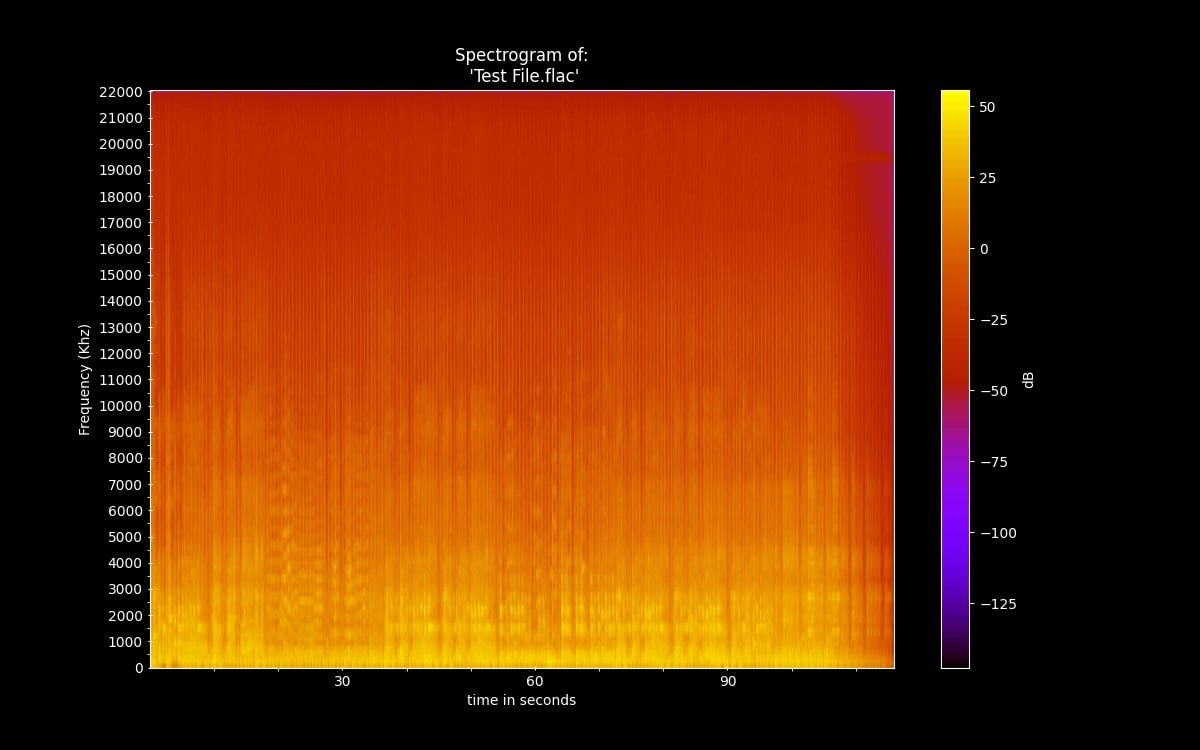
Before we get into the memes, we have to talk about what we’re actually looking at. A spectrogram is basically a visual representation of the spectrum of frequencies of a signal as it varies with time. Think of it as a 3D graph. The horizontal axis is time, the vertical axis is frequency (pitch), and the brightness or color represents the intensity (volume).
When you see a standard radio broadcast on a waterfall display—which is just a scrolling spectrogram—it usually looks like a messy, fuzzy river of static and peaks. But if you manipulate the audio signal just right, you can force those "random" peaks to align into shapes. It’s like rearranging the stars to make a constellation.
The Art of Painting with Sine Waves
How do you actually start broadcasting a meme on a radio spectrogram? You don't just "play" a JPEG into a microphone. That would just sound like a screeching modem and look like a blur. You need a specific type of software that performs an Inverse Fourier Transform.
Essentially, the software takes your image—let’s say it’s a Rick Astley silhouette or a "Doge"—and treats the vertical pixels as frequency bins. If there is a black pixel at the top of the image, the software generates a high-pitched tone at that exact millisecond. If there’s a white pixel at the bottom, it generates a low-pitched tone.
When you play this audio back, it sounds like absolute chaos. It’s a rhythmic, digital chirping that most people would ignore. But to anyone watching a Waterfall Display on a Software Defined Radio (SDR), the meme slowly scrolls upward or downward on their screen. It's a digital ghost.
Real-World Examples and "Easter Eggs"
This isn't just for bored ham radio operators. The European Space Agency (ESA) and NASA have used similar concepts for calibration and "Easter eggs."
Perhaps the most famous instance in pop culture is the "Doom" soundtrack. Composer Mick Gordon hid pentagrams and the number "666" within the audio frequencies of the track "Cyberdemon." When fans ran the audio through a spectrogram, the images appeared perfectly.
In the world of radio, "SSTV" (Slow Scan Television) is the grandfather of this technique. Amateur radio enthusiasts on the International Space Station (ISS) frequently beam down SSTV images to Earth. While SSTV is a standardized protocol meant for actual photos, the "meme spectrogram" method is more "freehand." It's dirtier. It's less about data integrity and more about visual impact.
The Problem with Bandwidth
Broadcasting a meme on a radio spectrogram is a massive bandwidth hog. This is the part people get wrong. You can't just blast a high-definition 4K meme over the airwaves.
Radio spectrum is a finite resource. If you want a sharp image, you need a wide "canvas." In radio terms, that means a wide bandwidth. Most standard Narrowband FM or Single Sideband (SSB) transmissions only give you a few kilohertz of space. If you try to cram a complex meme into 3 kHz, it’s going to look like a pixelated mess from 1994.
To get those crisp, "clean" memes you see on Reddit, operators usually use wideband modes or operate on frequencies where they won't interfere with emergency services or commercial broadcasts. Legalities are a bit of a gray area here. In the US, the FCC has strict rules about "broadcasting" on amateur bands, which generally means you can't just transmit one-way content. However, transmitting "experimental data" for the purpose of testing signal propagation? That’s where the hobbyists live.
How to See These Signals Yourself
You don't need a $2,000 radio setup to find these. Honestly, all you need is a $30 RTL-SDR dongle and a piece of wire.
- Get an SDR: Plug the USB dongle into your laptop.
- Download Software: Use something like SDR# (SDR Sharp) or GQRX.
- Look at the Waterfall: This is the scrolling display at the bottom of the screen.
- Tune to "Odd" Sounds: If you hear a repetitive, melodic chirping that doesn't sound like voice or Morse code, look closely at the waterfall. You might be looking at a meme in progress.
The "Coagula" Method
If you want to create these yourself, the "old school" way is using a program called Coagula. It’s a "Shortwave Image-to-Sound" synthesizer. You import a BMP file, and it spits out a WAV file.
The sound is haunting. Because the software is mapping brightness to amplitude and vertical position to frequency, the "sound" of a meme depends entirely on its composition. A meme with lots of horizontal lines will sound like steady, tonal drones. A meme with lots of vertical noise will sound like static bursts.
Why Does This Still Matter?
In an era of high-speed 5G and fiber optics, why are people still obsessed with broadcasting a meme on a radio spectrogram?
It’s about the "hidden" nature of the medium. There is something inherently cool about sending a message that is invisible to the ear but visible to the "eye" of the computer. It's a form of digital graffiti. In some circles, it's used as a "watermark." If someone steals your audio, your hidden spectrogram meme proves you’re the creator.
It also pushes the limits of what we consider "communication." Most radio is about efficiency—getting the most words into the smallest space. Spectrogram art is the opposite. It’s inefficient. It’s loud. It’s flamboyant. It’s art.
Limitations and Distortions
Radio is a messy medium. Atmospheric interference, "fading" (QSB), and multipath distortion can ruin a perfectly good meme.
If you’re broadcasting on Shortwave (HF), the signal bounces off the ionosphere. This can cause the image to "smear" or "ghost." You might start transmitting a "Pepe" and by the time it reaches a receiver in Poland, it looks like a Salvador Dalí painting.
This distortion is actually part of the aesthetic for some. There’s a whole subculture of "Radio Art" that embraces the glitches. They want the noise. They want the signal to look like it’s struggling to exist.
Actionable Steps for Aspiring Signal Artists
If you're ready to try this, don't just start blasting signals. You'll get a knock on the door from the authorities faster than you can say "bandwidth violation."
- Start with Audio Files: Don't transmit yet. Just use a tool like "PhotoSounder" or "Coagula" to turn images into audio. Play them back and view them on a software spectrogram on your own PC to see how they look.
- Study the Waterfall: Watch the 20-meter or 40-meter amateur radio bands. Use a web-based SDR (like the ones at the University of Twente) to see what others are doing globally without buying any hardware.
- Mind the Law: If you decide to transmit, get your Technician Class amateur radio license at the very least. Learn where digital "experimental" modes are allowed.
- Optimize Your Images: Use high-contrast, black-and-white images. Grayscale is okay, but color doesn't translate well to a standard waterfall. Keep the resolution low—think 128x128 pixels.
- Check Your Gain: If your audio is too loud, it "clips," and the image will bleed across the entire frequency range, turning your meme into a wall of white noise.
Broadcasting a meme on a radio spectrogram is a bridge between the analog past and the digital present. It’s a way to make the invisible visible, turning the airwaves into a canvas for the weirdest corners of the internet. Just remember to keep your signal clean and your bandwidth legal.