High-altitude kasbah travel in autumn fails when travelers treat elevated earthen fortresses as mild-weather scenic stops rather than high-variance alpine microclimates with fragile infrastructure. A rigorous autumn expedition to a mountain kasbah requires evaluating four operational variables: thermal amplitude, road and supply-chain friction, heritage preservation constraints, and seasonal demand distortion. Rather than relying on romantic impressions of "clouds" and "adventure," travelers and operators can evaluate these journeys through concrete physical mechanisms, cost drivers, and risk trade-offs. Because no source text or URL was provided beyond the working title, the analysis below treats "an autumn adventure at a kasbah in the clouds" as an archetype of elevated Amazigh or North African earthen citadel travel during September through November, clearly separating established physical and operational mechanisms from educated hypotheses.
Defining the High-Altitude Kasbah Archetype
A kasbah, historically a fortified citadel, residence, or administrative stronghold built with rammed earth (pisé), mudbrick (adobe), stone, and timber, sits at the intersection of defensive architecture and climate adaptation. When situated at high elevation—such as in the High Atlas or Anti-Atlas ranges—it occupies a zone where steep topography compresses ecological belts over short horizontal distances.
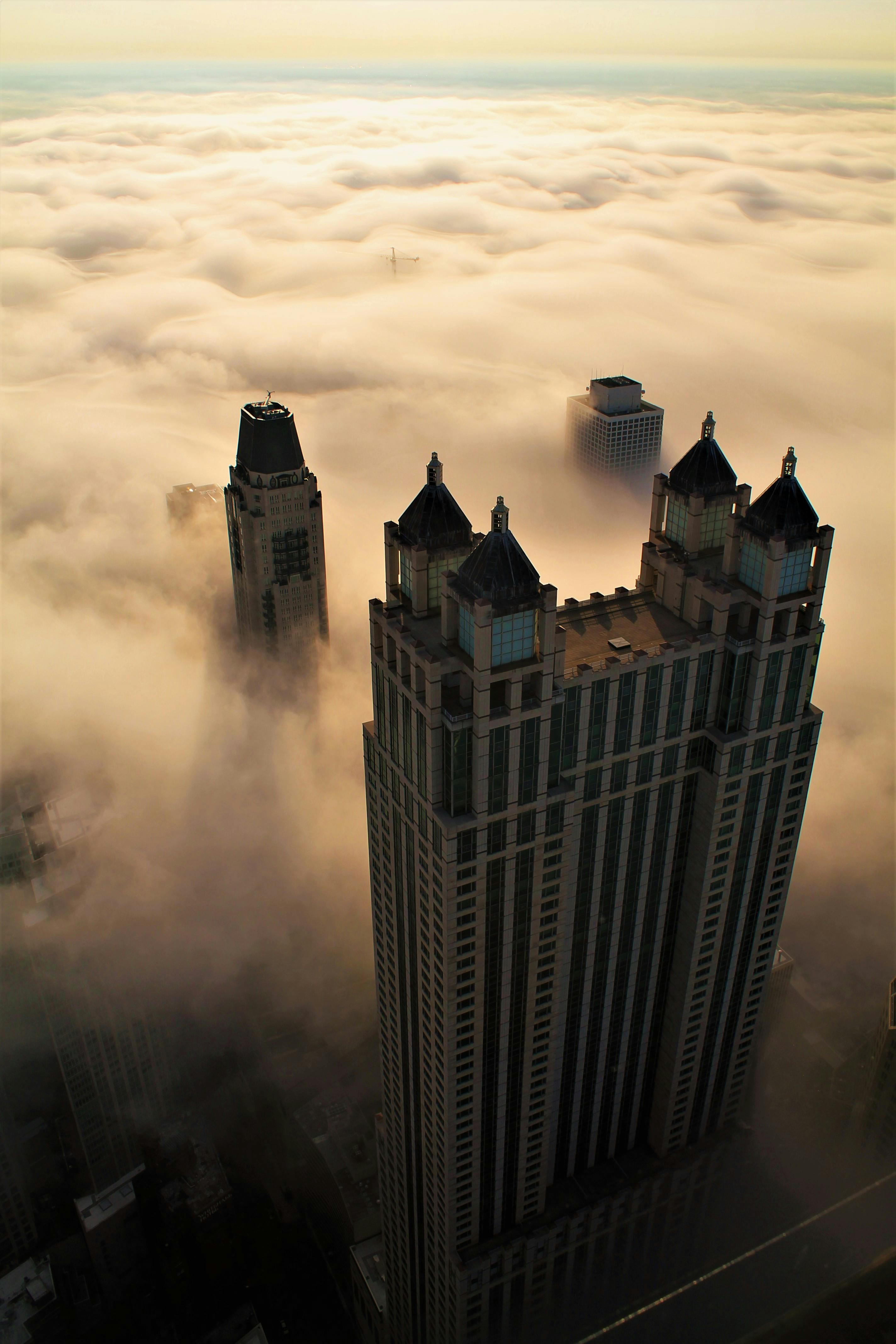
Calling such a property a kasbah "in the clouds" usually describes one of two meteorological states. The first is orographic cloud formation or valley fog rising as warm air cools against mountain slopes. The second is a vantage point above lower valley mist during clear high-pressure windows. Treating "in the clouds" as a permanent postcard state rather than a transient atmospheric condition creates immediate planning errors around visibility, trail traction, and thermal comfort.
Autumn—roughly September through November in the Northern Hemisphere—is widely marketed as a shoulder season with moderate daytime sun and fewer summer crowds. In mountain terrain, however, autumn is a transition regime. Solar angles drop, nights lengthen rapidly, precipitation patterns shift from dry late-summer conditions toward early cold fronts and mountain snow at higher passes, and agricultural calendars (such as walnut, almond, or saffron harvests) reshape local movement and labor availability.
The Four Mechanics of an Autumn Mountain Kasbah Trip
Thermal Amplitude and Microclimate Lag
Elevation reduces air temperature roughly along the environmental lapse rate—often approximated around $6.5^\circ\text{C}$ per $1,000\text{ meters}$ under standard atmospheric conditions, though local humidity, wind, and valley cold-air pooling cause sharp deviations. In arid or semi-arid mountain zones, low atmospheric moisture and clear skies allow rapid daytime heating followed by steep radiative heat loss after sunset.
Earthen walls add a second layer to this thermal profile: thermal mass. Thick rammed-earth or stone walls absorb heat during sunny afternoon hours and release it slowly overnight. That buffering helps stabilize interior temperatures compared to lightweight tents, yet uninsulated or poorly sealed rooms in older structures can still feel cold once stored heat is exhausted or when cold drafts enter through unglazed openings and courtyards.
A common planning error is packing for "autumn" using low-elevation city averages. A traveler who experiences $22^\circ\text{C}$ in a valley town at noon may face near-freezing temperatures before dawn at $2,000\text{ meters}$ or higher, especially if wind chill strips heat from damp clothing after a sudden rain or cloudburst.
Access Friction and Supply-Chain Elasticity
High-altitude kasbahs rarely sit on high-capacity transport corridors. Reaching them often involves winding mountain roads, unpaved tracks, switchbacks, rockfall zones, or seasonal stream crossings. Travel time in mountains is governed by gradient, curvature, and surface condition rather than straight-line distance.
An educated hypothesis for autumn itineraries is that early-season weather events disproportionately disrupt travel schedules even before sustained winter closures begin. A localized rainstorm can trigger mudslides, wash out ungraded crossings, or leave dense fog over mountain passes, turning a two-hour transfer into a half-day delay or a forced overnight hold.
Supply-chain elasticity is equally tight at altitude. Fresh produce, fuel, bottled gas, replacement plumbing parts, and skilled repair labor all incur transport surcharges and lead times. When an autumn cold snap arrives early, heating fuel demand spikes across the valley at the exact moment delivery is slowest.
Heritage Fabric vs. Guest Comfort
Many historic kasbahs were built for multigenerational defense, grain storage, or lineage prestige using local earth and timber rather than modern hospitality engineering. Converting or operating them as lodging requires balancing authenticity against structural vulnerability.
Rammed earth and adobe perform well when kept dry and properly maintained, but prolonged water intrusion—from roof leaks, rising damp, or freeze-thaw cycles in saturated masonry—accelerates erosion and cracking. Seismic exposure in tectonically active mountain belts adds another structural consideration that influences how renovations are reinforced or restricted.
Guests often expect modern amenities like consistent hot water, strong Wi-Fi, and quiet mechanical heating inside a centuries-old silhouette. Delivering those comforts without compromising breathable earthen walls or historic fabric requires careful engineering. Solar thermal systems, for example, can struggle during multi-day cloud cover or after cold nights if pipe runs lack freeze protection.
Seasonal Demand and Pricing Asymmetry
Autumn sits between peak summer heat in lower regions and winter snows in high passes, making it attractive to independent travelers, hikers, and photographers. Demand is rarely uniform across the season. School holidays, regional festivals, harvest weekends, and clear-weather windows create sharp occupancy spikes compared to mid-week or overcast stretches.
Because remote mountain properties have fixed room counts and high fixed maintenance costs, operators often price around seasonal averages while absorbing variable costs like generator fuel, food waste during low-occupancy days, and emergency repairs. Travelers who book late during prime autumn weekends frequently face thin availability or higher rates, while those who travel mid-week gain flexibility at the cost of fewer shared excursions or reduced staffing.
What Standard Travel Advice Misses
Conventional travel guides tend to treat mountain kasbahs as static scenery rather than dynamic systems. Three causal links are routinely overlooked:
- Cloud cover changes mobility, not just photography. Dense fog or low cloud reduces visibility on narrow mountain roads and unmarked trails, increasing navigation errors and slowing driving speeds well before rain starts.
- Water and heating are coupled systems. Cold autumn nights increase the desire for hot showers and warm rooms, but low temperatures and cloud cover can reduce passive solar gain while increasing pumping or heating loads.
- Isolation magnifies small health or gear mistakes. A twisted ankle, dehydration at altitude, or a missing thermal layer carries higher consequence miles from clinics, pharmacies, or gear shops than it does in an urban hotel.
Another frequent question among prospective visitors is whether autumn is better than spring for visiting a high-altitude kasbah. Autumn generally offers drier, more settled conditions in early weeks and harvest activity, whereas spring brings snowmelt, fuller streams, and greener slopes alongside higher odds of late snow on high passes and variable runoff. Which season is superior depends on whether a traveler prioritizes clear late-season visibility and crisp air or spring greenery and meltwater flow—a trade-off rather than a universal ranking.
Visitors also commonly ask how many nights to stay at a remote mountain property. One night often converts into mostly transit and recovery from winding roads; two to three nights allows buffer time for weather shifts and unhurried local walks, provided the property offers enough on-site or nearby activity to match the traveler's pace.
Evaluating a Kasbah Itinerary Step by Step
A disciplined traveler or trip planner can audit an autumn mountain kasbah itinerary using a five-step sequence:
- Map elevation and road geometry first. Record starting elevation, kasbah elevation, pass elevations along the route, and road surface types. Treat any route crossing a high pass or unpaved gorge as time-variable rather than fixed.
- Audit thermal layers and room systems. Check heating methods, backup power, and hot-water mechanisms at the property, and pack a layering system (moisture-wicking base, insulating mid-layer, wind/rain outer shell) suited to a $15^\circ\text{C}$ to $20^\circ\text{C}$ day-to-night swing.
- Build explicit weather and transit slack. Avoid scheduling tight onward flights, strict check-ins, or long multi-stage transfers immediately after a mountain descent during autumn.
- Verify local logistics and connectivity. Confirm cash requirements (as rural connectivity and card terminals can fail), offline maps, and daylight margins so mountain driving finishes before dusk.
- Assess ecological and cultural footprint. Favor operators that maintain earthen structures properly, manage water and waste responsibly in low-water mountain basins, and respect agricultural land and local norms.
Limitations and Edge Cases
No framework eliminates mountain uncertainty. A kasbah situated in a sheltered lower valley behaves very differently from one perched near a windy ridge or high pass, even if both use the word "kasbah" in marketing copy. Furthermore, modern "kasbah-style" lodges built recently with concrete frames and contemporary insulation face different thermal and maintenance dynamics than unrestored historic earth structures.
Educated hypotheses about weather timing or crowd patterns remain probabilistic in any given year. An unseasonable autumn storm or a warm dry spell can invert expectations within hours. Planning should therefore prioritize adaptability over rigid schedules.
Strategic Play for Autumn Mountain Travel
Treat an autumn trip to a high-altitude kasbah as a modular mountain operation: anchor your stay for at least two nights in one well-vetted property, keep daily driving daylight-bound with built-in buffer time, and pack for rapid temperature and visibility shifts so weather becomes a manageable variable rather than a trip-ruining disruption.