The asphalt on a highway just before dawn possesses a deceptive, serene stillness. It is a quiet world. The sky is usually that deep, bruised violet color right before the sun breaches the horizon, and the only sound is the rhythmic, hypnotic hum of tires against the pavement. For most drivers, this is a time of mindless transit. You are coasting between where you were and where you need to be.
But high-speed roadways do not forgive a single second of drifted focus.
When a multi-ton vehicle is moving at seventy miles per hour, it stops being a convenience. It becomes a force of pure, kinetic energy. When that energy is suddenly redirected by a mistake, a sudden turn, or a loss of control, the universe contracts into a fraction of a second. Metal crumples like paper. Glass turns into a cloud of glittering, lethal dust. And in that precise, violent heartbeat, entire futures vanish.
We read about these moments in the morning news, nestled between political updates and weather forecasts. The reports are always sterile. They tell us the age of the driver, the location of the mile marker, the charges filed by the state. They give us the hard data of tragedy.
What they leave out is the weight of the air in the room when the family gets the call. They leave out the nursery that will now stay empty. They leave out the agonizing realization that a sequence of completely avoidable choices led to a permanent, unalterable catastrophe.
The Anatomy of a Midnight Report
Consider the stark details provided by a recent state police dispatch out of Pennsylvania.
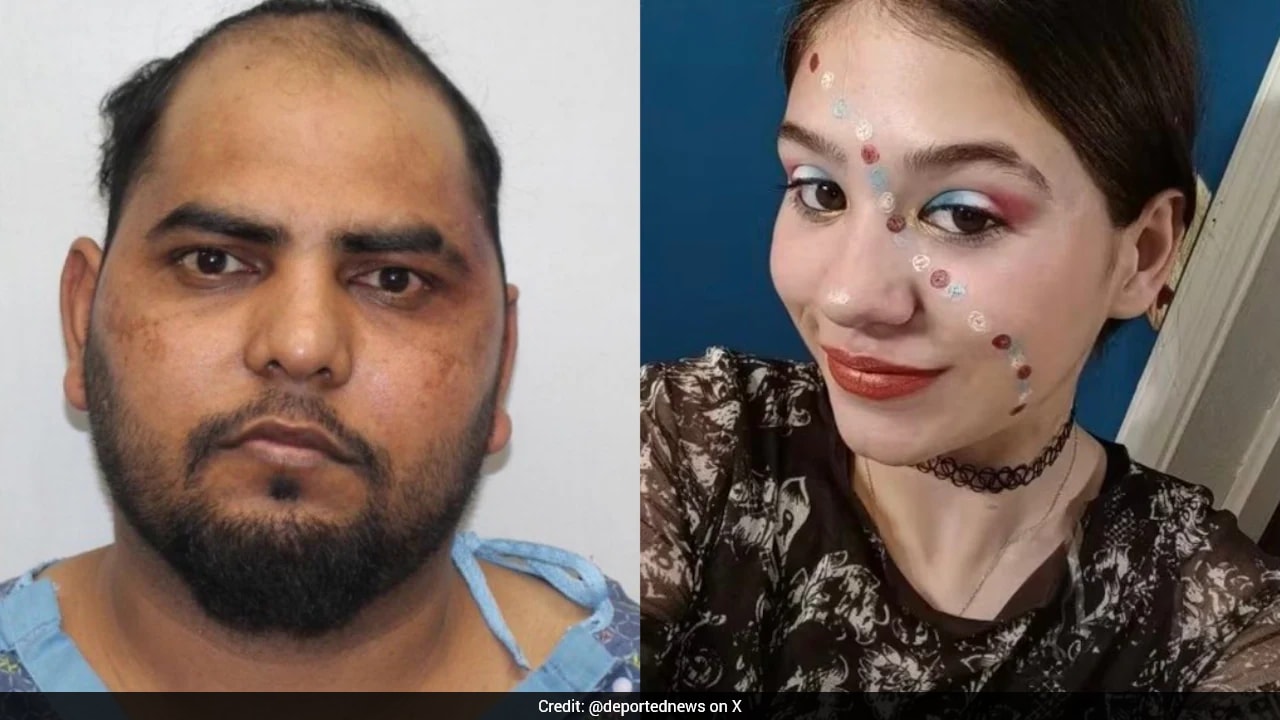
A 33-year-old man faces a litany of severe legal charges. Homicide by vehicle. Involuntary manslaughter. Reckless driving. The incident occurred on a major interstate transit route in the middle of the night. The vehicle veered off the road, striking an embankment with enough velocity to flip the car completely.
The driver survived. His passenger did not.
She was eighteen years old. She was also five months pregnant.
When you strip away the legal jargon of a court docket, this is what remains: a young woman on the absolute threshold of adulthood, carrying a life that had not yet begun, died in the dark on the side of a highway. The man behind the wheel, who was supposed to navigate them safely through the night, now faces decades behind bars.
It is easy to look at a headline like that, shake your head, and move on with your day. We compartmentalize horror because it keeps us sane. We tell ourselves that these things happen to other people, in other places, under extraordinary circumstances.
But the terrifying truth of the road is that the margin between a safe arrival and a fatal wreck is incredibly thin. It is measured in millimeters of brake pedal travel and single degrees of a steering wheel turn.
The Friction Between Choices and Consequences
To understand how a life ends on an embankment at 3:00 AM, you have to look at the psychology of the driver.
Every time we turn a key or push a start button, we enter an unwritten contract with everyone else on the road, and everyone inside our cabin. It is a contract of mutual preservation. We promise to maintain control of the massive, fast-moving object under our command.
Yet, familiarity breeds a dangerous kind of contempt. We drive so often that we forget we are piloting a lethal weapon. We look at our phones. We drive tired. We let our minds wander to our finances, our relationships, our anxieties.
Imagine a hypothetical driver on a long, dark stretch of highway. Let’s call him the Navigator. The road is empty. The monotony of the white lines passing by creates a lulling effect known as highway hypnosis. Your eyes are open, but your brain is essentially asleep.
Suddenly, a deer steps out. Or perhaps the passenger drops something, creating a momentary distraction. Or maybe, the exhaustion of a long day finally catches up, and the eyelids flutter shut for just two seconds.
In those two seconds, the vehicle travels nearly two hundred feet. Without any human guidance.
If the vehicle drifts toward the shoulder, the tires hit the rumble strips. The sound is like gunfire inside the cabin. Panic spikes. The natural human reaction to a sudden drift is to overcorrect. You yank the wheel in the opposite direction.
This is where physics takes over, completely indifferent to human emotion or regret.
When a vehicle is overcorrected at high speed, the weight shifts violently to one side. The tires lose their grip on the asphalt. The car begins to slide sideways. Once a vehicle goes sideways at seventy miles per hour, the driver is no longer a driver; they are a passenger in a metal box governed entirely by momentum. If that box hits a ditch, an embankment, or a guardrail while sliding, it trips.
It rolls.
And inside that rolling cabin, anything and anyone not secured becomes part of a chaotic, violent vortex.
The Invisible Stakes of the Passenger Seat
There is a distinct vulnerability to being a passenger, particularly a young one.
When you are eighteen, the world feels vast, open, and fundamentally malleable. You are no longer a child, but you haven't yet accumulated the scars of adulthood that teach you to be deeply cautious. You trust the older person in the driver’s seat. You assume that because they have a license and a few more years on this earth, they possess the judgment required to keep you safe.
Now add the layer of impending motherhood. Five months pregnant means the reality of a new life is no longer abstract. It is tangible. There are kicks. There are doctor appointments. There is an entire mental roadmap being drawn for a future that will require sacrifice, growth, and unconditional love.
When that passenger gets into a vehicle late at night, they are placing their life, and the life of their unborn child, entirely in the hands of the person behind the wheel.
That is the invisible stake of every car ride. We aren't just transporting bodies; we are transporting entire lineages. We are carrying the hopes of parents, the futures of children, and the emotional stability of everyone who loves us.
When a driver acts recklessly—whether through speed, impairment, or profound distraction—they aren't just risking a traffic ticket. They are gambling with a currency they can never repay if they lose.
The Shockwave of Aftermath
The crash itself happens in seconds, but the aftermath ripples outward for generations.
First come the first responders. People often forget the psychological toll exacted on the paramedics, firefighters, and police officers who have to arrive at these scenes in the dead of night. They are the ones who have to illuminate the wreckage with flashlights, assess the vitals, and face the grim reality of a life cut short. They see the ultrasound photos left on the dashboard. They see the debris of a life interrupted.
Then comes the notifications.
There is a specific knock on the door that every parent dreads. It usually happens in the early morning hours, when the house is freezing cold and the neighborhood is silent. Two officers standing on the porch, holding their hats.
In that moment, before a single word is spoken, the architecture of a family breaks.
The mother who was preparing to become a grandmother suddenly has to plan a funeral instead of a baby shower. The nursery furniture that was ordered has to be cancelled. The clothing, the tiny shoes, the toys—they all transform from symbols of hope into artifacts of profound grief.
But the destruction doesn't stop with the victim's family. It extends to the driver's side as well.
A 33-year-old man sitting in a jail cell waiting for a trial is a portrait of a different kind of ruin. The legal system moves with a cold, mechanical precision. It does not care about your remorse. It does not care that you didn't mean to do it. The law looks at the actions, the outcomes, and the statutes.
Homicide by vehicle is a charge that carries the weight of a lifetime. Even if the sentence is ten, fifteen, or twenty years, the real sentence is internal. Every time that man closes his eyes in a concrete cell, he will see the headlights. He will hear the sound of the metal tearing. He will live with the knowledge that his hands on the steering wheel caused the termination of his partner and his child.
That is the true cost of recklessness. It creates a prison long before the judge ever raps the gavel.
Redefining Our Relationship with the Road
We live in a culture that prioritizes speed and convenience above almost everything else. We want to get there faster. We want to multi-task while we travel. We treat the act of driving as a mundane chore rather than a high-stakes operational task.
How do we prevent the next headline? How do we ensure that another dawn doesn't break over a scene of preventable devastation?
It starts with a fundamental shift in how we view the driver’s seat. It requires us to reclaim the gravity of the task.
- The Power of Refusal: If you are a passenger and the person driving is tired, distracted, or impaired, you have the absolute right to demand the keys or refuse the ride. Your life is worth more than the awkwardness of a confrontation.
- The Discipline of the Silence: When you are behind the wheel, the rest of the world must wait. The text message, the notification, the playlist adjustment—none of it matters compared to the clean trajectory of your vehicle.
- The Recognition of Fatigue: Sleepiness is an impairment just as dangerous as alcohol. It slows reaction times, blunts judgment, and can cause micro-sleeps that end in disaster. If your eyes are heavy, pull over. The delay of an hour is a cheap price to pay for a lifetime.
We cannot rewrite the tragedy that occurred on that Pennsylvania highway. The court will hold its sessions, the evidence will be presented, and the sentences will be handed down. The 18-year-old girl and her child will remain gone, leaving behind an ache in the hearts of those who knew them that time will never fully heal.
But we can look at the wreckage from a distance and allow it to change us.
The next time you get behind the wheel in the dark, when the road stretches out before you and the world feels empty, look at the passenger seat. Look at the empty space next to you, or look at the person sitting there trusting you with their breath. Remember that you are holding the future in your hands. Drive like it.