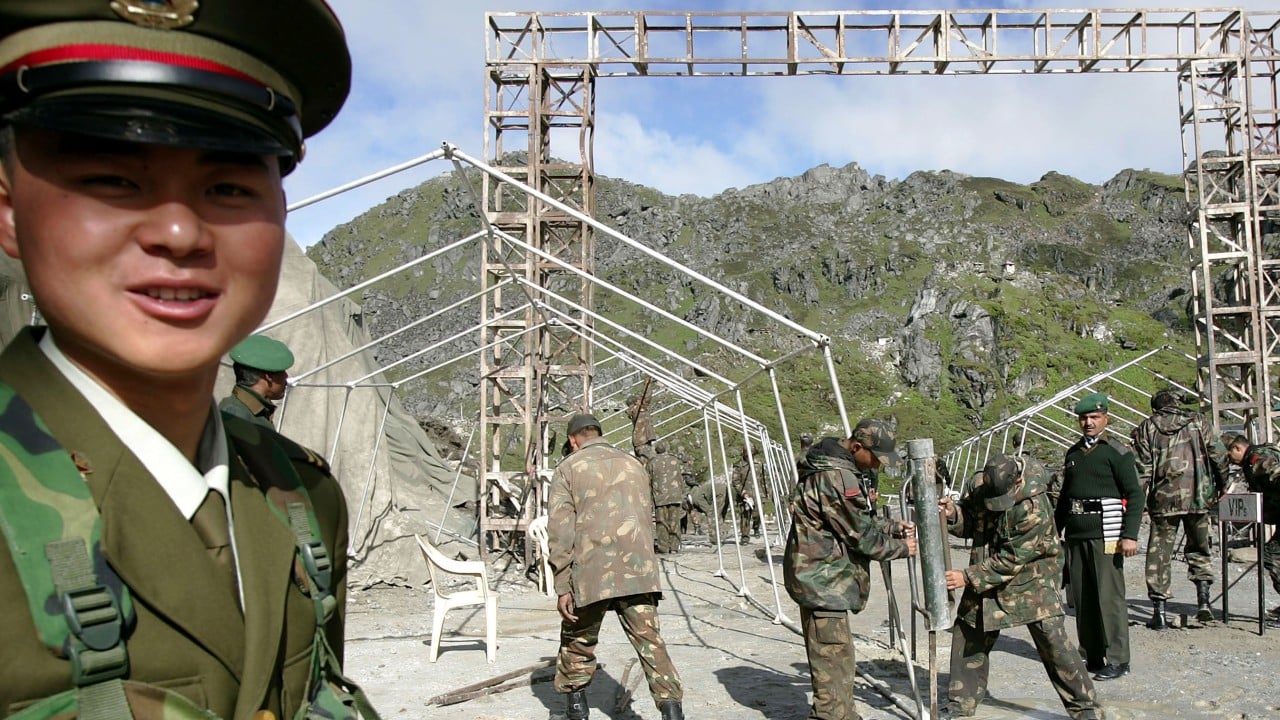
The press is salivating over the reopening of Himalayan mountain passes for trade between India and China. Headlines frame this as a diplomatic thaw, a sign of returning normalcy, and a pragmatic step toward regional prosperity.
They are wrong. Don't forget to check out our previous coverage on this related article.
This isn’t a bridge; it’s a mirage. Viewing the reopening of a high-altitude trade corridor as a signal of geopolitical detente is a failure to understand the structural friction between these two powers. The obsession with "reviving trade" at the border is a distraction from the reality that these nations aren't moving toward integration. They are digging in for a long-term resource war, and these minor trade concessions are merely tactical theater.
The Logistics Mirage
Let’s look at the numbers the enthusiasts ignore. Himalayan border trade is not, and has never been, a volume play. These passes are high-altitude choke points. They are seasonal. They are expensive to maintain and incredibly dangerous to traverse. To read more about the history of this, The New York Times offers an excellent summary.
When you hear about "reviving trade," the media implies that container ships on wheels are about to cruise over the Himalayas. The reality is mule tracks and small-scale barter.
I have spent enough time in logistics to know that if you cannot scale, you cannot compete. These border posts offer symbolic volume—a rounding error in the multi-billion dollar trade balance between Beijing and New Delhi. Calling this a "revival" is like calling a dripping faucet a flood. It provides the illusion of movement while the underlying systemic blockade remains untouched.
The Strategy Behind the Smile
Why would two nations locked in a border dispute, who have seen actual combat in the Galwan Valley in recent years, suddenly open these gates?
It isn't about cooperation. It’s about intelligence and population management.
Opening these routes allows both states to keep eyes on remote, restive border regions. It gives the military infrastructure on both sides a pretext to maintain a presence under the guise of "customs enforcement" and "border security."
Imagine a scenario where a state needs to justify permanent, hardened infrastructure in a contested zone. Building a commercial trade post is the perfect cover. It permits the movement of heavy machinery, fuel, and supplies under the banner of commerce. If you believe this is about merchants trading tea and textiles, you are missing the secondary—and primary—purpose: state control.
The Myth of Economic Interdependence
We have been sold a bill of goods since the early 2000s that trade makes war impossible. This was the era of the "Golden Arches Theory of Conflict Prevention." It was a failure of imagination then, and it is a dangerous delusion now.
India and China are not moving toward a future of mutual dependence. They are actively pursuing economic decoupling. India is aggressively pushing the "Make in India" initiative to shed its reliance on Chinese manufacturing. China is maneuvering to secure its supply chain through the Belt and Road Initiative, bypassing India entirely where it can.
When two neighbors have fundamentally different visions for regional hegemony, trade is not a lubricant. It is a weapon. Both sides use these small, visible trade points to signal to the international community that they are "responsible stakeholders." It is a PR performance aimed at Washington, Brussels, and Tokyo, not at each other.
Why the Consensus Is Failing
The common take is that these trade routes are precursors to a broader, more stable political arrangement. This ignores the reality of the Line of Actual Control. The border is not a line; it is a permanent site of friction.
By focusing on the "trade" aspect, analysts ignore the actual mechanics of this relationship:
- Asymmetric Dependency: China views the border trade as a negligible cost to maintain a massive military advantage. India views it as a necessary evil to keep local border populations from becoming entirely economically isolated.
- The Technology Trap: High-altitude logistics requires sophisticated surveillance. Both sides are turning these passes into testing grounds for automated, remote-controlled border monitoring. This is a cold, technological arms race masquerading as a flea market.
Stop asking how much trade will pass through these gates. That is the wrong question.
Instead, ask yourself: What military capabilities are being deployed to "secure" these trade routes? Ask why both nations feel the need to formalize a trade relationship while simultaneously reinforcing their respective artillery batteries within striking distance of these same passes.
The Reality of the Himalayan Barrier
If you want to understand the future of Asia, look at the investments in infrastructure. China is busy building dual-use facilities that can move divisions in hours. India is fast-tracking mountain tunnels and all-weather roads.
This isn't an investment in trade; it is an investment in mobilization.
The people promoting this "revival" as a win for peace are the same people who told you that the global financial system would prevent the invasion of Ukraine. They rely on models that assume actors prioritize wealth over power. In the Himalayas, power—sovereignty and territorial control—is the only currency that matters.
The border trade is a smoke screen. It provides a visual, comforting narrative for diplomats to share at conferences, giving them something to point to when they claim that "talks are moving forward." Meanwhile, the real movement on the ground is the silent, methodical hardening of defenses.
We are watching a slow-motion transformation of the world's most beautiful, inhospitable terrain into a high-tech, fortified cage. Do not be fooled by the news of open gates. Look at what is being moved through them, and look at the men with rifles standing on both sides, watching the trucks go by. They aren't there to count the cargo. They are there to make sure nobody gets too comfortable.
The trade is incidental. The tension is intentional.
Ignore the headlines. Watch the concrete pour.