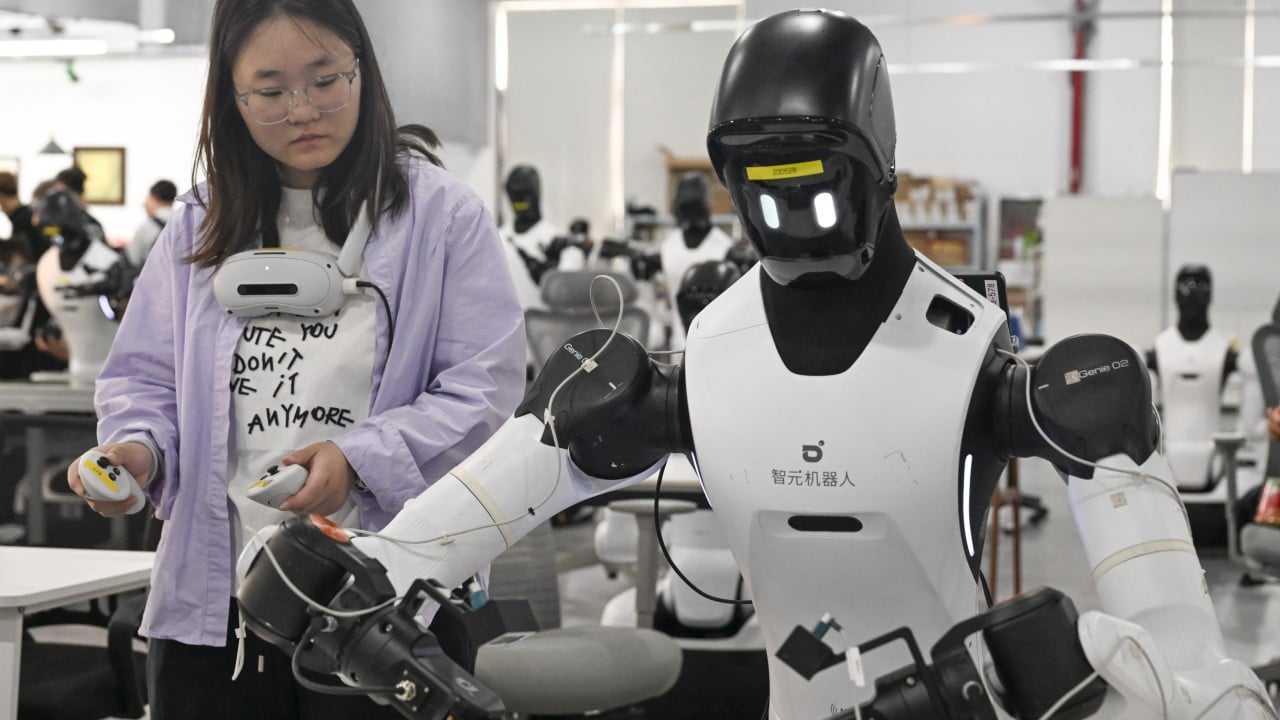
Every time a legacy university slaps a corporate logo on a new regional outpost and calls it an innovation hub, a venture capitalist somewhere buys another boat. The headlines roar about HKU partnering with big tech outfits to plant an expanded footprint in Shanghai, complete with shiny artificial intelligence labs and glossy brochures celebrating regional brilliance.
It sounds wonderful. It plays well at trustee dinners. It satisfies the bureaucratic need for forward-looking optics.
It is also largely a waste of prime real estate and expensive silicon.
I have spent the better part of two decades watching institutions throw capital at brick-and-mortar research centers under the comforting illusion that proximity equals progress. I have seen corporate partners use university sponsorships as PR shields while contributing little more than outdated codebases and marketing budget overflow. The lazy consensus says that clustering academics next to tech giants in mainland hubs will mint the next generation of breakthroughs.
The reality on the ground is far messier, far more bureaucratic, and fundamentally opposed to how real technological leaps actually happen.
The Geography Delusion
Universities love real estate because concrete feels permanent. When HKU expands its footprint into Shanghai alongside corporate heavyweights, administrators point to the square footage as proof of ambition.
Breakthrough intelligence work does not happen because three professors and a corporate vice president share a cafeteria. It happens in cramped Discord servers, in isolated basement apartments at three in the morning, and through distributed compute clusters scattered across jurisdictions that do not care about academic branding.
By building massive physical labs anchored to specific corporate sponsors, institutions create an administrative cage. You cannot iterate rapidly on model architectures when your hardware access requests have to clear a university procurement committee and a corporate compliance officer.
The corporate partners do not want radical disruption. They want talent pipelines and patents they can defend in court. Academia wants grant money and publication counts. Neither of those incentives aligns with building foundational shifts in machine reasoning.
The Corporate Co-Option Trap
Let us look at what actually occurs inside these high-profile corporate labs.
Big tech companies do not fund university labs out of philanthropic goodwill. They fund them to steer academic talent toward proprietary toolkits and away from open science. When a tech titan sponsors an artificial intelligence wing at a major regional campus, they are buying mindshare. They are ensuring that graduate students cut their teeth on their specific frameworks, use their specific cloud credits, and learn to think within the boundaries of their commercial ecosystem.
This is not research. This is customer acquisition disguised as higher education.
When you anchor academic freedom to corporate roadmap goals, you neuter the output. Real scientific inquiry requires following anomalies down dark alleys where commercial viability does not exist yet. Corporate-sponsored labs are allergic to dead ends. They demand deliverables, quarter-by-quarter metrics, and risk-averse increments that look good in shareholder decks.
What They Aren't Telling You About Regional Hubs
The push into Shanghai is framed as a bridge between top-tier academic rigor and commercial scale. The unsaid truth is that regulatory friction and data localization walls make global collaboration in these physical hubs increasingly performative.
If your researchers cannot pull open datasets from Western repositories without hitting bureaucratic latency, or if your corporate partners cannot deploy models globally due to compliance fragmentation, your shiny new lab is just an expensive intranet.
True engineering talent goes where constraints are lowest, not where the lobby has the best espresso machines. The best minds working on deep learning infrastructure today are not sitting in branded corporate-academic hubs waiting for a dean to cut a ribbon. They are working remotely, combining open-weight models, and moving faster than any institutional partnership committee can schedule its monthly sync.
Stop Funding Landmarks and Start Funding Friction
If universities actually wanted to accelerate the future of machine intelligence, they would stop building monuments. They would burn the campus expansion playbooks and do three uncomfortable things instead.
First, they would hand unrestricted compute budgets directly to individual graduate students with zero strings attached and zero corporate oversight. Let them fail fast, burn out servers, and chase bizarre hypotheses without a corporate sponsor reviewing their quarterly KPIs.
Second, they would sever the financial ties between specific corporate entities and foundational research groups. If a tech giant wants to fund basic science, they should write a check to an anonymous endowment and walk away. The moment a logo goes on the wall, the integrity of the inquiry is compromised.
Third, institutions need to accept that regional expansion is often just a real estate play masquerading as an intellectual movement. You cannot manufacture an ecosystem by dropping concrete into a tech district and inviting executives to a photo op.
The future of intelligence engineering will not be built in boardroom-approved university annexes. It will be built by people who ignored the press releases, bypassed the committee meetings, and built something useful in the dark.