Most people think they know exactly what happened on the morning of April 28, 1789. You've probably seen the movies. Fletcher Christian is usually a brooding hero, and William Bligh is a spitting, red-faced villain who whipped his men for sport. It's a great story. It's also mostly wrong.
The revolt aboard the HMS Bounty wasn't just a simple case of a bad boss getting what he deserved. It was a messy, complicated explosion of human ego, sexual desire, and the psychological toll of a long-term tropical vacation. If you want to understand why a group of professional British sailors decided to risk a death sentence by hanging, you have to look past the Hollywood tropes and look at the actual logs.
Why Fletcher Christian Really Cracked
Bligh wasn't a monster. Actually, by the standards of the 18th-century Royal Navy, he was surprisingly progressive. He was obsessed with the health of his crew. He hated physical punishment and used the lash far less than his contemporaries. He even brought a professional fiddler on board because he believed dancing would keep the men fit.
The problem wasn't that Bligh was cruel. It's that he was a jerk.
He had a sharp tongue and a habit of insulting his officers in front of the crew. Fletcher Christian, his protégé and friend, was the primary target of this verbal abuse. The tension reached a breaking point after a five-month stay in Tahiti. The men had lived in paradise. They had formed deep emotional and physical bonds with the local women. They had "gone native" in every sense of the word.
When the time came to leave with a cargo of breadfruit trees, the transition back to strict naval discipline was a shock. Christian was reportedly suffering from a breakdown. He actually planned to flee the ship on a small raft before he decided to take over the whole vessel. It was an impulsive, poorly planned act of desperation, not a calculated revolution.
The Most Incredible Open Boat Journey in History
Here is the part where William Bligh proves he was one of the greatest navigators to ever live. After the mutineers forced Bligh and 18 loyalists into a 23-foot launch, they expected him to die. The boat was dangerously overloaded. They had a pocket watch, a quadrant, and almost no charts.
Bligh didn't die. He sailed that tiny boat 3,618 nautical miles.
Think about that. They were starving, dehydrated, and constantly under threat from hostile islanders. Bligh managed the rations with obsessive precision, weighing out bread against the weight of a pistol ball. He navigated to Timor using nothing but memory and basic tools. It’s a feat of endurance that defies logic. While the mutineers were busy trying to hide, Bligh was busy pulling off a miracle. He returned to England, reported the crime, and the hunt for the Bounty began.
The Pitcairn Island Escape and the Aftermath
The mutineers knew the British Navy would never stop looking for them. Some stayed in Tahiti, where they were eventually captured by the HMS Pandora and brought back to face trial. But Christian and eight others took several Tahitians—men and women—and vanished.
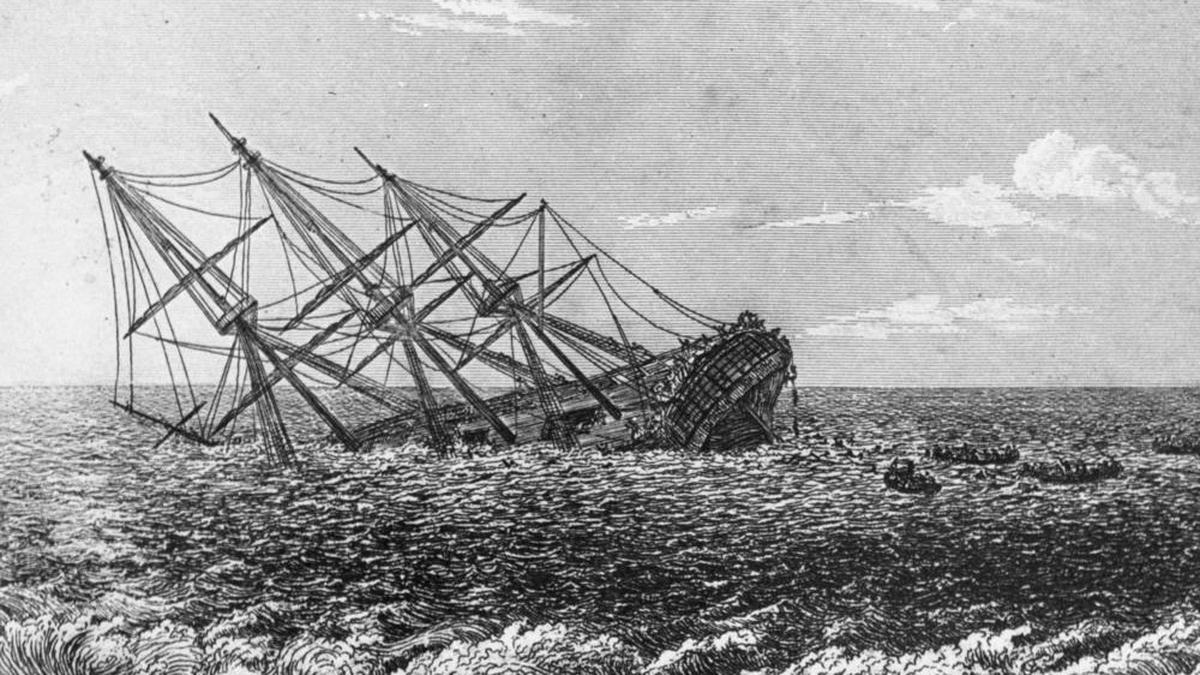
They found Pitcairn Island. It was misplaced on the Admiralty charts of the time, making it the perfect hideout. They stripped the Bounty of everything useful and burned the ship to the waterline to ensure they couldn't be seen from the sea.
But paradise didn't last. Life on Pitcairn turned into a nightmare of jealousy and violence. Within a few years, most of the men—including Fletcher Christian—were dead, killed by each other or by the Tahitian men who had been treated like servants. By the time an American sealing ship rediscovered the island in 1808, only one original mutineer, John Adams, was still alive, presiding over a community of women and children.
Why We Still Care About the HMS Bounty Mutiny
The story survives because it’s the ultimate workplace dispute gone wrong. It’s a lesson in leadership. Bligh had the technical skill but lacked the emotional intelligence to manage his team. Christian had the charisma but lacked the stability to handle the pressure.
If you're interested in seeing the physical legacy of this event, you can still visit Pitcairn today. The descendants of the mutineers still live there. They speak a unique dialect of English and Tahitian. It’s a living museum of a morning in 1789 when everything went sideways.
If you want to dive deeper into the technical side of the voyage, read Bligh’s own logs. They’re dry, but they show the mind of a man who was clearly misunderstood by history. You can also track the archeological remains of the ship in Bounty Bay, though there isn't much left but some charred timbers and a few anchors.
Stop thinking about the movie versions. The real story is much darker and far more interesting. Check out the records at the National Maritime Museum if you’re ever in London. They hold the original documents that prove the "villain" Bligh might have been the most impressive person on the ship.