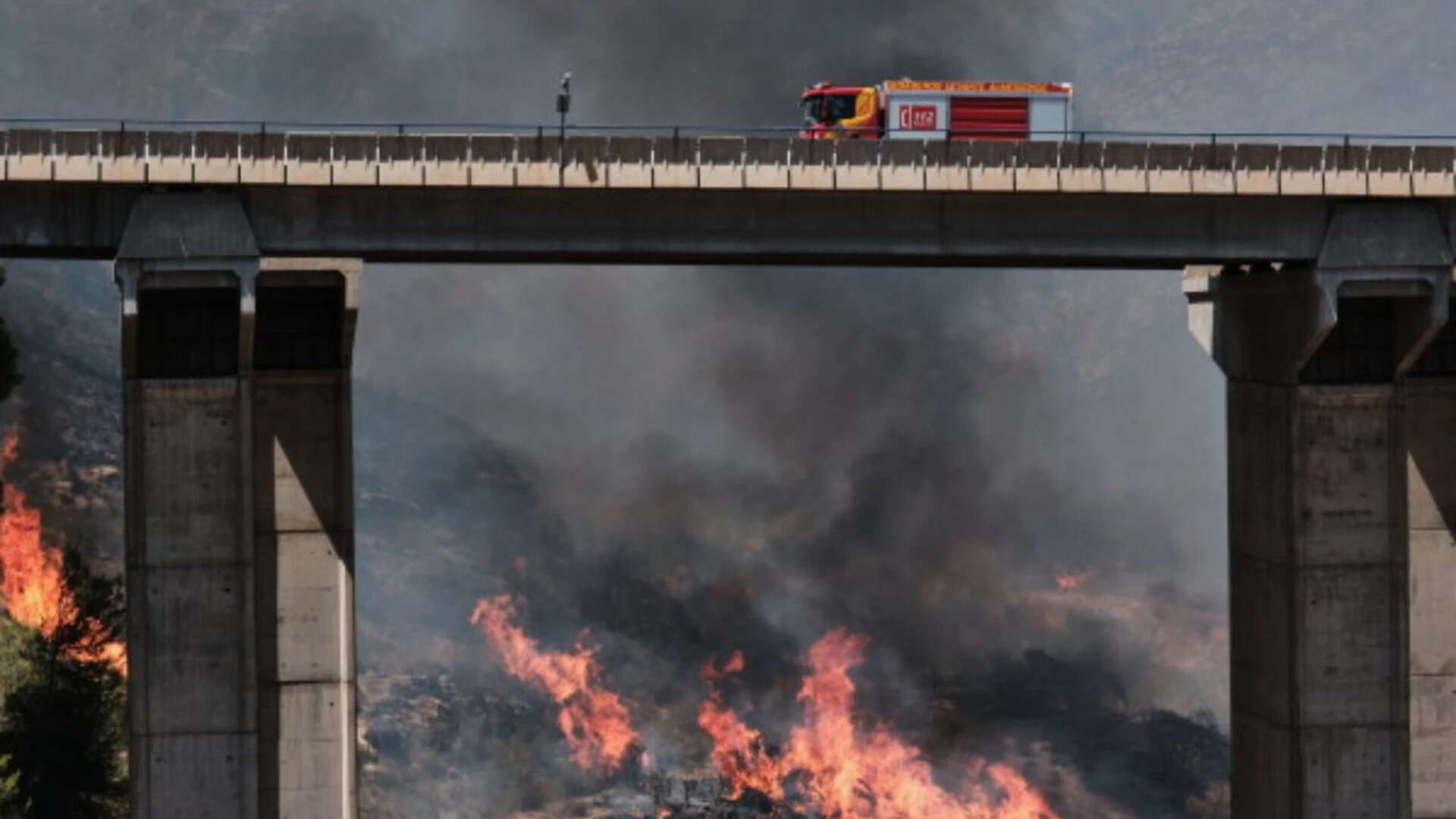
You pack your boots, check the weather app, and head out for a scenic walk under the Mediterranean sun. It's a classic holiday plan. But a sudden shift in wind can turn an idyllic trail into a raging furnace within minutes.
That's the terrifying reality facing tourists in southern Europe. The recent disaster in Almeria, Spain, proves that traditional hiking safety rules are no longer enough. A British couple visiting the region ended up trapped down a steep ravine near the village of Bedar, caught in a fast-moving wildfire that has already claimed 12 lives and scorched over 6,000 hectares.
When Civil Guard officers finally found them, the hikers were semi-conscious, suffering from severe burns covering 40% of their bodies. They survived by a miracle and a gut instinct. Search teams initially dismissed their faint cries as an echo in the charred landscape. Sergeant Pedro Barre noted that experience told him to look one more time, leading his team down the hillside to initiate a grueling two-hour rescue.
The fact that these hikers could cry out at all with 40% burns was a monumental physical feat. While they are currently recovering in intensive care, their ordeal highlights a massive, deadly gap in how travelers perceive summer risks abroad.
The Dry Riverbed Trap and Fleeing the Wrong Way
When a wildfire moves toward you, your survival instinct screams at you to run. But running without a strategy is exactly how people are dying. Andalusian emergency officials revealed a grim detail about the Almeria blaze. Many of the 12 victims perished because they ignored shelter-in-place instructions and tried to outrun the flames.
In rural Spain, dry riverbeds look like natural pathways out of trouble. They are clear of dense trees and seem to offer a direct route away from the mountain brush.
They are actually death traps.
A dry riverbed acts like a chimney during a wildfire. The wind funnels heat, thick smoke, and flying embers directly down these geographical trenches at terrifying speeds. In the Almeria fire, seven people died on foot after abandoning their cars in these low-lying areas. Another four victims, believed to be British nationals, were found dead inside a right-hand-drive vehicle after getting trapped on narrow rural roads.
If you are hiking and see smoke, heading down into ravines or riverbeds to hide is the worst move you can make. Fire travels uphill faster than it travels downhill, but smoke and intense heat collect rapidly in depressions and canyons.
Why Your Phone Won't Warn You in Time
A major point of contention among Almeria residents and tourists is the lack of communication during the crisis. Many evacuees complained that they received no mobile emergency alerts before the flames reached their neighborhoods, forcing them to flee with nothing but their passports.
Local authorities defended the lack of mass mobile alerts by claiming it would have caused widespread panic outside the danger zone, clogging vital evacuation routes.
You cannot rely on local government infrastructure to send a timely text to your foreign phone. When you travel to high-risk zones during summer heatwaves, you have to take tracking the danger into your own hands.
Before hitting a trail in southern Europe, download regional emergency apps like My112 in Spain. Don't just look at the daily temperature. Check the local fire risk index, which calculates wind speeds and humidity levels alongside raw heat. If the rating is high or extreme, stay off the trails entirely.
Survival Steps If You See Smoke on a Trail
If the worst happens and you spot a wildfire while hiking, you don't have time to debate your next move. Here is exactly what to do.
- Move downwind and flank the fire: Never try to outrun a fire directly ahead of you if the wind is blowing toward your back. Move sideways relative to the fire's path to get around the flanks of the blaze.
- Find a burn zone: If you are cornered, look for areas that have already burned. Walking onto scorched earth where the fuel is already consumed is infinitely safer than staying in paths of dry brush and esparto grass.
- Avoid the ridges and the valleys: Don't head to high ridges where fire climbs rapidly, and don't drop into narrow ravines where smoke suffocates you. Look for flat, cleared areas with minimal vegetation, like a wide dirt road or a rocky outcrop.
- Protect your lungs: Smoke inhalation kills far quicker than actual flames. Wet any clothing you have with your remaining drinking water and tie it over your mouth and nose. Stay low to the ground where the air is cleaner.
The holiday landscape has shifted. Intense summer heatwaves regularly push southern European temperatures past 40°C, turning dry scrubland into a ticking time bomb. Treat the wilderness with the same respect and caution you would show a volatile winter mountain peak. Your life depends on it.