The air smells of burnt diesel and wet pine. Outside a rusted hangar somewhere near the eastern edge of Europe, a mechanic wipes grease from his knuckles using a rag that has long lost its original color. Above him, the concrete roof is scarred by old concussions, and the horizon is a bruised purple line where the sky meets a flat, indifferent earth.
He does not look up when the siren wails in the distance. Sirens are background noise now, like the hum of a refrigerator or the ticking of a broken clock. Instead, his eyes remain fixed on the belly of a machine resting on steel jacks.
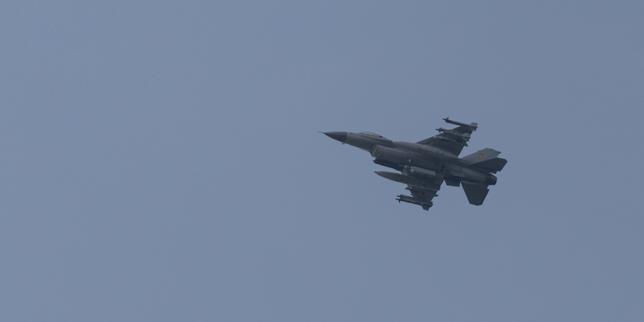
It is a Falcon. Slender, sharp-nosed, built decades ago for a cold war that its designers assumed would never thaw into actual fire. Today, it sits stripped of its mystic aura, reduced to a high-performance skeleton awaiting a meal it may not receive.
In command centers hundreds of miles away, analysts talk about supply chains, procurement cycles, and inter-governmental logistics. They speak in clean, sanitary syllables. They map trajectories on glass screens and debate the friction points of foreign aid budgets. But down here, where the damp seeps into the marrow of your bones, the reality is starker and far more fragile.
There are not enough arrows left in the quiver.
To understand why a fighter jet grounded for lack of munitions is more than just a military statistic, you have to understand what these aircraft actually represent in the psychological architecture of a besieged nation. They are not merely delivery systems for ordnance. They are floating pieces of sovereign territory, moving bulwarks cutting through contested clouds, reminding the people below that the sky does not entirely belong to the invader.
When a pilot climbs into that narrow cockpit, snapping straps into place and feeling the sudden, violent roar of the turbine ignition, an invisible contract is forged. The state promises him wings; the state promises him teeth.
Right now, that contract is fraying at the edges.
Reports from the front lines and intelligence briefings confirm a quiet crisis unfolding behind the headlines. The advanced fighter jets transferred to Kyiv after months of diplomatic agonizing are facing a severe bottleneck. Not in airframes. Not in trained pilots, though every single one of those aviators is a scarce resource carved out of years of grueling preparation. The shortage is deeper, more mundane, and infinitely more dangerous: the specialized missiles required to feed their weapon stations.
Consider what happens when a jet takes off without the precise armament designed for its fire-control systems. It becomes an expensive, vulnerable target—a high-speed scout flying blind in a microwave of hostile radar. Air combat at supersonic speeds leaves zero room for improvisation. You cannot improvise a radar-guided interceptor missile in a makeshift workshop. You cannot substitute a precision-guided munition with raw courage. Physics is stubbornly literal.
This is the hidden cost of prolonged attrition. Wars are rarely lost in a single cataclysmic afternoon. More often, they bleed out slowly, drop by drop, missile by missile, as the industrial capacity of the free world stumbles to keep pace with the ravenous appetite of an active front.
Listen closely to the silence between the artillery bursts. That is where the war is actually being decided.
It is decided in the quiet offices of defense contractors who are discovering that turning on a cold production line is like trying to restart an ancient locomotive whose boiler has rusted solid. It is decided in customs depots where paperwork meets bureaucratic inertia while winters loom like an approaching glacier.
The pilots know this. They sit in briefing rooms with mugs of lukewarm tea, staring at maps where red arrows push relentlessly westward. They study the radar signatures of incoming bombers, calculating the intercept windows, knowing precisely how many rounds remain in the magazines. They do not complain. Complaint is a luxury for people who have options. In their world, you manage the variables you can control, and you try not to think about the mathematical certainty of running dry.
We have seen this script before in history. The brave defenders holding the line with exceptional skill, outmatching their adversaries in tactical brilliance, only to find themselves strangled by the unromantic tyranny of logistics. Bravery makes for great poetry, but high-explosive ordnance stops tanks.
The friction between diplomatic ambition and industrial reality is now reaching a critical tipping point. Pledges made on television stages under bright lights do not translate instantly into steel and guidance chips on the tarmac. There is a lag—a terrifying, yawning chasm between the promise of support and the delivery of the payload.
And time, in this equation, is denominated in human lives.
Every day that passes without an emergency replenishment shipment narrows the operational envelope for these aircraft. Without missiles, the jets are tethered to the ground, reduced to defensive posture tokens rather than active shields. The strategic initiative begins to wobble. The enemy notices. An adversary does not need to read classified memos to know when the sky has gone quiet; they simply push harder, fly bolder, and press their advantage deeper into the contested blue.
Back in the hangar, the mechanic finishes wiping his hands. He pats the gray fuselage of the Falcon twice, a gesture halfway between a superstition and a prayer. The jet stands silent, cold, and waiting. Somewhere out there, beyond the treeline, the war continues its relentless march. The question is no longer whether the men and women flying these machines have the will to fight.
The only question left is whether the world standing behind them remembers how fast an empty quiver empties a nation.