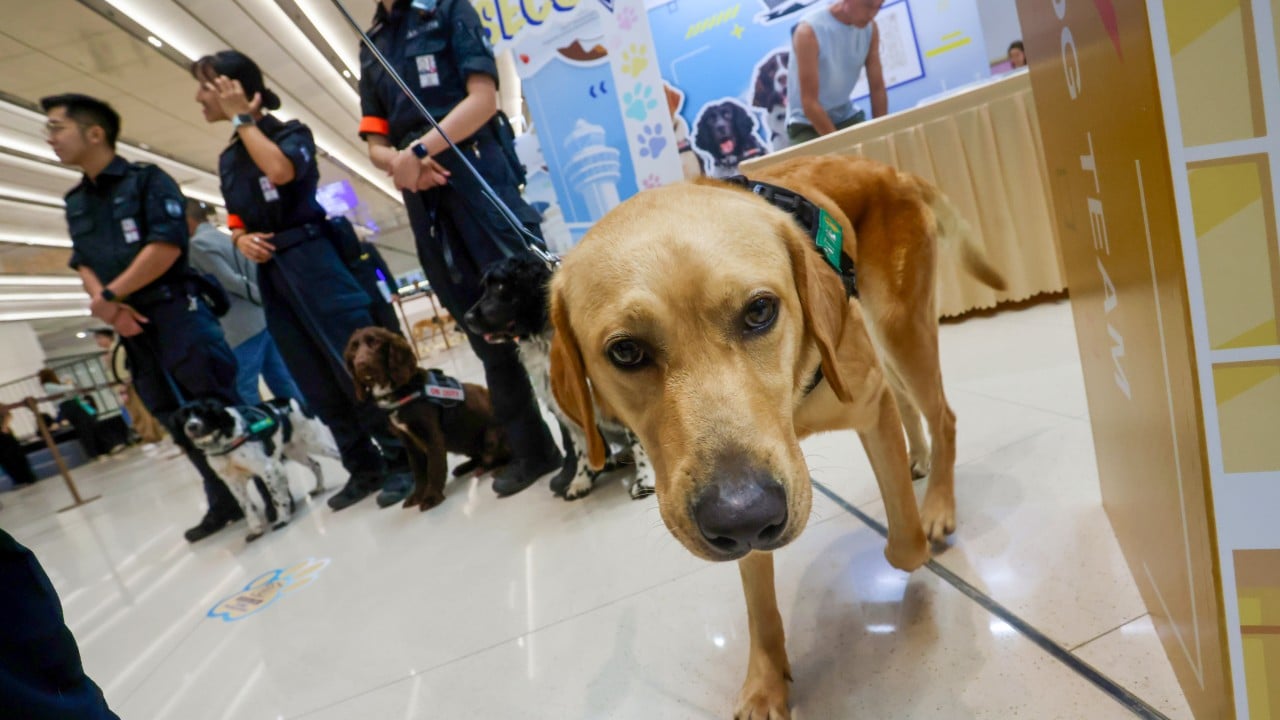
An abandoned bag sits next to a check-in kiosk. In most major aviation hubs, this immediately triggers a tense, slow-moving protocol. Security cordons go up. Handlers carry in heavy manual scanning equipment. Passengers start checking their watches as delays ripple through the terminal. The whole ordeal routinely eats up at least ten minutes of tense waiting.
But at Hong Kong International Airport, a Springer Spaniel can sprint to the scene, sniff the handles, and give a definitive all-clear in just over ten seconds. Meanwhile, you can find related developments here: The Helsinki Handshake and the Architecture of a New World.
Ten seconds versus ten minutes. When you scale that efficiency across an aviation hub managing millions of passengers, it changes everything.
As the newly expanded Terminal 2 reopens its doors to handle surging passenger traffic alongside the massive Three-runway System, the pressure is on to keep foot traffic moving without letting down a single security guardrail. The solution isn't just flashy facial recognition screens or heavier baggage scanners. It's a squad of twenty highly trained detection dogs. To see the full picture, check out the detailed article by The Guardian.
The Aviation Security Company Limited Canine Unit, known as the Avseco Canine Unit, just marked its fifth anniversary. What started in 2021 as a specialized pilot project with imported dogs from the Netherlands and Belgium has grown into a major pillar of landside security. With Terminal 2 coming back online, these dogs are stepping into their biggest role yet.
Speed and Scent Over Heavy Hardware
A lot of travelers assume that high-tech airport infrastructure means everything relies on algorithms and X-rays. It doesn't. Traditional tech is great for structured checkpoints, but it's incredibly rigid when dealing with the chaotic environment of a public, non-restricted landside terminal.
The Avseco dogs hunt for what machines often miss in a crowd: firearms, ammunition, and explosives.
Manual inspections are slow. They require human staff to isolate a threat, set up a perimeter, and carefully examine structural seams or fabric folds. Canines skip the physical friction. Their sense of smell operates on a level that allows them to track microscopic vapor trails left by black powder or volatile chemical compounds while moving at a brisk walk.
Avseco Executive Director Jacob Cheung Tat-keung has been blunt about the math. The twenty dogs currently on strength are enough to absorb the extra real estate of Terminal 2 because their operational pace is so high. They don't require the airport to completely double its human patrol roster. Instead, staff are redeployed strategically from Terminal 1, while the canines act as force multipliers.
The Dual Wardrobe Strategy
If you spot an Avseco dog working the floor in Terminal 2, look at the vest. It tells you exactly what kind of headspace the animal is in. The unit operates under a strict dual-role system that balances hard security with passenger psychological comfort.
- The On Duty Vest: When the dog wears this gear, it is actively working. It's sniffing baggage, tracking paths through check-in lines, and scanning crowds for prohibited items. The handler is focused entirely on the dog's behavioral cues. You don't approach them.
- The Pat Me Vest: This changes the dog into a goodwill ambassador. Traveling causes massive anxiety for a lot of people. Delayed flights, tight transfers, and long lines wear down patience. Switching the dogs to an interactive role lets passengers decompress by petting them, turning a security asset into a tool for crowd morale.
This isn't just about making travelers smile. It's a calculated deployment strategy. A dog can't maintain peak scent-detection focus for hours on end without its accuracy dropping.
The shift structure is highly disciplined. A typical day lasts nine hours, but actual active patrol time is strictly capped at four hours total per dog. To keep their senses sharp, the animals take a hard 30-minute rest break after every 30 minutes of floor patrol. The rest of their shift is divided between grooming, feeding, specialized agility training, and ambassador duties.
The Logistics of Breeding and Infrastructure
You can't just buy a dog, give it a few treats, and put it to work in a busy airport. The infrastructure behind the scenes at Chek Lap Kok has quietly doubled in size to support this expansion.
The airport's dedicated kennel facility, located within the restricted area, underwent a massive upgrade to match the growing team. It's built based on the best practices of local disciplined forces like the Hong Kong Police Force and international working dog standards. We are talking about custom indoor climate-controlled resting blocks, dedicated grooming bays, and specialized indoor training zones. Right outside, a 2,400-square-meter training ground gives the dogs space for endurance and agility runs.
The training itself takes twelve weeks of grueling, daily repetition. Handlers and dogs are paired up permanently to build an intense bond. They learn advanced obedience, desensitization to loud jet engines and screaming crowds, and precise scent discrimination.
They also don't work in isolation. The unit's longevity relies on a deep web of inter-departmental collaboration. Avseco works directly with the Hong Kong Police Force, the Customs and Excise Department, and the Agriculture, Fisheries and Conservation Department. During major joint exercises, you will see dogs from different departments working the same zones, sharing intelligence on changing threat profiles, and ensuring there are zero blind spots between immigration checkpoints and the public lobby.
What This Means for Your Next Flight
The reopening of Terminal 2 isn't just a win for airport capacity; it's a field test for how modern hubs handle security bottlenecks. If you're flying out of Hong Kong soon, expect to see more paws on the ground.
Don't be alarmed if a Springer Spaniel or a Labrador walks past your luggage trolley. They aren't there because there's an active threat. They are there to ensure the line you are standing in keeps moving forward.
If you want to make their job easier, keep your bags with you at all times. Unattended luggage ruins everyone's schedule, even if a dog can clear it in ten seconds flat. And if you see a handler walking a pup sporting that bright "Pat Me" vest, take a second to say hello. It's the easiest way to drop your pre-flight stress before you head through the departure gates.