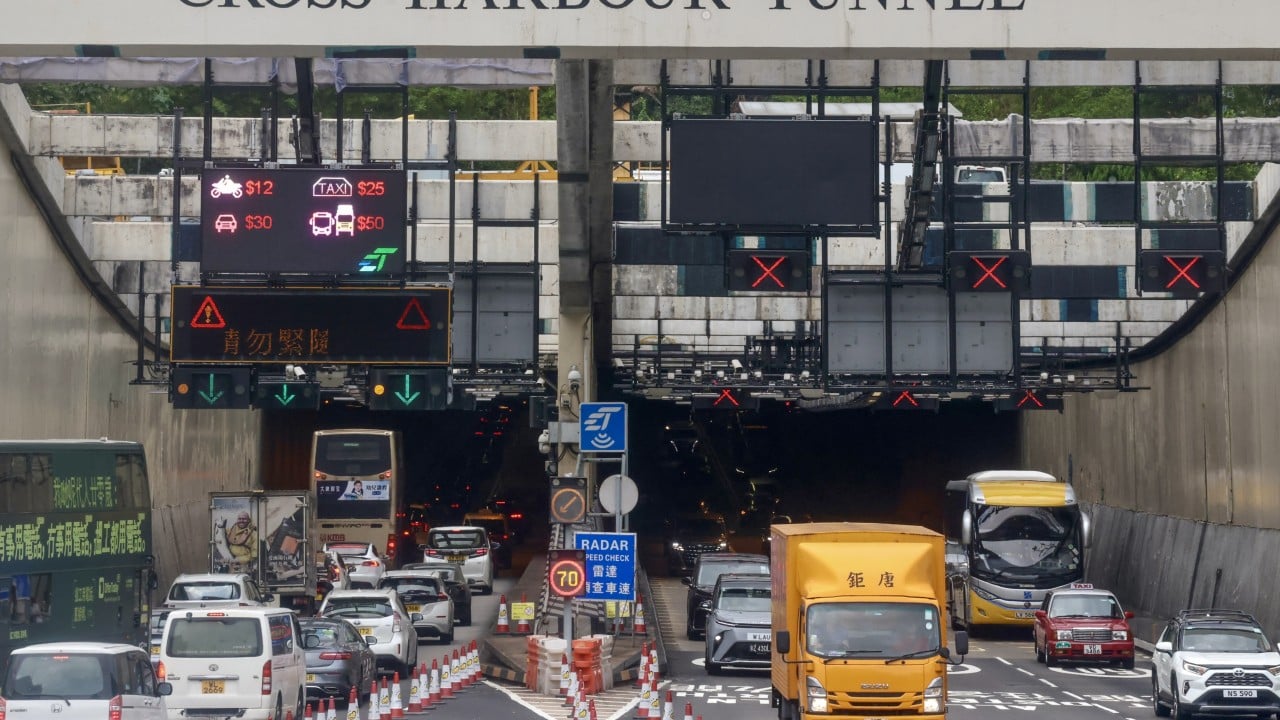
The Hong Kong government is slashing tunnel tolls by 50 percent for commercial vehicles starting May 17, 2026, a desperate move to stabilize a logistics sector bucking under the weight of historic fuel prices. This two-month emergency measure, announced by the Inter-departmental Task Force on Monitoring Fuel Supply, applies to buses, goods vehicles, light buses, and taxis across all government-tolled tunnels and the Tsing Sha Control Area. While the headline suggests relief, the math behind the mandate reveals a much more complicated reality for the city’s supply chain.
The Mathematics of Survival
For a logistics operator in 2026, the ceiling has effectively collapsed. Diesel prices in Hong Kong have climbed to a staggering HK$32.97 per litre, driven by intense geopolitical instability in the Middle East that has sent global crude markets into a frenzy. In this environment, a 50 percent reduction in a tunnel toll—while welcome—is a drop of water in a forest fire. You might also find this similar article useful: Vietnam Petroleum Chess Why The Blockade Plea Is Strategic Theater.
Consider a standard heavy goods vehicle. Before this subsidy, a round trip through the Western Harbour Crossing during peak hours was a calculated, painful expense. Now, the government is absorbing half that hit until July 16. However, when fuel accounts for nearly 40 percent of total operating costs for local hauliers, the toll reduction only offsets about 3 to 5 percent of the monthly overhead. It is a stay of execution rather than a pardon.
The HKeToll Variable
Unlike previous relief packages that required mountains of paperwork, this rollout is being handled entirely through the HKeToll system. The automation is efficient. Drivers do not need to apply; the sensors at the tunnel portals will simply register the reduced rate. As extensively documented in recent articles by Bloomberg, the effects are notable.
But this efficiency masks a growing friction point in the taxi trade. While taxi owners benefit from the lower tolls when roving, passengers are still legally required to pay the full statutory toll. This creates an awkward, often confrontational dynamic inside the cab. The driver pays the discounted rate to the government, but the passenger pays the full rate to the driver. This "surplus" is intended to help the driver offset their own surging fuel costs, yet without clear public communication, it has become a source of daily disputes on the city’s roads.
Why Two Months is Not Enough
The July 16 expiration date for this measure is an optimistic bet on global stabilization that few analysts believe will happen. The 2026 fuel crisis is not a temporary glitch. With Hong Kong now recording the highest gasoline prices in the world, the structural integrity of the "last-mile" delivery economy is at risk.
Local couriers and food delivery networks are already discussing permanent surcharges. If the government allows these toll discounts to expire in July without a corresponding drop in Brent Crude, we will see a massive "cost-push" inflation event. Every carton of milk and every e-commerce package delivered in the city will carry the ghost of these energy prices.
The Tai Lam Precedent
We saw the precursor to this strategy in May 2025, when the government took over the Tai Lam Tunnel. Back then, the goal was traffic rationalization—shifting cars away from congested routes by lowering fees. Now, the mission has shifted from traffic management to economic survival.
The government is using the tunnel infrastructure as a fiscal lever because they have few other options. They cannot control the price of oil in the Strait of Hormuz, but they can control the price of the asphalt under a truck's wheels. The problem is that this lever is becoming less effective as the price of fuel continues to decouple from traditional economic logic.
Infrastructure as a Subsidy
The use of the Tsing Sha Control Area and government tunnels as a subsidy channel is a shift in how Hong Kong views its infrastructure. Historically, tunnels were revenue generators or tools for congestion pricing. In 2026, they have become a buffer for the retail and logistics industries.
If this two-month window fails to provide a meaningful cushion, the next step is likely a direct fuel subsidy—a move the government has resisted due to the massive fiscal drain. For now, the 50 percent discount serves as a high-stakes experiment. It is a gamble that a small reduction in "friction costs" can prevent a total breakdown in the movement of goods across the territory.
Logistics firms are not waiting for July to find out. They are already rerouting fleets, consolidating shipments, and in some cases, mothballing older, less fuel-efficient vehicles. The half-price toll is a lifeline, but the water is still rising.