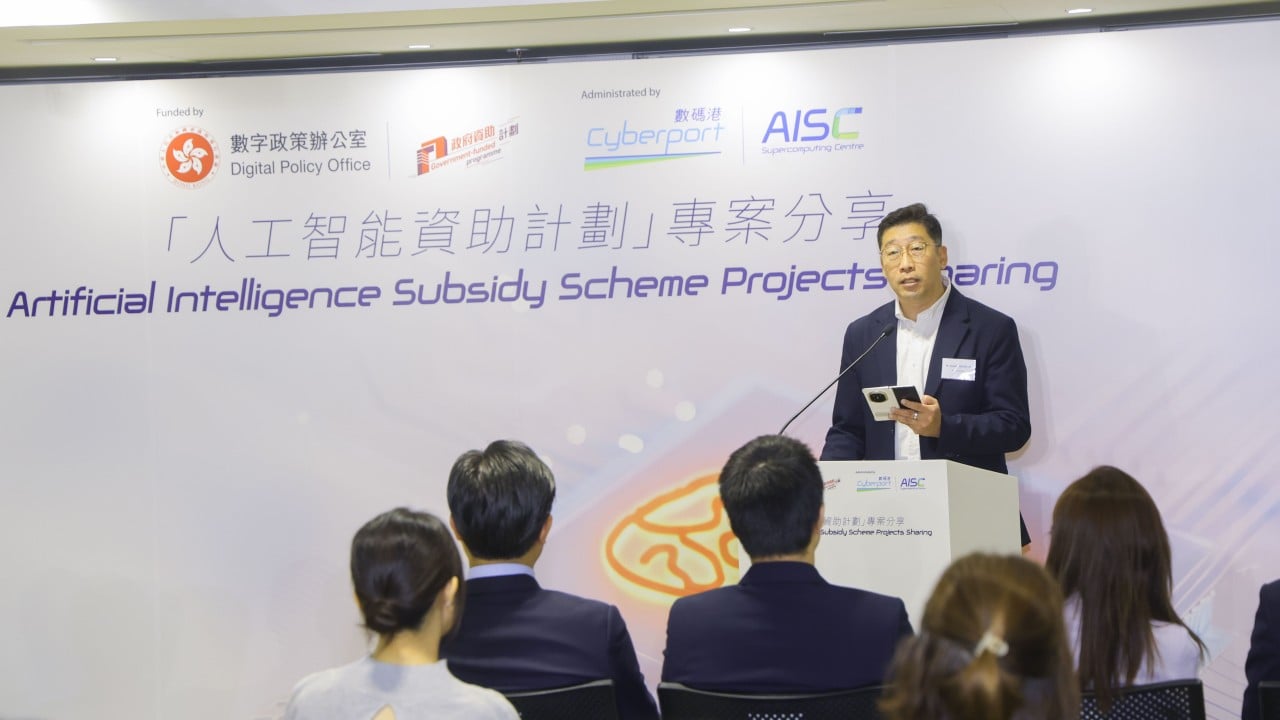
Capital flows differently when desperation drives policy. Hong Kong has poured billions of dollars into artificial intelligence initiatives, attempting to purchase a leading position in the global technology race through sheer financial force. Government coffers opened wide to fund innovation labs, talent acquisition schemes, and massive infrastructure projects designed to turn the financial hub into an intelligence-driven powerhouse. Yet beneath the glossy press releases and executive ribbon-cuttings lies a persistent disconnect. The territory is throwing cash at tomorrow's algorithms while the foundational mechanics of its traditional commercial ecosystem struggle to adapt.
Financial centers do not transform into Silicon Valley overnight simply by writing checks. For decades, the city thrived on a distinct set of advantages: low taxes, a frictionless legal system inherited from British common law, and a geographical position serving as the primary bridge between mainland China and global capital markets. When geopolitical friction intensified and regional competition from Singapore sharpened, the local administration panicked. Instead of addressing structural rigidity in labor markets and commercial stagnation, officials pivoted toward the most convenient buzzword in global economics. Artificial intelligence became the designated cure-all for deep-seated economic anxieties. You might also find this related coverage insightful: The Physics of Vertical Transit: Dissecting Megatall Elevator Engineering.
The monetary commitment is staggering. Billions have been earmarked for advanced computing facilities, university research grants, and direct subsidies for startups claiming to build disruptive machine learning models. Venture capital funds backed by public money now chase early-stage enterprises across the New Territories and Cyberport. But money distributed without a mature, self-sustaining entrepreneurial culture often evaporates into administrative overhead and theoretical research that never makes contact with actual market demand.
Consider the talent pipeline. Building sophisticated neural networks requires deep domain expertise in mathematics, data science, and hardware architecture. Hong Kong universities produce world-class graduates, but many of them immediately migrate to technology giants in Shenzhen, London, or Silicon Valley. The local corporate landscape, traditionally dominated by rigid conglomerates rooted in real estate and shipping, historically viewed software development as an IT expense rather than a core strategic asset. Traditional employers rarely know how to integrate advanced machine learning models into supply chains or customer service operations. As a result, the newly minted PhDs funded by government grants find themselves trapped between academic isolation and local corporate apathy. As highlighted in latest coverage by The Verge, the effects are worth noting.
Furthermore, the relationship between Hong Kong and mainland China's technological juggernauts introduces a complex dynamic. While integration with the Greater Bay Area offers access to vast manufacturing capacity and massive data pools across the border, it also forces local startups to compete directly with giants based in Shenzhen and Beijing. Competing against entities with infinite venture backing and state-directed resource allocation is a brutal endeavor. Pouring public funds into local firms without a clear comparative advantage often means subsidizing entities that will inevitably get outscaled by mainland competitors.
Infrastructure development faces similar hurdles. High-performance computing requires vast amounts of electrical power and specialized cooling systems, both of which are scarce commodities in a densely populated, resource-dependent territory. Proposals for sprawling data center campuses run straight into the brick wall of astronomical real estate costs and strict environmental regulations. While neighboring jurisdictions construct sprawling facilities with relative ease, local infrastructure projects bog down in bureaucratic friction and land allocation disputes.
The strategy relies heavily on the assumption that capital injection automatically generates innovation. Economic history suggests otherwise. True technological revolutions emerge from organic problem-solving, where regulatory freedom allows small companies to fail, iterate, and scale without state interference. When the government dictates the direction of innovation through targeted subsidies, it frequently rewards compliance and political alignment over raw market utility. Founders spend more time writing grant applications to satisfy bureaucratic key performance indicators than they do building products that customers actually want to buy.
Commerce in the territory faces an identity crisis. The traditional pillars of trade and finance are under pressure, and officials treat artificial intelligence as a magic shield against structural decline. But algorithms do not write commercial leasing contracts, nor do they replace the need for vibrant small businesses facing crushing rental costs and shrinking consumer spending. Injecting billions into high-tech verticals while ignoring the commercial blood flow of the street-level economy creates a bifurcated reality. High-profile research centers display impressive hardware, while traditional merchants close their shutters across commercial districts.
Sustainable technological growth demands patience, regulatory flexibility, and a willingness to let market forces punish inefficiency. By attempting to compress decades of organic ecosystem development into a few fiscal budget cycles through sheer spending velocity, the administration risks building an expensive facade. The billions spent will undoubtedly yield patents, headlines, and temporary employment spikes. Whether those investments can survive the inevitable withdrawal of government life support remains the unexamined question at the heart of the territory's digital transformation.