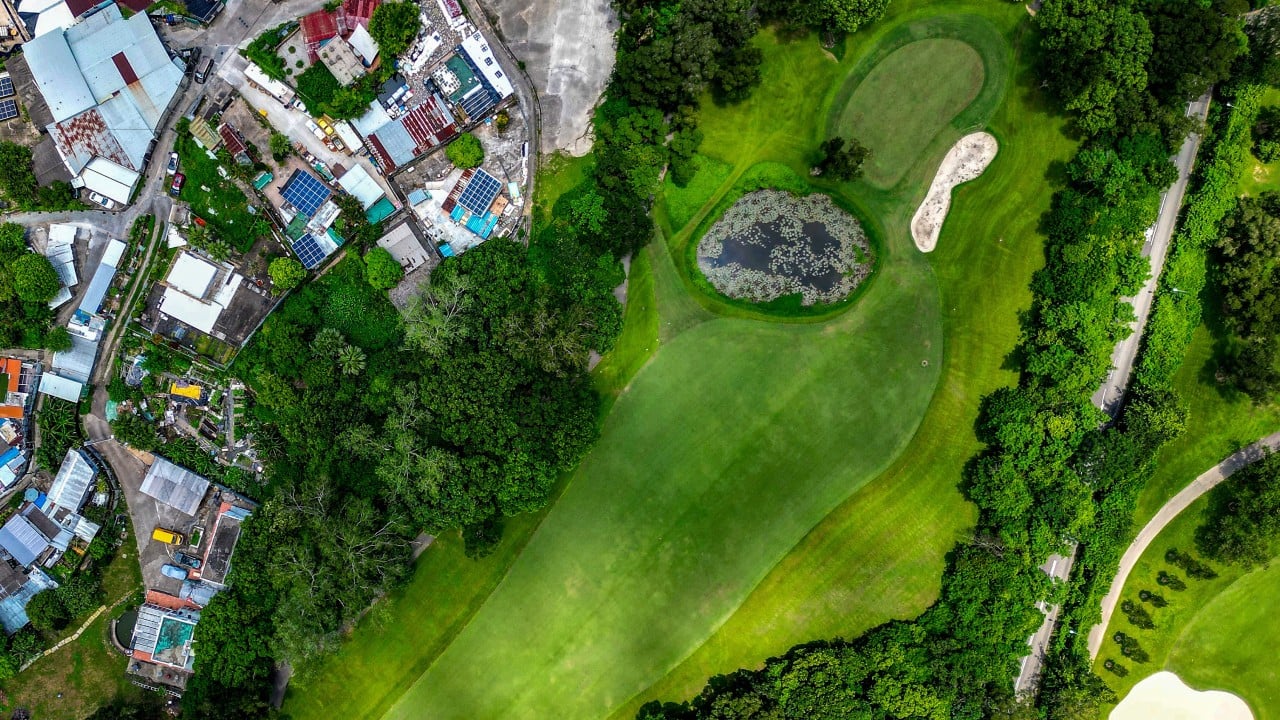
Hong Kong officials dropped their legal fight against a court injunction blocking a controversial public housing project on a historic golf course, choosing surrender over a protracted legal battle that exposed the limits of government power against entrenched elite privilege.
The administration quietly decided against appealing a court ruling that halted the partial redevelopment of the Fanling golf course. The decision effectively killed plans to build 12,000 public housing flats on a fraction of the sprawling 170-hectare Fan Ling course managed by the Hong Kong Golf Club. For a city crippled by chronic housing shortages and multi-year waiting lists for public apartments, the capitulation was a stark reminder of who actually holds sway when real estate, power, and recreation collide. Building on this topic, you can find more in: Tehran Tribunal The Death Sentences Shattering The Judicial Façade.
The Anatomy of a Compromise
The Fanling golf course dispute has long served as a lightning rod for the city's glaring wealth divide. On one side stood grassroots organizations and housing advocates desperate for land. On the other stood the Hong Kong Golf Club, an elite institution counting tycoons, politicians, and expatriate executives among its members.
When the government first proposed carving up 32 hectares of the course to build affordable flats, it was hailed as a rare victory for common-sense urban planning. The plot was large, flat, and already partially accessible. But the club pushed back through judicial reviews and environmental impact assessments, dragging the development through bureaucratic molasses. Analysts at The New York Times have also weighed in on this matter.
Instead of pushing forward with the full vision, authorities caved to procedural hurdles and environmental concerns raised by heritage groups and golfers. By dropping the appeal, the government abandoned its stated goal of maximizing usable land for the city’s most vulnerable populations.
Bureaucratic Cowardice and Elite Capture
Urban planning in this territory has always been a high-stakes chess match between public need and private wealth. The Fanling saga illustrates a recurring pattern. Whenever a development plan threatens the recreational sanctuaries of the wealthy elite, the machinery of state suddenly finds itself constrained by sudden procedural obstacles.
Environmental impact assessments were weaponized to stall the project. The presence of ancient trees and rare moth species became more urgent priorities than the housing needs of families crammed into subdivided flats. The irony was lost on no one. A city that builds towering skyscrapers over steep hillsides suddenly discovered that touching a manicured fairway would cause irreparable ecological harm.
The decision not to appeal signals a deeper institutional fatigue. Officials chose the path of least resistance. Fighting the powerful club meant risking prolonged litigation and political friction with influential stakeholders who view the course as an irreplaceable social hub.
The Real Cost of Stalling
The abandonment of the 12,000-flat target is not just a localized zoning dispute. It represents a missed opportunity to reset the city's housing trajectory.
Consider the mathematics of urban space in this dense metropolis. Every hectare withheld from housing development forces thousands of families to remain trapped in substandard living conditions. Subdivided flats, cage homes, and agonizingly long waits for public housing are the direct downstream consequences of policy paralysis.
When officials bow to elite pressure on Fanling, they send a chilling message to every community waiting for relief. The message is simple. Public interest matters, until it inconveniences the powerful.
The administration will undoubtedly point to alternative land reclamation projects and distant northern metropolis initiatives as proof of its ongoing commitment to housing supply. Yet these distant megaprojects take decades to materialize. Fanling was shovel-ready. It was a tangible, immediate countermeasure against a housing emergency.
A Broken Social Contract
The court halt and the subsequent government surrender expose the fraying edges of the local social contract. For decades, citizens tolerated hyper-dense living conditions and astronomical property costs under the implicit promise that the government would eventually prioritize civic welfare over elite leisure.
When a golf course takes precedence over public housing during a severe housing shortage, that implicit promise shatters.
The fairways at Fanling remain pristine, clipped to perfection for a privileged few who can afford membership fees that outstrip the annual earnings of average families. Meanwhile, the waiting list for public housing stretches onward, an abstract statistic masking human desperation.
The authorities had a chance to demonstrate backbone. They chose retreat instead.



