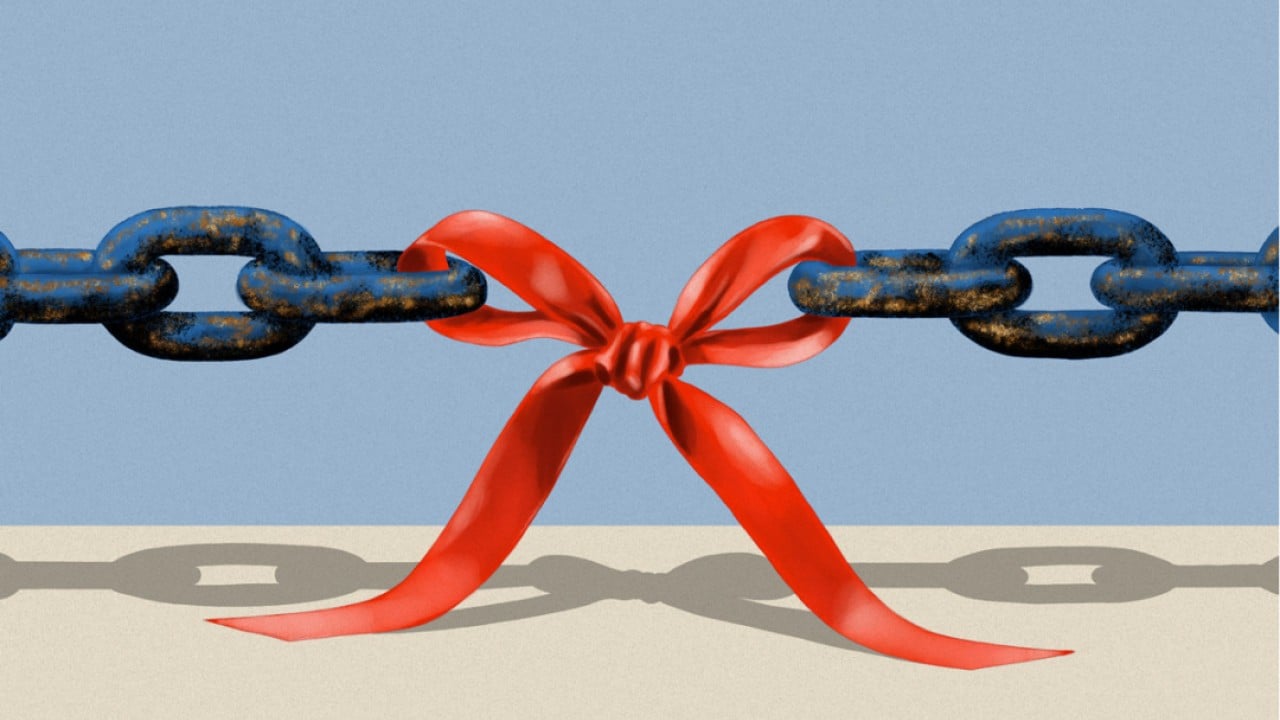
They are selling you a fairy tale wrapped in the language of personal safety.
When Hong Kong's Privacy Commissioner for Personal Data (PCPD) recently backed tighter restrictions on public access to the Land Registry, the mainstream financial press nodded along like obedient stenographers. The headline narrative is seductively simple. Doxxing is bad. Identity theft is rising. Therefore, hiding property ownership records behind bureaucratic red tape protects ordinary citizens from harassment and fraud.
That consensus is not just lazy. It is dangerous.
By treating a public property ledger like a private diary, regulators are dismantling one of the last remaining pillars of commercial transparency in Asia. They are solving a minor, localized nuisance—targeted doxxing—by blowing a massive hole in the city's anti-money laundering (AML) defenses, hamstringing due diligence, and handing a structural advantage to bad actors who hide behind shell companies.
If you buy property, lend money, investigate corporate fraud, or simply care about whether Hong Kong remains a credible financial center, you are asking the wrong question. The debate is not about privacy versus harassment. The real question is who gets to verify truth in a market built on capital flows.
The Myth of the Private Property Ledger
To understand why these restrictions are a massive step backward, you have to understand what a land registry actually is. It is not a social media profile. It is not a medical record. It is a state-backed guarantee of title.
In common law jurisdictions—the very legal foundation that made Hong Kong an international financial hub—public registries exist for a singular economic reason: to reduce transaction costs and prevent fraud. When a buyer hands over millions of dollars for an asset, or a bank underwrites a mortgage, both parties need absolute certainty that the seller actually owns the asset and that no hidden encumbrances exist.
Historically, Hong Kong's Integrated Registration Information System (IRIS) allowed anyone to pay a nominal fee, enter a property address, and inspect the memorial—the historical chain of ownership, mortgage deeds, and court orders attached to that physical space.
Now, under the guise of aligning with the Personal Data (Privacy) Ordinance (PDPO), the push is to sanitize these records, mask full identification numbers, restrict search parameters, and require "legitimate purpose" declarations that narrow who can look under the hood.
I have sat across the table from compliance officers at Tier-1 investment banks in Central who are already sweating over this. Years ago, when the Companies Registry began masking the full Hong Kong Identity Card (HKID) numbers and residential addresses of company directors, due diligence timelines stretched overnight. Investigators suddenly could not tell if "Chan Tai Man" on a corporate filing was the same "Chan Tai Man" defaulting on a loan in Kowloon or sitting on a sanctions list.
Adding the same opacity to the Land Registry compounds that blindness. When you strip unique identifiers from public records, you do not protect the innocent. You create plausible deniability for the corrupt.
The Doxxing Smokescreen
Let us address the stated justification head-on. Advocates for tighter access point to the surge in doxxing incidents following the 2019 social unrest, alongside the 2021 amendments to the PDPO that criminalized the unauthorized disclosure of personal data. They argue that open land records allow malicious actors to look up a target's home address, discover who owns it, and weaponize that information.
Here is the flaw in that logic: doxxing is already illegal.
Under Hong Kong law, publishing someone's personal data with the intent to threaten, intimidate, or cause psychological harm carries severe criminal penalties, including hefty fines and years in prison. The PCPD already possesses broad statutory powers to investigate, issue cessation notices, and prosecute offenders.
Restricting the Land Registry to stop doxxing is like banning the sale of kitchen knives because someone might commit a violent crime. You punish millions of legitimate commercial actors—journalists, conveyancing lawyers, credit risk analysts, small business owners verifying a landlord's identity—to stop a fraction of a percent of bad actors who are already breaking criminal statutes.
Imagine a scenario where a mid-sized logistics firm in Kwun Tong wants to sign a five-year commercial lease. The landlord demands a six-month upfront deposit totaling millions of dollars. Under a heavily restricted registry regime, the tenant's legal team faces delays or redactions when trying to verify whether the person signing the lease is the true beneficial owner, or whether the property is currently subject to a foreclosure petition by a creditor. By the time the red tape clears, the deal is dead—or worse, the tenant wires the deposit to an impostor and never sees a dime again.
This is not hypothetical paranoia. Title fraud and rental scams thrive in environments where verification is slow, expensive, or restricted to an inner circle of licensed professionals.
Who Actually Benefits From Dark Registries?
Follow the incentives. Whenever a government tightens access to public records, ask yourself who pops champagne. It is rarely the average salaried worker living in a 400-square-foot flat in Sha Tin.
The primary beneficiaries of opaque property records are:
- Politically Exposed Persons (PEPs) and Kleptocrats: High-net-worth individuals moving illicit capital across borders rely on real estate as a safe deposit box. When journalists and civil society watchdogs can cross-reference corporate registries with land records, unexplained wealth gets exposed. Close that window, and luxury apartments on the Peak become invisible vaults.
- Serial Litigants and Debtors: Trying to enforce a court judgment against a deadbeat business partner is hard enough. Asset tracing relies heavily on reverse-searching property holdings to locate attachable assets. When access to land records is gated behind narrow "purpose" tests, debtors gain precious weeks to transfer titles to relatives or offshore trusts before a freezing order can land.
- Predatory Developers and Land Assemblers: In urban redevelopment, knowing who owns adjacent parcels—and what mortgages they carry—is critical market intelligence. Restricting public data concentrates informational power in the hands of massive institutions with armies of lawyers, pricing out smaller competitors and leaving individual flat owners negotiating in the dark.
Look at global precedents. The Financial Action Task Force (FATF), the global money-laundering watchdog, has spent the last decade pushing jurisdictions toward greater beneficial ownership transparency, not away from it. In the United Kingdom, following the passage of the Economic Crime (Transparency and Enforcement) Act, Parliament moved to force overseas entities owning UK property to declare their true human owners on a public register. They recognized a fundamental truth: secrecy in real estate is a national security vulnerability.
Hong Kong, by cheering on tighter Land Registry restrictions, is sprinting in the exact opposite direction of global anti-corruption standards.
Dismantling the "People Also Ask" Fallacies
When this topic hits the mainstream, the same predictable questions surface. Let us dismantle them with the candor you will not get from a government press release.
"Doesn't GDPR in Europe require hiding property ownership records?"
No. This is one of the most persistent myths peddled by privacy maximalists. The European Union's General Data Protection Regulation (GDPR) does not mandate blanket secrecy for public registries. GDPR explicitly provides lawful bases for processing personal data, including compliance with legal obligations and the performance of tasks carried out in the public interest. While the Court of Justice of the European Union (CJEU) ruled in 2022 against unrestricted public access to corporate beneficial ownership registers under specific EU directives, land registries across Europe remain accessible for legitimate commercial, legal, and journalistic verification—often with clear, standardized digital pathways rather than arbitrary bureaucratic bottlenecks. Using Europe as an excuse to gut Hong Kong's transparency is a selective reading of international law.
"Can't banks and lawyers still access the records anyway?"
Sure, if you define "public transparency" as a cartel privilege. Creating a two-tier system where licensed solicitors, estate agents, and financial institutions get special backdoor access while ordinary citizens, independent researchers, and investigative reporters are locked out destroys public accountability. Who watches the gatekeepers? Historically, some of the biggest financial scandals in Asia were uncovered not by bank compliance departments, but by independent journalists and short-sellers connecting dots in public filings. Gatekeeping truth behind professional licenses ensures that uncomfortable stories never see print.
"Won't masking HKID numbers prevent identity theft?"
Identity theft happens because companies store unencrypted customer databases on vulnerable servers, because phishing attacks trick users into handing over credentials, and because legacy institutions still use static numbers like an HKID or Social Security Number as both a username and a password. Blaming the Land Registry for identity theft is a distraction. If an ID number can be used to steal your identity simply because someone read it on a deed, your authentication system is broken—not the public record. Fix the authentication protocols instead of burning the library.
The Uncomfortable Trade-Off Nobody Admits
To be intellectually honest, radical transparency has real costs. I am not pretending open registries are painless.
When full names, partial or full ID numbers, and historical addresses sit online for anyone with a credit card and a browser to pull, malicious actors will abuse the system. Stalkers exist. Aggressive debt collectors exist. Politically motivated harassment is real, and the psychological toll on victims whose home addresses are plastered across messaging apps is severe. Pretending otherwise would be dishonest.
Furthermore, automated scraping—where data brokers harvest millions of registry records to build shadow profiles for commercial resale—is a legitimate abuse of public infrastructure. The Land Registry was built to facilitate property transactions, not to feed spam marketing databases.
So how do you solve data scraping and targeted harassment without blinding the entire economy? You regulate behavior and access mechanics, not the existence of the data itself.
What Regulators Should Do Instead
If the PCPD and the Development Bureau actually wanted to balance privacy with market integrity, they would scrap broad data redactions and implement surgical, modern technical controls:
- Mandatory Digital Audit Trails (Not Gatekeeping): Keep the records open to any verified user, but require strong digital authentication (such as Hong Kong's "iAM Smart" platform) to run a search. Log every query. If a property owner is later doxxed, law enforcement has an immediate, indisputable forensic trail showing exactly who pulled the record and when. Deterrence through accountability beats blanket censorship every single time.
- Rate-Limiting and Anti-Scraping Architecture: Stop bulk harvesting at the server level. Implement strict API throttling, CAPTCHA challenges, and algorithmic anomaly detection to block bots from scraping thousands of memorials an hour, while allowing human researchers, buyers, and journalists to conduct targeted searches friction-free.
- Tiered Identifier Verification: Instead of deleting unique identifiers entirely—which creates the "John Smith" collision problem—use cryptographic hash matching. Allow a user to input an HKID number they already possess to receive a simple "Yes/No" confirmation that the person matches the registered owner, without displaying the raw number to blind browsers.
- Explicit Carve-Outs for Public Interest Reporting: Codify a fast-track, zero-friction exemption for accredited media, academic researchers, and non-governmental watchdogs investigating corruption, public safety, and financial crime.
The Cost of Choosing Comfort Over Clarity
Markets run on trust, and trust is just a polite word for verifiable information.
Every time Hong Kong erects another wall around its public registries, it tells international investors, compliance officers, and investigative watchdogs that the city values administrative tidiness and superficial privacy over rigorous accountability. You cannot market yourself as a premier global financial center while systematically turning off the lights in the due diligence room.
The privacy watchdog got its applause. The bureaucrats got their tighter rules. Now watch what happens when the next major property fraud, money-laundering network, or corporate collapse hits the headlines—and nobody can trace who actually owned the bricks.