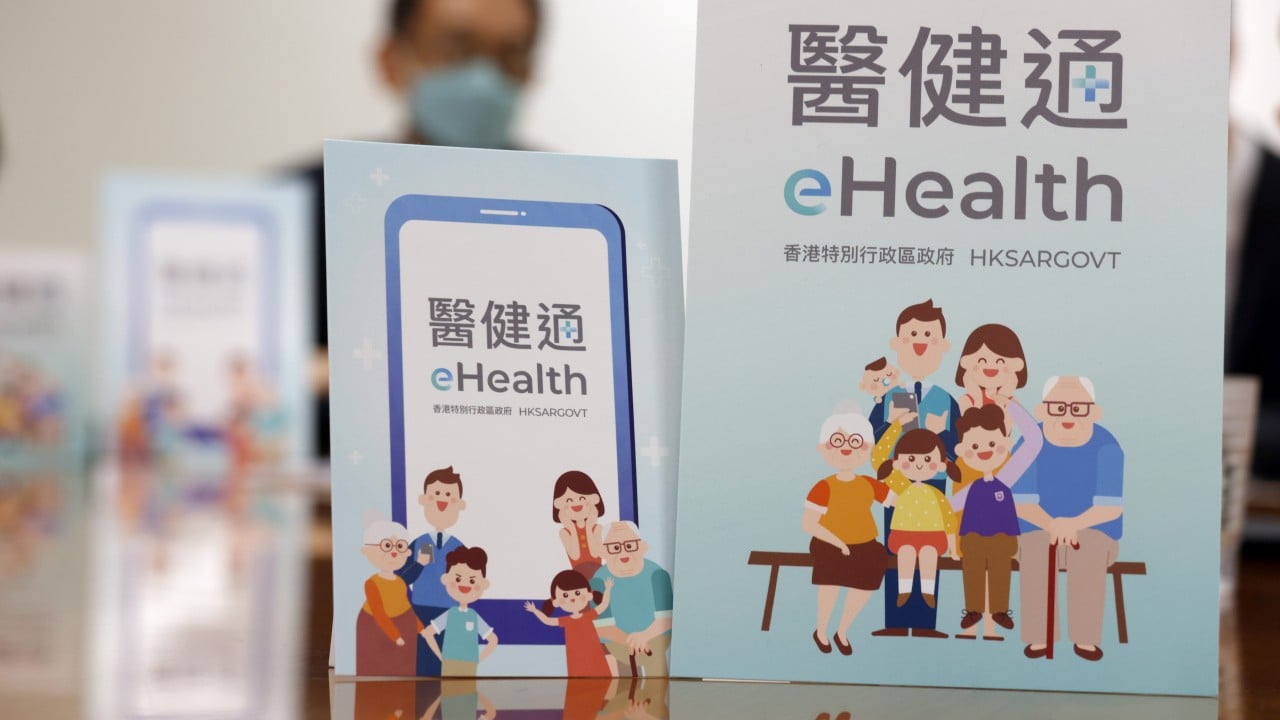
Digitizing an advance medical directive does not fix a broken family dynamic.
The celebratory headlines rolling out across Hong Kong right now treat an online portal for refusing end-of-life care like a triumph of modern patient autonomy. Officials and tech optimists are applauding the convenience. Fill out a web form, verify your identity, click submit, and your wishes are locked into the cloud before a medical crisis hits.
It sounds clean. It sounds efficient. It is also dangerously naive.
Having spent years watching clinical teams, legal counsel, and grieving relatives collide inside intensive care units across Asia, I can tell you exactly what happens when a crisp, legally valid document meets a panicked family at three in the morning. The paper—or the glowing tablet screen—loses. Every single time.
The lazy consensus assumes that end-of-life friction in Hong Kong is a paperwork bottleneck. Remove the friction of finding two witnesses, booking a doctor’s appointment, and filing physical forms, the logic goes, and suddenly residents will die with dignity on their own terms. That premise ignores the actual mechanics of how medical decisions happen in Chinese societies, how emergency room doctors manage liability, and why checkboxes fail to capture human psychology.
The Myth of Frictionless Autonomy
Let’s look at the mechanics of what Hong Kong is actually rolling out under the Advance Decision on Life-Sustaining Treatment Ordinance. Moving the process online lowers the administrative barrier to entry. You no longer need to hunt down a private practitioner to witness a physical sheet of paper that gets lost in a filing cabinet or buried in a safe deposit box while you are intubated in Queen Mary Hospital.
Accessibility is great. Accessibility is not authority.
In Western bioethics, autonomy is king. The individual stands alone, makes a rational calculation about future suffering, and binds the medical establishment to that choice. In Hong Kong, medical decisions are rarely individual. They are familial, hierarchical, and deeply entangled with filial piety.
When a patient suffers a massive hemorrhagic stroke or enters late-stage organ failure, they are unconscious. They cannot advocate for their digital form. The doctors walk out to the waiting room to speak with the eldest son, the spouse, or the adult children who just flew in from Vancouver or London.
Imagine a scenario where a seventy-eight-year-old father quietly logged onto a government portal two years prior, checked the boxes to refuse cardiopulmonary resuscitation and mechanical ventilation, and never mentioned it over Sunday dim sum because talking about death brings bad luck. Now he is in the ICU. The digital record pops up on the attending physician's screen.
The eldest son looks at the doctor and says, "I don't care what he clicked on a website. Do everything. If you let him die, I am suing this hospital and filing a complaint with the Medical Council."
What do you think happens next?
Physicians are trained to preserve life and avoid litigation. Even when the statutory protection under Hong Kong’s ordinance explicitly shields medical professionals who follow a valid advance directive in good faith, clinical reality operates on risk mitigation. A doctor facing a hostile, weeping, litigious family at the bedside will almost always default to aggressive intervention while "clarifying" the validity of the directive. By the time the hospital's ethics committee reviews the digital timestamp, the patient is already hooked up to a ventilator, and withdrawing life support becomes ten times harder emotionally and politically than withholding it in the first place.
Checkboxes Cannot Handle Clinical Ambiguity
The second fatal flaw in the online directive hype is the illusion of precision. Web forms love binary choices. Yes or no. Resuscitate or do not resuscitate. Tube feed or withhold nutrition.
Real medicine is almost never binary.
An advance medical directive (AMD) is a legally binding instruction specifying what medical treatments a person refuses if they become mentally incapacitated and meet specific clinical preconditions, such as terminal illness, persistent vegetative state, or end-stage irreversible conditions. Notice the trap in that definition. Someone has to declare that the patient has reached one of those exact preconditions.
Medicine is messy. Take severe pneumonia in an eighty-five-year-old with moderate dementia. Is that a temporary, reversible acute infection, or is it the final chapter of an end-stage irreversible decline? Two senior consultants can look at the exact same chest X-ray and blood gas panel and reach opposite conclusions.
When you force citizens onto a standardized digital portal without deep, iterative clinical counseling, you get vague, rigid instructions applied to wildly fluid emergencies. People check boxes based on how they feel on a sunny Tuesday afternoon while drinking coffee. They have no visceral understanding of what "non-invasive positive pressure ventilation" feels like, nor do they grasp the difference between a seven-day trial of intensive care and permanent institutionalization.
I have reviewed hundreds of advance care files where the patient’s stated preferences contradicted themselves within three paragraphs because they clicked through a template without an experienced clinician stress-testing their logic. A web interface cannot look you in the eye and say, "You said you want antibiotics for infections, yet you refused all hospital transfers—how do you expect us to administer intravenous drugs?"
What People Actually Get Wrong About End-of-Life Planning
If you look at the questions Hong Kong residents are asking right now about the new digital system, almost all of them focus on technicalities. They are asking the wrong questions because the public discourse has framed this as a tech upgrade rather than a communication crisis.
Will an online advance directive stop my family from overriding my wishes?
Legally, yes. Practically, no. Under the legislation, family members have zero legal authority to revoke a valid directive made by a mentally competent adult. However, law and bedside reality are two different universes. If your family is blindsided by your digital directive in the emergency room, their grief and guilt will manifest as anger toward the medical staff. Doctors do not like fighting grieving families. Your digital signature will not stop an emotional ambush unless you have already dismantled your family's objections while you are still healthy.
Is a digital directive better than appointing a decision-maker?
This is the biggest blind spot in the entire rollout. People treat an advance directive as a complete solution. It is not. An advance directive only covers refusal of specific treatments under narrow conditions. It cannot consent to treatments, and it cannot navigate gray-area medical decisions. For true protection, you need an enduring power of attorney (EPA) or a designated healthcare proxy—someone who knows your values and can argue with doctors in real time. Relying solely on a static web form is like leaving a locked safe in a burning building without giving anyone the combination.
Doesn't registering online guarantee the hospital will see it immediately?
Integration into the Hospital Authority's electronic health record system solves the retrieval problem for public hospitals. It does not solve the interpretation problem, nor does it guarantee seamless cross-border or private-sector execution if you collapse in a private clinic or while traveling across the Greater Bay Area. Data availability is not clinical alignment.
The Heavy Hitters Already Know This
You do not have to take my word for it. Look at the empirical record from jurisdictions that digitized advance care planning years ago.
Dr. Muriel Gillick, a prominent geriatrician and palliative care expert at Harvard Medical School, has spent decades documenting why standard advance directives frequently fail to alter end-of-life care trajectories. The core issue is structural: future medical scenarios are too complex to be predicted accurately via static checklists, and surrogates routinely misinterpret written instructions when under acute stress.
Look even closer at the landmark SUPPORT trial—the Study to Understand Prognoses and Preferences for Outcomes and Risks of Treatments—published in JAMA. Researchers poured tens of millions of dollars into improving end-of-life decision-making across major hospitals, ensuring physicians had clear documentation of patient preferences. The result? Documentation alone barely moved the needle on unwanted interventions, ICU days, or resuscitation rates.
More recently, the Respecting Choices program in La Crosse, Wisconsin—widely considered the gold standard in advance care planning—proved that high completion rates only translate into respected wishes when the process is driven by trained facilitators having structured, multi-party conversations with both the patient and their family. The form is merely the receipt of a conversation that already happened. Hong Kong is digitizing the receipt while skipping the transaction.
The Uncomfortable Downsides of My Own Argument
Before you write off the online portal entirely, let’s be brutally honest about the trade-offs of my stance.
Pushing for deep, clinician-led, family-inclusive conversations over fast digital self-service does not scale easily. Hong Kong’s public healthcare system is already stretched to the breaking point. Specialist outpatient clinics have wait times stretching into years. Doctors in the Hospital Authority have roughly six to eight minutes per consultation. Asking an overworked medical officer to conduct a forty-five-minute existential counseling session with an elderly patient and three skeptical adult children is a fantasy under current staffing ratios.
Furthermore, for isolated seniors—the thousands of elderly Hongkongers living alone with no surviving relatives or estranged children—a frictionless online portal is a genuine lifeline. When there is no family waiting room ambush to worry about, an unambiguous digital record integrated directly into the public hospital database is vastly superior to dying alone without any recorded preferences at all.
The online system is not useless. It is simply incomplete, and marketing it as a silver bullet creates a false sense of security that will leave thousands of families shattered when reality hits.
How to Actually Make Your Wishes Bulletproof
If you live in Hong Kong and plan to use the online portal next year, do not treat it like renewing your driver's license. If you want your refusal of life-sustaining treatment to actually hold up under pressure, execute this sequence instead:
- Hold the ambush before the crisis. Sit your spouse and every adult child down at a dinner table while you are completely healthy. Tell them directly: "I am registering an advance directive online. If my brain is gone or my organs are failing, I do not want machines keeping my lungs inflating. I am telling you now so you do not have to carry the guilt of making that choice later." Record a two-minute video on your phone stating this clearly in your own voice. A video of a lucid parent explaining their reasoning shuts down a panicked relative's objections in an ICU waiting room faster than any government QR code ever will.
- Audit your language with a palliative specialist, not a tech support FAQ. Pay for one private consultation with a geriatrician or palliative care physician before you click submit on the government portal. Have them walk you through the exact clinical thresholds—terminal illness, persistent vegetative state, end-stage irreversible conditions—so you understand what triggers your refusal and what does not.
- Name an enforcer. Identify the most rational, emotionally resilient person in your circle—not necessarily the eldest child—and designate them as your primary family spokesperson. Give them explicit instructions to hold the line against emotional relatives who might try to bully doctors into reversing your plan.
- Update the record every twenty-four months. A digital directive signed five years ago carries less psychological weight with clinicians than one reviewed six months ago. Log back in, update the timestamp, and confirm that your refusal still reflects your reality as your health evolves.
Technology can store your signature, route your data, and alert an emergency room physician in milliseconds. It cannot give your children the courage to let you go.
Until Hong Kong stops treating death like an IT workflow problem, those clean digital forms will keep getting overridden by messy human panic.