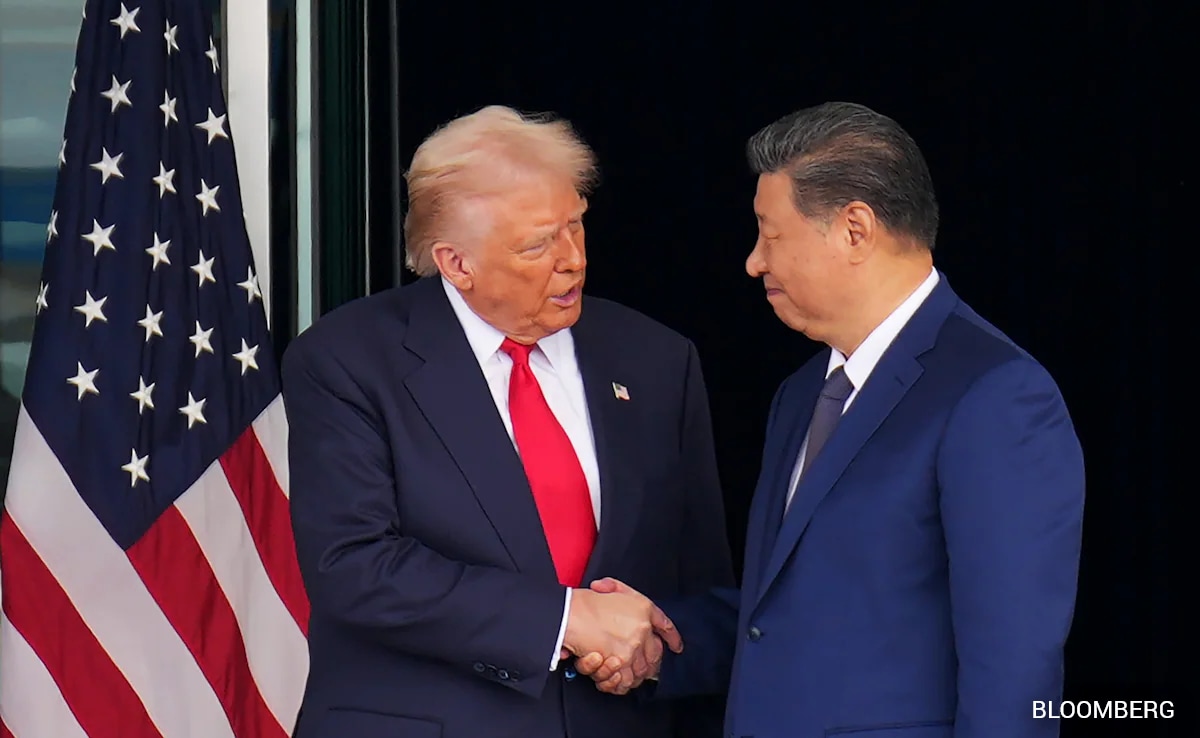
The mainstream media is currently hyperventilating over a ghost. If you believe the headlines, the world is forty-eight hours away from a global cardiac arrest because of "tensions" in the Strait of Hormuz ahead of a high-stakes Beijing summit. They want you to think a few naval maneuvers and some aggressive rhetoric represent a systemic threat to the global economy. They are wrong.
The "Hormuz Blockade" narrative is the most overused, least understood trope in modern geopolitics. It serves the interests of two groups: click-hungry newsrooms and diplomats who want to manufacture leverage where none exists. Let’s stop pretending we’re looking at a military standoff and start looking at the math. In related updates, we also covered: Why a Lebanon Ceasefire Might Actually Stick This Time.
The Geography of Fear vs. The Reality of Logistics
The Strait of Hormuz is twenty-one miles wide at its narrowest point. That sounds like a chokehold. In reality, it is a wide-open door that is impossible to lock without blowing up your own house.
The consensus view suggests that a blockade would send oil to $300 a barrel and cause the immediate collapse of the Western industrial complex. This ignores the single most important factor in the 2026 energy market: redundancy. Associated Press has analyzed this fascinating subject in extensive detail.
In my fifteen years analyzing energy flows, I’ve watched the "experts" consistently underestimate the speed of global adaptation. Between the East-West Pipeline in Saudi Arabia and the Habshan-Fujairah line in the UAE, millions of barrels per day already bypass the Strait. More importantly, China’s strategic petroleum reserve is currently at record highs. If Beijing were truly terrified of a blockade, they wouldn’t be sending a diplomatic delegation to discuss trade; they would be hunkering down.
China is Not the Victim—They are the Playwright
The narrative being sold right now is that the US is "rising to meet the threat" of a Chinese-backed Iranian blockade. This is a fundamental misunderstanding of the power dynamic. China is the world's largest importer of crude. They are more vulnerable to a Hormuz shutdown than a suburban dad in New Jersey.
So why the tension? Because Beijing loves it when the US spends billions of dollars and massive political capital playing "Global Policeman" in the Gulf. Every time a US carrier strike group moves into the Arabian Sea to "protect" shipping lanes, China wins. They get their energy security subsidized by American taxpayers while they use the "tension" as a bargaining chip to extract concessions on semiconductor tariffs and AI export bans before the Trump meeting.
The US isn't "securing" anything; it’s being baited into a vanity project.
The Myth of the Unstoppable Naval Blockade
Let’s talk about the actual mechanics of a blockade. Modern warfare isn’t a game of Battleship. You don’t just park a destroyer in the middle of a lane and say "stop."
To actually block the Strait, a power would need to maintain constant air superiority and neutralize the coastal defense batteries of every nation bordering the water. The moment a single mine is laid or a single tanker is struck, the insurance premiums don't just go up—the legal framework of the UN Convention on the Law of the Sea (UNCLOS) triggers a response that neither Iran nor China actually wants to deal with.
A "blockade" in 2026 is a digital and psychological event, not a physical one. We see this in the way markets react to tweets faster than they react to troop movements. The "tension" is the product. The blockade is the marketing.
Stop Asking About Oil Prices—Ask About Insurance
If you want to know what’s actually happening, stop looking at the price of Brent Crude and start looking at Lloyd’s of London "War Risk" premiums.
The mainstream press focuses on the price at the pump because it’s relatable. It’s also a lagging indicator. The real war is being fought in the actuarial tables. When the US or China talks about "rising tensions," they are effectively manipulating the cost of doing business for their rivals.
Imagine a scenario where a state actor doesn't need to fire a single shot. They simply announce "heightened naval exercises" in a specific quadrant. Insurance companies immediately spike premiums for any vessel entering that zone. The shipping companies pass that cost to the consumer. The result is an inflationary spike that looks like a blockade but costs the aggressor zero lives and zero ammunition.
This is "Grey Zone" warfare. The competitor article you read likely treated this like a 20th-century troop movement. It isn't. It’s an economic DDoS attack.
Why the Beijing Trip is a Red Herring
The media is framing the upcoming Beijing visit as a "last-ditch effort to prevent conflict." This is a classic diplomatic theater.
The US and China have a symbiotic relationship with chaos. The US needs a "threat" to justify its defense budget and its presence in the Indo-Pacific. China needs a "distraction" to mask its internal demographic crisis and cooling real estate market.
By manufacturing a crisis in the Middle East, both sides can walk into the meeting room and "negotiate" a return to the status quo. They "solve" a problem they created, and both leaders get a domestic win for "averting war."
The real issues—quantum computing dominance, the weaponization of the SWIFT system, and the sovereignty of the South China Sea—will be buried under the fluff of a "Hormuz Peace Accord" that doesn't actually change anything because there was no real blockade to begin with.
The Silicon Shield vs. The Oil Chokepoint
People always ask: "Won't a blockade destroy the tech industry?"
The premise is flawed. The tech industry doesn't run on oil; it runs on neon gas, high-purity silicon, and lithography machines. If you want to see a real blockade, look at the export restrictions on ASML’s EUV machines. That is a blockade that actually matters.
A temporary interruption in oil flow might cause a quarterly dip in earnings for shipping companies, but the permanent restriction of high-end compute power is what defines the 21st century. The focus on Hormuz is a distraction from the real "Strait" that is currently being blocked: the flow of intellectual property and high-end hardware between San Jose and Shenzhen.
The Brutal Truth About "Energy Independence"
The US claims to be energy independent, yet it still reacts to every ripple in the Gulf like a terrified addict. Why? Because the global market is a single pool. You can’t be "independent" of a global price.
The contrarian move for the US isn't to send more ships. It’s to stop caring. If the US signaled that it would no longer guarantee the safety of the Strait for non-allied vessels, the burden would shift instantly to the biggest customer: China.
Suddenly, Beijing would have to foot the bill for the massive naval presence required to keep their factories running. They would have to navigate the complex tribal and religious politics of the region. They would have to be the ones losing sailors to drone boat attacks.
But the US won't do that. Because the US leadership is addicted to the "security provider" status. It’s a sunk-cost fallacy on a planetary scale. We spend trillions to protect the interests of our primary competitor, then act surprised when they use that saved money to build a bigger navy.
The Mechanics of the Manufactured Crisis
- The Leak: A "senior official" mentions a credible threat of mines in the water.
- The Market: Algorithms pick up the keywords "Hormuz" and "Blockade," triggering a $5 jump in oil.
- The Media: Outlets produce maps with red arrows pointing at the Strait.
- The Diplomacy: Both sides meet to "de-escalate."
- The Result: The status quo is preserved, and the real structural issues are ignored for another six months.
Stop Playing the Wrong Game
If you are an investor or a policy observer, you need to ignore the noise. The blockade isn't coming. It's a logistical nightmare that serves no one's long-term interests.
The real conflict is happening in the undersea fiber optic cables, the orbital slots for satellite constellations, and the supply chains for rare earth elements. The Strait of Hormuz is a 1970s problem that we’re still trying to solve with 1970s logic.
While the "experts" are counting tankers, the real power players are counting flops and qubits. The tensions aren't rising over oil; they are being staged to see who flinches first in the race for technological hegemony.
The next time you see a headline about "Rising Tensions in Hormuz," do yourself a favor. Close the tab. Go look at the trade balance for high-end semiconductors. That’s where the real blockade is happening, and unlike the Strait, that one is already in full swing.
The world isn't going to end because of a few patrol boats in a narrow channel. It's changing because we're looking at the wrong map.