The assumption that a nuclear weapon is the ultimate insurance policy for a modern state died on February 28, 2026. When the United States and Israel launched Operation Epic Fury—a relentless air campaign that eliminated Iran’s senior leadership and crippled its primary nuclear facilities at Fordow and Natanz—they proved that a "breakout" threshold can be met with a sledgehammer rather than a seat at the table. But as the smoke cleared over the rubble of the IRGC command centers, a different kind of weapon was detonated.
Iran didn't need a nuclear warhead to bring the global economy to its knees. They had the Strait of Hormuz. If you enjoyed this post, you should look at: this related article.
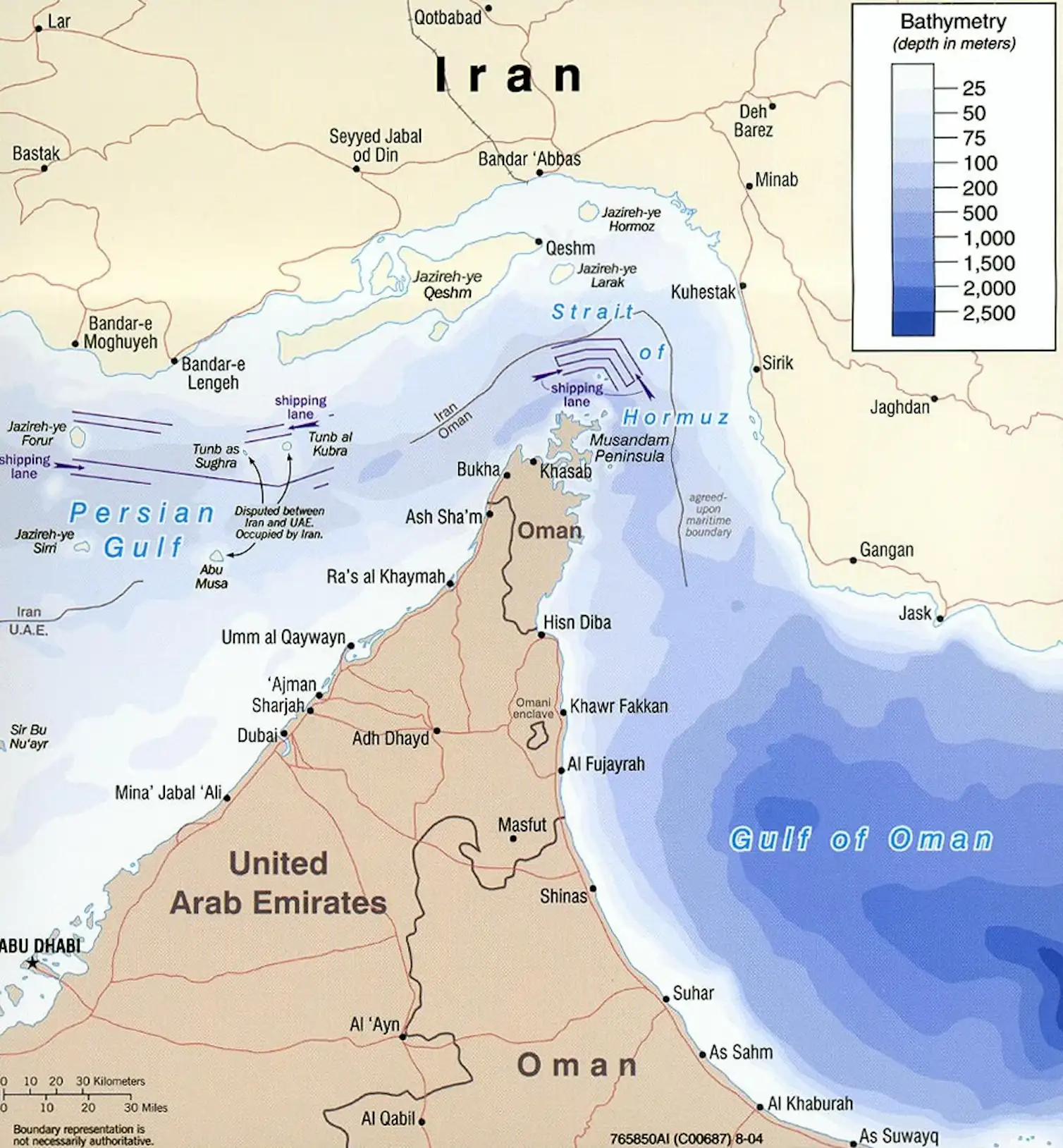
By effectively closing the world’s most sensitive maritime chokepoint, Tehran has turned a 21-mile-wide strip of water into a geostructural explosive. This is not a metaphor. The disruption of 20 million barrels of oil per day and 20% of the world’s liquefied natural gas (LNG) supply has caused a "Hormuz Shock" that far outstrips the tactical damage of any single atomic device. While the West focused on the enrichment of uranium, it ignored the weaponization of geography.
The Atomic Comparison is a Distraction
For years, Iranian officials and regional analysts have compared the strategic importance of the Strait to an atomic bomb. In the wake of the 2026 strikes, that rhetoric has shifted from a threat to a functional reality. The logic is simple: a nuclear weapon is a weapon of last resort that, if used, invites total annihilation. A blockade of the Strait, however, is a sliding scale of economic strangulation that allows Iran to inflict maximum pain while maintaining a layer of deniability through asymmetric tactics. For another look on this development, see the latest coverage from Reuters.
Since the ceasefire took hold in late April, the maritime environment has settled into a "paradoxical equilibrium." The U.S. Navy has attempted to "blockade the blockaders," yet the IRGC continues to exert control through a high-tech siege. They aren't using a traditional blue-water navy to fight the U.S. Fifth Fleet. Instead, they utilize:
- Drone Swarms: Low-cost, expendable loitering munitions that can overwhelm the Aegis defense systems of billion-dollar destroyers.
- Unmanned Surface Vessels (USVs): Remote-controlled "suicide boats" packed with explosives, capable of targeting the hull of a Very Large Crude Carrier (VLCC) with surgical precision.
- Smart Sea Mines: Modern variants that can remain dormant for weeks, only activating when they detect the specific acoustic signature of a target vessel.
The result is a Geopolitical Risk Premium that has added a permanent $30 to $35 floor to the price of a barrel of oil. This isn't a temporary spike; it is a structural tax on the global energy system.
Why Diplomacy Failed the Enrichment Test
The current impasse in the Islamabad negotiations reveals the core of the miscalculation. Washington is pushing for a 20-year freeze on all enrichment activities. Tehran, now under the more hardline leadership of Mojtaba Khamenei, is offering single digits. But the nuclear issue is no longer the primary lever.
The U.S. entered this conflict with the goal of neutralizing a nuclear threat. They succeeded in set-piece kinetic strikes but failed to account for the Just-in-Time (JIT) logistics trap. The global economy lacks the structural redundancy to survive a total stoppage at Hormuz. When the Strait closed, Brent crude didn't just rise; it shattered records, hitting $126 per barrel within weeks. For countries like China, which receives a third of its oil through this passage, the war in the Middle East became an immediate domestic crisis.
This has forced a shift in American strategy. The Trump administration, desperate to lower prices at the pump before domestic political pressure becomes untenable, has begun to decouple the "maritime security" track from the "nuclear" track. Secretary of State Marco Rubio’s recent comments suggest a willingness to push back nuclear negotiations if it means a memorandum of understanding on "freedom of navigation."
This is exactly what Tehran wanted. By holding the global energy supply hostage, they have forced the world to negotiate on their terms, even after losing their Supreme Leader and their conventional air defenses.
The Mirage of the North Korea Model
A dangerous lesson is being learned by mid-tier powers watching the 2026 conflict. The "North Korea Model"—the idea that possessing a nuclear weapon prevents regime-targeting strikes—seemed to be validated when Iran was attacked despite being in active negotiations. Observers in Ankara, Seoul, and Warsaw are now asking if Iran would have been hit if they already had the bomb.
However, this ignores the unique "Hormuz Factor." Iran’s true power is not that it can build a bomb, but that it sits on the valve of the world’s heart. Unlike North Korea, which is an isolated economic island, Iran is a central node in the global energy web.
The Asymmetric Dominance Toolkit
| Tool | Strategic Impact | Escalation Level |
|---|---|---|
| Uranium Enrichment | Diplomatic leverage, long-term deterrent | High (Invites pre-emptive strikes) |
| Hormuz Blockade | Immediate global economic depression | Variable (Harder to justify full-scale invasion) |
| Proxy Networks | Regional destabilization, "gray zone" warfare | Low to Medium |
| Cyber-Energy Strikes | Disruption of refining and port logistics | Medium |
The Iranian regime has adopted a population-centric strategy of active mobilization. They have accepted that their fixed military sites can be destroyed by Western technology. In response, they have moved their strategic weight into the water and into the streets. The IRGC has proved that even a "decapitated" regime can maintain asymmetric dominance over the Strait if they have pre-positioned assets and a decentralized command structure.
The Cost of the "Clean" Victory
The U.S. and Israel may have achieved a tactical masterclass in the first 12 hours of the war, but they are now facing a strategic nightmare. The blockade has turned energy into the "first pillar of national defense" for every major importing nation.
We are seeing a move toward the formation of a Persian Gulf Strait Authority, an attempt by the U.S. to provide a permanent naval escort for merchant vessels. But this is an expensive, resource-draining operation that can be defeated by a single $50,000 drone or a well-placed mine. The "victory narrative" of ending Iran's nuclear program has been swallowed by the reality of $7-a-gallon gasoline in the American Midwest.
There is no "clean" way to win a war in the Persian Gulf. You can destroy a laboratory, and you can sink a ship, but you cannot easily "secure" a waterway that is within range of a thousand miles of hostile coastline. The atomic bomb comparison was never about the blast radius of a weapon; it was about the radius of consequences.
The world is currently paying the price for a war that was won in the air and lost in the water. Unless a deal is reached that addresses the fundamental insecurity of the Strait, the "Hormuz Shock" will become the new baseline for the global economy.
The bomb has already gone off. We are just living in the fallout.



