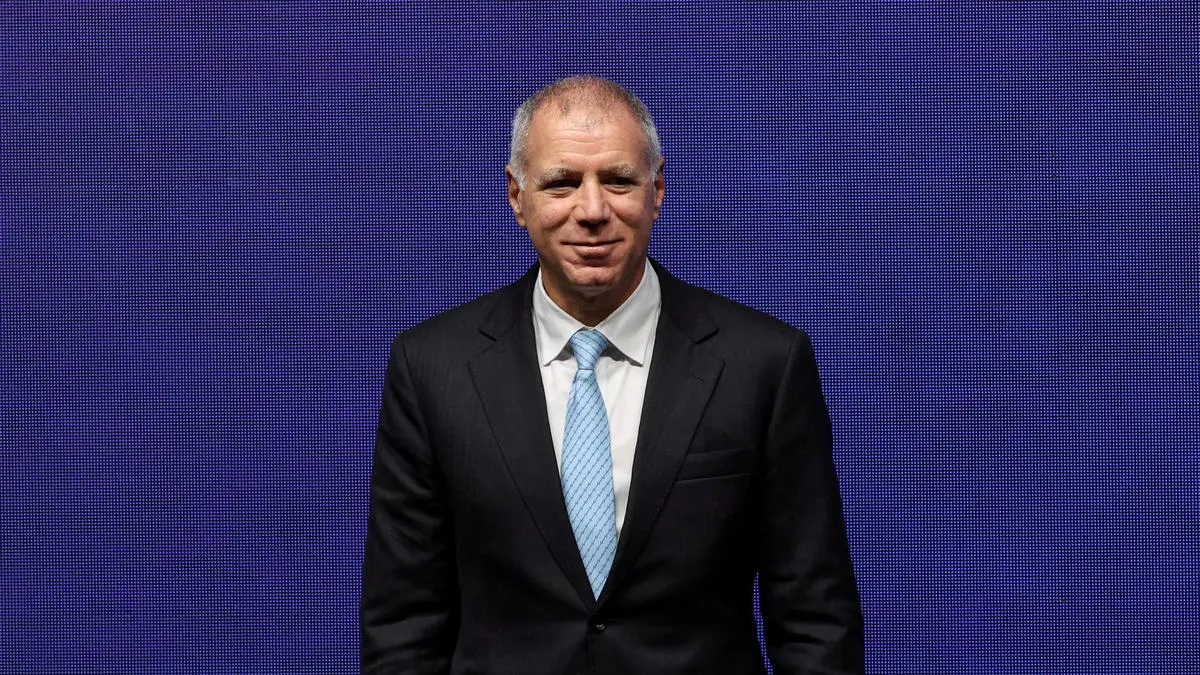
HSBC CEO Georges Elhedery thinks the Strait of Hormuz could become redundant within five years as Gulf states rush to build alternative energy routes. Honestly, that timeline sounds bold on a conference stage in Dubai, but on the water it runs straight into physical limits.
Pipelines can move some crude oil around the chokepoint. They cannot easily replace liquefied natural gas at scale or erase geography overnight.
Before the conflict with Iran erupted in late February 2026, roughly a fifth of global oil and liquefied natural gas trade passed through this narrow stretch of water. When shipping lanes tighten or get contested, every boardroom from Tokyo to Rotterdam starts asking the same question. How do we stop betting our energy security on one narrow sea passage?
What Elhedery Actually Said and Why Five Years Is Aggressive
Speaking at the HSBC Future Forum in Dubai in October 2026, Elhedery paired a wish for peace with a blunt projection that Hormuz might become redundant in five years' time. His point wasn't that ships will vanish from the Persian Gulf by 2031. Rather, he argued that Gulf producers will invest heavily in alternative infrastructure so they aren't held hostage by disruptions at the strait.
That distinction matters. Bankers speak in capital flows and multi-year project pipelines. Construction intelligence firm MEED and regional project trackers have highlighted massive investment opportunities across Gulf energy and transport logistics, part of a huge regional push to diversify routes. An HSBC survey of more than 1,600 business leaders and roughly 820 global institutional investors also showed strong ongoing appetite to deploy capital into the Gulf despite near-term turbulence.
Still, five years is a blink of an eye in heavy energy infrastructure. Permitting, engineering, steel procurement, pumping stations, and export terminals rarely move that fast when war risk is active. The World Bank forecast that the Middle East, North Africa, and Pakistan economy would contract by 1.3% in 2026 after growing 3.3% in 2025, pointing to a strong but uneven recovery in 2027. Money wants to move, yet physical bottlenecks slow it down.
Pipelines Help Only a Few Producers
If you look at who actually has a way around Hormuz today, the map gets narrow fast. Only Saudi Arabia and the United Arab Emirates operate major export pipelines capable of bypassing the strait for crude oil. Other Gulf producers—including Kuwait, Bahrain, and Qatar—lack comparable overland bypasses for most or all of their export volumes.
Saudi Arabia's Red Sea Push
Saudi Arabia's East-West pipeline carries crude from inland fields toward Red Sea export terminals, letting tankers load outside the Persian Gulf. At the WPC Energy Congress in Riyadh in October 2026, Energy Minister Prince Abdulaziz bin Salman outlined plans to expand the pipeline's capacity from 7 million barrels per day to 10 million within two to three years.
Adding 3 million barrels per day of capacity is real. Yet expansion on paper doesn't guarantee uninterrupted flow in practice. Reporting around the conflict has shown how vulnerable bypass lines can be, including drone strikes shutting down or curtailing pumping along the East-West route and threats to shipping in the Red Sea. Moving the chokepoint doesn't always eliminate the risk. It often shifts it to another body of water.
The UAE's Fujairah Route
The UAE has long relied on its pipeline to Fujairah on the Gulf of Oman to get crude past Hormuz. Work on an additional parallel line aims to lift export capacity through Fujairah substantially, though scaling up requires matching port loading capacity and terminal throughput.
Even when both Saudi and Emirati expansions hit their targets, spare capacity before the conflict fell well short of total volumes normally transiting Hormuz. A pipeline can relieve pressure. It can't magically absorb every barrel that used to sail through the strait.
Why Liquefied Natural Gas Is the Real Bottleneck
Crude oil gets most of the headlines, yet liquefied natural gas is where the "redundant in five years" claim runs into its hardest wall. Qatar is a cornerstone of global LNG supply, and its liquefaction facilities sit inside the Gulf. There simply isn't an easy pipeline workaround that lets Qatar bypass maritime export routes the way crude pipelines bypass Hormuz for Saudi and Emirati oil.
When strikes hit Qatari energy facilities and disrupted export capacity during the 2026 conflict, buyers felt it immediately because LNG depends on specialized coastal liquefaction trains and LNG carriers. You can't just reroute millions of tons of super-chilled gas onto a truck or an existing crude line. As analysts have noted, replacing LNG shipments through Hormuz demands dedicated gas transport and export infrastructure—not merely bigger oil pipes.
What People Get Wrong About Chokepoints
In my experience watching energy and trade crises, commentators love declaring chokepoints obsolete the moment a crisis spikes. We've seen that movie before with canals, straits, and rail corridors. Here are the traps that trip people up:
- Confusing partial relief with full replacement: Having 3 million or even 5 million barrels per day of bypass capacity is huge for cushioning price spikes, yet it doesn't make the primary maritime route unnecessary.
- Treating alternative routes as conflict-proof: Pipelines, ports, and Red Sea shipping lanes face their own security, weather, and operational hazards. Diversification lowers single-point risk, though it doesn't create a risk-free zone.
- Ignoring commercial economics in calmer times: Pipelines cost billions and take years to pay back. When shipping through Hormuz is open, cheap, and calm, producers naturally prefer lower-cost marine logistics unless geopolitical risk stays permanently high.
Practical Next Steps for Businesses and Investors
Whether you run a supply chain, manage commodities exposure, or track regional infrastructure, don't build your five-year plan around Hormuz disappearing. Do this instead:
- Stress-test multi-route exposure: Map where your suppliers, fuels, and chemical feedstocks originate, and check whether they rely on single-point maritime passages or single-country pipelines.
- Separate crude from gas and refined products: Track LNG, petrochemicals, and freight insurance separately from headline crude prices, since bottlenecks hit each commodity differently.
- Watch actual commissioning milestones, not just announcements: Pay attention to completed pumping stations, terminal expansions, and sustained throughput numbers rather than early project headlines.
- Keep flexible procurement and hedging: Maintain buffer inventory, dual-sourcing options where feasible, and clear risk triggers for freight rate and insurance swings rather than guessing the exact end date of geopolitical conflict.


