The air smells like burnt rubber, high-octane gasoline, and millions of dollars waiting for a green light.
Down on the pit lane, the heat radiates off the asphalt in shimmering waves, distorting the sleek lines of an IndyCar that looks like a fighter jet stripped of its wings. Mechanics move with the silent, terrifying precision of surgeons. They do not talk. They communicate in sharp hand signals, eye contact, and the frantic whine of pneumatic wrenches.
To the casual observer standing in the grandstands, inhaling the sweet, heady scent of popcorn and exhaust, this is just a race. It is speed. It is noise. It is a Sunday afternoon distraction measured in checkered flags and roaring engines.
They are wrong.
Look closer. Look past the driver suits emblazoned with corporate crests. Look up into the tinted glass of the executive suites hanging over the home stretch.
The Freedom Two Hundred Fifty Grand Prix is not merely a sporting event. It is a quiet, high-stakes collision chamber where American politics, corporate ambition, and motorsport velocity smash together at two hundred miles per hour.
The Quiet Power in the Paddock
Picture a man named Arthur. (He is hypothetical, but he could just as easily be any one of the chief executive officers currently pacing the polished floor of a VIP hospitality suite.) Arthur runs a mid-sized logistics empire employing ten thousand people across the rust belt. He wears a tailored navy suit that costs more than a used hatchback, though he has hastily swapped his leather dress shoes for sleek running sneakers to survive the endless concrete miles of the paddock.
Arthur does not care about downforce ratios. He does not know the difference between a Firestone red alternate tire and a black primary.
He cares about access.
For months, Arthur’s marketing division has whispered about stagnant growth and the desperate need to capture a more fiercely loyal demographic. Sports fans are not like normal consumers. They do not scroll past brand logos; they wear them on their chests. They tattoo them onto their arms. When a brand anchors itself to a high-speed machine hurtling down a straightaway, something strange happens to the human brain. Trust is transferred at terminal velocity.
So Arthur wrote a check. A big one.
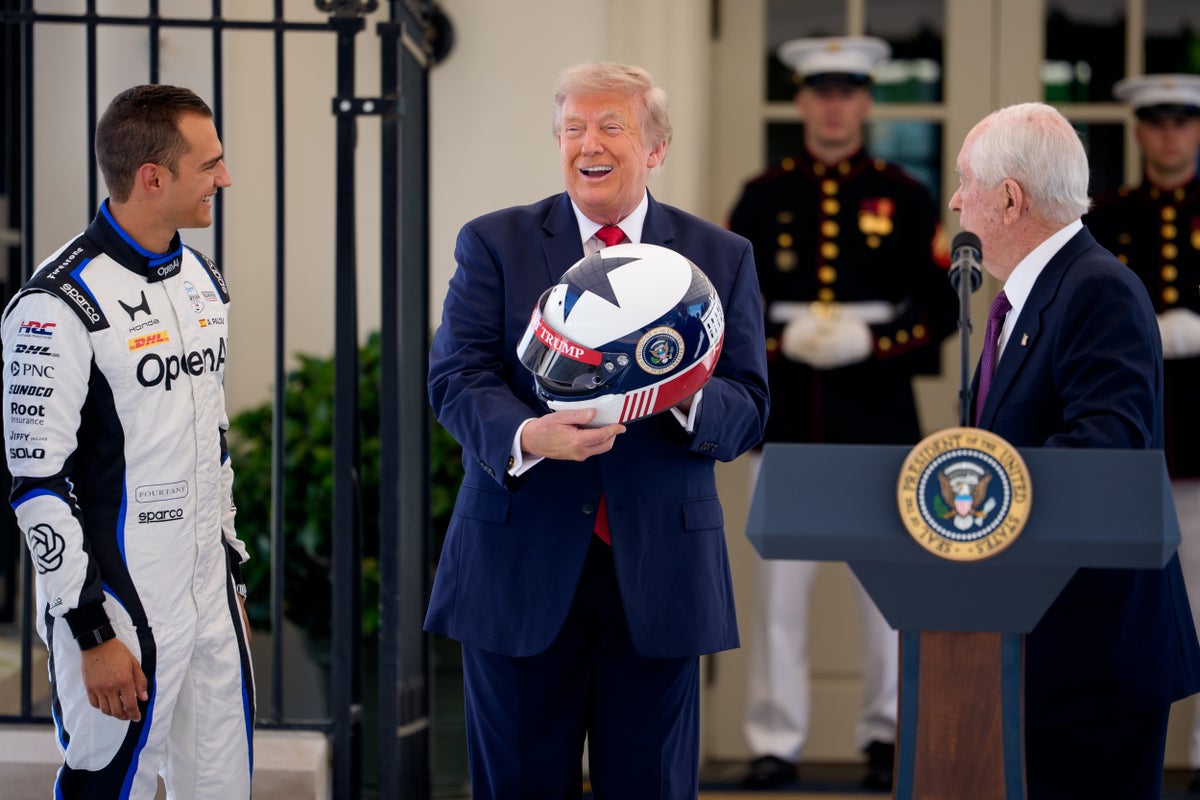
Now, his company logo is stamped across the rear wing of a carbon-fiber projectile. But more importantly, Arthur is standing six feet away from a former president, shaking hands in a makeshift green room while secret service agents sip lukewarm bottled water and eye the television monitors.
This is the hidden economy of modern racing. The Freedom Two Hundred Fifty Grand Prix has become a magnet for heavy-hitting executives, venture capitalists, and power brokers who realize that the traditional golf course handshake is dead. Deals aren't closed over a gentle nine iron anymore. They are forged in the deafening roar of a twin-turbocharged V6 engine, where the sheer terror and exhilaration of speed strip away corporate pretense and force genuine human connection.
The Economics of Adrenaline
Money talks. But in motorsports, money screams.
To understand why a new wave of corporate sponsors is suddenly flooding into this specific race, you have to look at the math of modern attention. The old advertising models are bleeding out. People skip commercials. They block banners. They live in curated digital bubbles.
Trackside is different. You cannot ad-block a three-thousand-pound missile screaming past your face at the speed of a commercial airliner.
When new sponsors sign on for an event like the Freedom Two Hundred Fifty, they aren't buying impressions. They are buying proximity. They are buying the visceral thrill of association. When a consumer watches a driver wrestle a bucking, twitching car through turn four without power steering, fighting G-forces that threaten to tear their helmet from their neck, that grit rubs off.
It is an old psychological trick, dressed up in high-tech telemetry and slick branding. We admire people who stare danger in the face and accelerate anyway. Corporations want you to think they do that, too.
Consider what happens next on Monday morning. Arthur goes back to his corporate headquarters in Chicago. His inbox is flooded, but the email from the CEO of a massive manufacturing conglomerate—someone he has been trying to land as a primary supply-chain partner for three years—begins with four simple words: Saw you at the race.
That single text message pays for the entire sponsorship package ten times over. The race was never about the television ratings. It was about getting the right five people in the same air-conditioned room, breathing the same smell of burnt oil, watching the same blur of motion.
The Human Cost of the Throttle
Yet, beneath the glossy veneer of corporate hospitality and heavy-handed networking, there remains the pure, unfiltered human element of the drivers themselves.
We forget them, sometimes. We get so caught up in the boardrooms and the stock prices and the sponsorship activations that we treat the cockpit like an executive toy.
It is not.
Step away from the luxury suites for a moment. Walk down to the garage area where the mechanics are desperately tearing down a gearbox after a practice crash. Look at the driver sitting on a metal folding chair in the corner of the trailer.
They are twenty-six years old. They have ice water in their veins and a mortgage on a modest house they rarely see. Their neck muscles are disproportionately thick from fighting lateral gravity. They carry scars they don't talk about, and they know, with absolute mathematical certainty, that a single microscopic failure of a titanium bolt at two hundred and fifteen miles per hour could end everything in a fraction of a heartbeat.
Why do they do it?
Not for the corporate sponsors. Not for Arthur in his navy suit.
They do it for the silence that comes right before the visor goes down. That terrifying, beautiful instant where the noise of the world—the boardrooms, the shareholders, the contracts, the expectations—vanishes entirely. There is only the steering wheel, the pedal, the tachometer, and the terrifying privilege of driving closer to the edge than anyone else dare go.
When the green flag drops at the Freedom Two Hundred Fifty, those two worlds collide. The multi-billion-dollar corporate machine and the lone human heart beating at five hundred beats a minute become the exact same thing.
The engines ignite. The grandstands shake. The CEOs lean forward in their glass boxes, holding their champagne flutes a little tighter. And for a few fleeting hours, everyone in the stadium is chasing the exact same ghost, burning rubber down a straightaway that leads straight into the unknown.