Glass is an arrogant material. It pretends to be nothing at all, a ghost in the window frame, until the light hits it just right and reminds you that it is heavy, sharp, and permanent. We throw it away by the truckload. Empty bottles of wine, amber beer stubs, green soda cylinders. They accumulate in our recycling bins like quiet accusations, destined for a furnace or a landfill, forgotten before the hangover even clears.
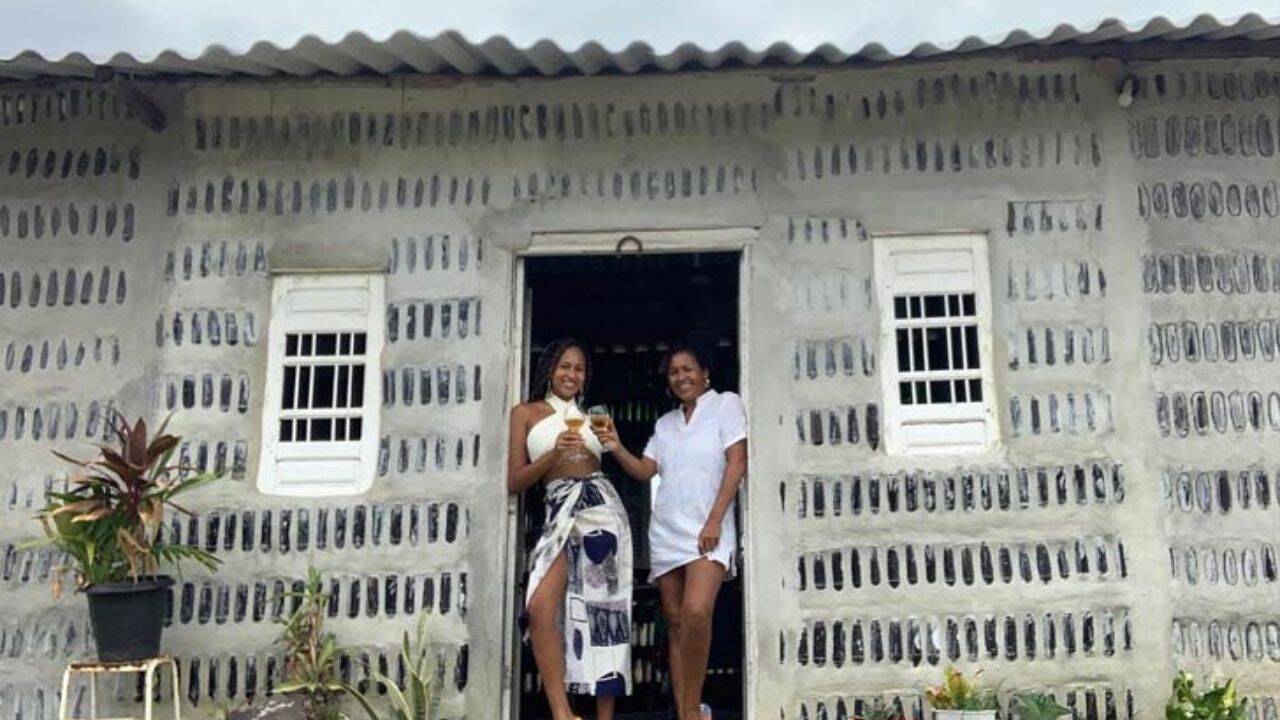
Adelma and her daughter looked at that mountain of waste and saw something entirely different. They saw bricks.
To understand what happened next, you have to understand the sheer weight of what they were up against. Building a house is already an act of stubborn optimism. Doing it without a traditional budget, fueled only by sweat, mortar, and eight thousand discarded glass bottles, borders on madness. But madness is often just vision that hasn't learned how to apologize yet.
Consider the raw logistics. Eight thousand bottles do not magically arrange themselves into walls. Every single one had to be collected, washed, stripped of stubborn paper labels, and dried. Imagine standing in a courtyard in Brazil, the tropical heat pressing down like a physical weight, your hands pruned from soapy water, surrounded by an ocean of green and brown glass. Your neighbors think you are eccentric. The local stray dogs treat your construction site as their personal obstacle course. Your lower back screams every time you bend down to lift yet another Heineken bottle.
Most people would quit by bottle fifty.
They kept going.
The technique itself is ancient in spirit, yet radical in execution. When you lay glass bottles horizontally, base-to-base, and bind them together with cement mortar, something magical happens to the architecture. The structure does not merely hold up a roof. It breathes.
Sunlight hits the exterior walls during the fierce afternoon hours, and instead of baking the interior, it filters through the glass. The rooms transform. The living room does not glow with the flat, sterile light of an overhead bulb; it fills with a scattered, cathedral-like luminescence. Emerald greens and deep ambers dance across the concrete floor. It is stained glass on an industrial, domestic scale.
By the time the project finished, standing proudly at seven bedrooms, the house defied every standard convention of modern suburban development. It wasn't just a shelter. It was an ecosystem.
Skeptics often point to the obvious worry. Is it safe? Will a rogue baseball or a minor tremor shatter the entire foundation into a hazard zone?
Here is where physics becomes poetry. Cylinders are among the strongest geometric shapes known to engineering. When laid horizontally with concrete locking the shoulders in place, a glass bottle can withstand staggering compressive loads. It acts like a Roman arch scaled down to the size of a hand. The glass is protected by the surrounding mortar matrix, cushioned and locked in place. It is surprisingly resilient.
More importantly, the thermal performance changes completely. Glass traps air. Sealed empty bottles create pockets of thermal insulation, keeping the interior cool when the Brazilian sun beats down relentlessly, and holding onto warmth when the evening damp sets in.
We have engineered our modern lives around convenience. We buy pre-fab drywall, plastic siding, and materials shipped across oceans, all while creating mountains of trash that outlive our grandchildren. This house stands as a quiet, stubborn rebuke to that cycle.
Think about the sheer tactile reality of living inside someone else's discarded Friday night. Every wall has a history you can trace with your fingertips. Here is a bottle that once held olive oil from a family dinner three towns over. There is a bottle that held soda at a child's birthday party. They are entombed in gray mortar, repurposed into something monumental.
It makes you look at your own trash differently. Every time you drop a bottle into the recycling bin, a tiny voice reminds you that it could be a window, a corner, a load-bearing pillar in a cathedral of everyday debris.
Adelma and her daughter did not just construct a seven-bedroom home. They built a physical manifestation of resourcefulness. They proved that beauty is rarely a matter of how much money you spend at the hardware store, but rather how deeply you are willing to look at the discarded scraps of the world around you.
Night falls over the valley. The exterior lights turn on, catching the exposed bottle ends protruding from the facade. The entire house begins to glow from the inside out, a sprawling mosaic of amber and emerald burning softly against the dark, refusing to be thrown away.