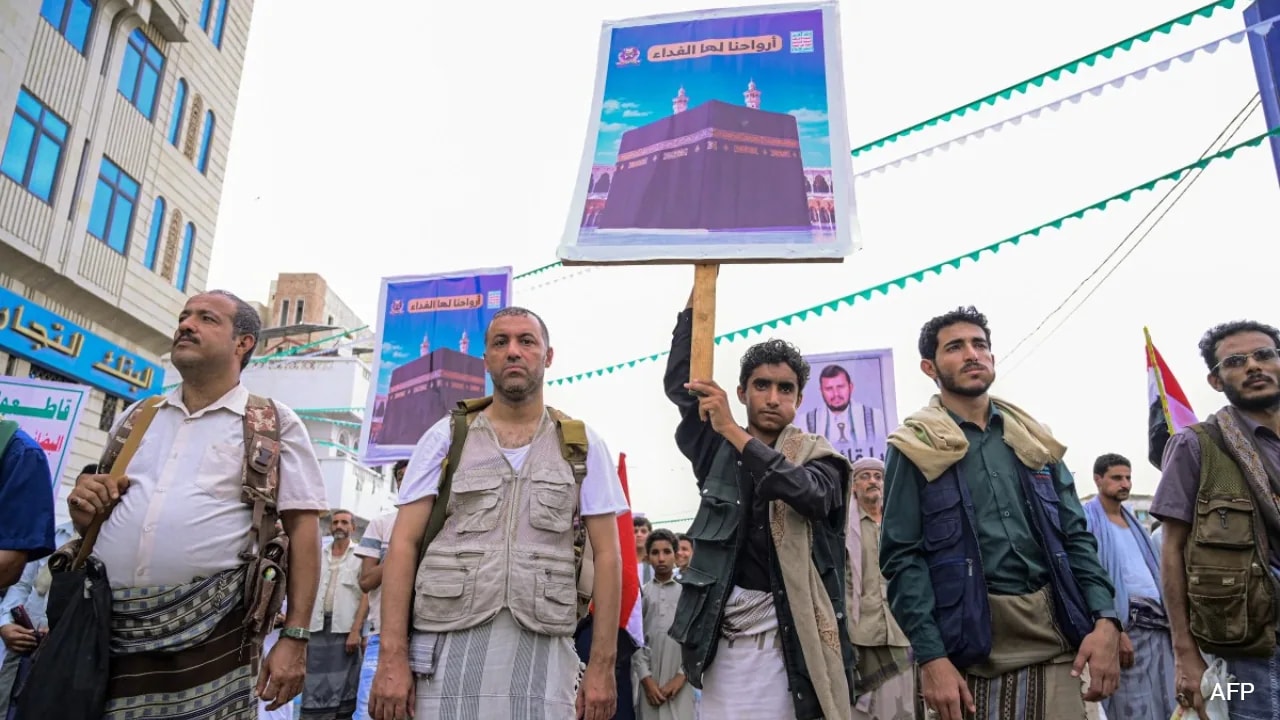
When unsealed court documents from the Jeffrey Epstein litigation began circulating globally, Yemen's Houthi movement spotted an immediate strategic opening. By extracting references to Saudi officials, sovereign wealth connections, and Western financial intermediaries from the Epstein files, Houthi media networks weaponized the disclosures to attack the legitimacy of the Saudi monarchy. Rather than relying solely on ballistic missiles and drones, the group deployed asymmetric information warfare—using Western judicial transparency to amplify narratives of elite corruption, moral hypocrisy, and Western subservience aimed at eroding Riyadh's standing across the Middle East.
This pivot from kinetic bombardment to reputational sabotage marks a sophisticated evolution in how non-state actors wage modern conflict.
The Anatomy of an Information Operation
Information warfare rarely requires fabricating evidence from scratch. The most effective campaigns take verified, publicly available records and strip away legal nuance until only the most damaging implication remains.
The unsealing of hundreds of pages of depositions, flight logs, and contact books tied to Epstein provided an ideal reservoir of raw material. Because Epstein cultivated relationships across global finance, academia, and statecraft, his records naturally contained passing mentions of prominent figures, diplomats, and business associates linked to Gulf states. In the hands of a disciplined propaganda apparatus, a mere mention in a deposition or an entry in an address book transforms overnight into proof of deep complicity.
Houthi media outlets, operating through satellite channels like Al-Masirah and sprawling Telegram networks, moved quickly to curate these excerpts. They translated specific passages into Arabic, paired them with graphic overlays, and pushed them across social media platforms frequented by audiences in Yemen, Saudi Arabia, and the broader Arab world.
The messaging followed a clear, calculated formula. First, anchor the claim in an undeniable Western legal document so critics cannot dismiss it as pure invention. Second, connect the financial and social circles of Epstein to the modernizing agenda of the Saudi leadership. Third, frame the entire dynamic as a betrayal of Islamic values and Arab sovereignty.
Why Moral Hypocrisy Cuts Deeper Than Missiles
To understand why the Houthis invested heavily in amplifying the Epstein files, you have to look at the specific vulnerabilities of the House of Saud.
For decades, the legitimacy of the Saudi state rested on two pillars: economic stability and its role as the custodian of Islam's two holiest sites. Under Crown Prince Mohammed bin Salman's Vision 2030, Riyadh has aggressively pursued rapid social liberalization, foreign direct investment, and high-profile partnerships with Western entertainment, sports, and financial institutions. While these reforms have energized a younger demographic inside the kingdom, they have also created friction with traditionalists across the region.
The Houthis, officially known as Ansar Allah, build their entire ideological identity around resistance to Western hegemony and moral decadence. When they highlight alleged links between Saudi elites and Epstein's network, they are striking directly at the ideological fault lines of the region.
A drone strike on an oil facility causes temporary economic pain and triggers international condemnation of the attackers. A viral narrative tying rival leaders to one of the most notorious scandals in Western history inflicts lasting reputational damage without firing a single shot. It forces Riyadh onto the defensive in the court of regional public opinion, where denials rarely travel as fast as the initial accusation.
Weaponizing Western Transparency
There is a sharp irony in how anti-Western militant groups consume and repurpose Western legal disclosures. The transparency mechanisms of the United States court system—designed to serve public accountability—frequently generate ammunition for actors who reject those very institutions.
Consider a hypothetical example of how this amplification pipeline operates in practice. Suppose a declassified deposition mentions that a financial advisor who once consulted for a Gulf sovereign fund attended a dinner hosted by an Epstein associate in 2012. In a Western courtroom, that single line carries almost zero evidentiary weight regarding state policy or criminal liability. Yet once exported into an active conflict zone, the degrees of separation vanish. Through selective editing and repetitive broadcasting, the narrative shifts from "an external consultant attended a dinner" to "state institutions were entangled with Epstein's network."
Fact-checkers and diplomatic spokespeople struggle to counter this tactic because the underlying document is real. You cannot debunk the existence of the court file itself. Explaining the difference between peripheral association and substantive involvement requires nuance—a commodity that does not survive on short-form video feeds or encrypted messaging channels.
The Strategic Context of the Red Sea Standoff
The timing of this narrative offensive cannot be separated from the broader geopolitical chessboard. Following years of devastating conflict in Yemen, Riyadh and the Houthis entered fragile, protracted negotiations aimed at securing a permanent ceasefire and a Saudi exit from the war. Simultaneously, the outbreak of the Gaza war and the subsequent Houthi blockade of commercial shipping in the Red Sea dramatically elevated the group's regional profile.
By positioning themselves as the primary regional force willing to confront Israel and its Western backers, the Houthis gained unprecedented traction on the Arab street. Exploiting the Epstein files allowed them to maintain that momentum while keeping pressure on Saudi Arabia during sensitive diplomatic maneuvering.
Leverage Without Escalation
Openly resuming cross-border missile attacks against Saudi cities carries severe risks for the Houthis. It would collapse truce negotiations, invite massive retaliatory airstrikes, and jeopardize the economic concessions they hope to extract from Riyadh.
Information operations offer a low-cost, high-reward alternative. By flooding the regional information ecosystem with damaging narratives derived from the Epstein disclosures, the Houthis can remind Riyadh of their capacity to destabilize the kingdom's international image and domestic prestige—all while staying strictly below the threshold of renewed military conflict.
- Zero kinetic cost: Digital campaigns require servers and translators rather than ballistic missile components and smuggling networks.
- Plausible deniability: Viral social media trends can be attributed to organic public outrage rather than official state-aligned directives.
- Global reach: English-language amplification allows Houthi-aligned accounts to tap into existing Western political debates and conspiracy ecosystems, multiplying their audience far beyond the Middle East.
The Limits of Narrative Sabotage
Despite its tactical cleverness, weaponizing Western scandals has clear boundaries. Propaganda thrives on confirmation bias; it is extraordinarily effective at energizing audiences who already distrust the target, yet far less capable of shifting hardened geopolitical realities.
In Washington, London, and Brussels, policymakers do not formulate Gulf security strategy based on Houthi Telegram channels. Western intelligence agencies and diplomats possess their own assessments of the Epstein files and are well aware of how foreign adversaries manipulate open-source intelligence. For Saudi Arabia's international business partners, sovereign capital flows and energy security outweigh viral outrage cycles.
Inside Saudi Arabia itself, the state maintains tight control over domestic media and commands vast digital counter-messaging resources. While whispers circulate on encrypted apps, the domestic population largely views Houthi media through the lens of an active wartime adversary that spent years launching rockets at Saudi infrastructure. Messenger credibility matters, and for many Saudis, the source of the accusation automatically taints the message.
The Double-Edged Sword of Moral Policing
Relying heavily on moral outrage also exposes the Houthis to scrutiny regarding their own governance. As the group broadcasts sermons condemning the alleged corruption of rival elites, populations living under Houthi rule in northern Yemen face severe economic deprivation, unpaid public salaries, arbitrary detentions, and harsh restrictions on civil liberties.
Overplaying the moral superiority card risks alienating local Yemenis who care far more about basic governance and food security than about declassified court documents from New York. Information warfare can distract an audience for weeks or even months, but it cannot substitute for functioning institutions or sustainable economic policy.
A Blueprint for Future Asymmetric Conflicts
What happened with the Epstein files is not an isolated media curiosity. It is a preview of how modern conflicts will increasingly be fought in the margins of Western legal and political systems.
Every major data leak, parliamentary inquiry, or unsealed court docket in the West now doubles as an open-source weapons depot for foreign adversaries. Whether it is the Panama Papers, corporate arbitration filings, or civil litigation depositions, armed groups and hostile intelligence services have learned to mine Western transparency for localized political ammunition.
They no longer need to hack classified servers to embarrass a rival government. They simply wait for a judge in Manhattan or London to unseal a docket, hire a team of savvy translators, and let the algorithms do the rest.