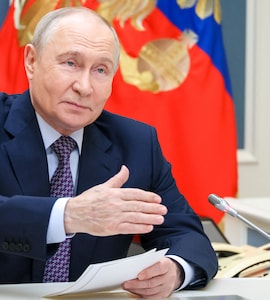
Standard diplomatic headlines treat a pledge of cooperation between Moscow and the Vatican as a humanitarian breakthrough, yet a localized truce over Oleshky operates under strict game-theoretic constraints where tactical incentives and operational bottlenecks govern every convoy. When Pope Leo XIV phoned Vladimir Putin from Rome's Gemelli Hospital on October 16, 2026, to press for food, medical aid, and voluntary evacuations for the Kherson region town, the Kremlin signaled willingness to cooperate without publicly committing to a ceasefire. Subsequent developments—including outreach to Ukrainian President Volodymyr Zelenskyy and a partial truce initiated on October 27 to evacuate critical residents—demonstrate that micro-level humanitarian access can be negotiated even when macro-level peace talks remain deadlocked.
Deconstructing Standard Wire Coverage
Conventional wire dispatches around the Oleshky exchange tend to compress a complex multi-actor negotiation into a binary narrative: Pope Leo pleads, Putin agrees to cooperate, and the Vatican notes a deepening crisis while the Kremlin omits ceasefire language. That framing is accurate on the surface, yet it leaves critical analytical gaps. First, it treats "cooperation" as a single diplomatic gesture rather than a conditional bargaining move across two belligerents and a neutral intermediary. Second, it treats humanitarian delivery as an act of goodwill rather than a cost-benefit calculation shaped by front-line attrition, supply constraints, and reputational signaling.
To understand whether a localized aid corridor in Oleshky can succeed—and why initial pledges rarely translate immediately into sustained logistics—we have to separate verified facts from educated hypotheses.
Known facts from public reporting:
- Pope Leo XIV spoke with Vladimir Putin by telephone on October 16, 2026, while recovering from surgery for lung cancer at Gemelli Hospital in Rome, urging arrangements to get food and medical supplies into Russian-controlled Oleshky and enable safe, voluntary civilian evacuations.
- The Kremlin stated that Putin agreed to cooperate on the matter without publicly referencing a ceasefire.
- Pope Leo also spoke with Ukrainian President Volodymyr Zelenskyy to urge humanitarian cooperation between Ukraine and Russia.
- Oleshky, captured by Russian forces in February 2022, had a pre-war population of roughly 24,000 and an estimated remaining population of around 1,700 residents, including 47 children, amid severe food shortages and mined access routes.
- A partial truce was initiated on October 27, 2026, to facilitate a humanitarian mission evacuating residents in critical condition from Oleshky.
Educated hypotheses:
- Moscow likely views a tightly scoped humanitarian concession in a frontline pocket as a low-cost reputational hedge that projects flexibility to non-Western and neutral actors without altering its territorial posture or broader war aims.
- Kyiv's willingness to participate in a localized pause depends on verifiable de-escalation along adjacent firing lines so that a humanitarian window does not become an asymmetric intelligence or force-repositioning advantage for Russian units.
- Even when political leaders assent to a truce, physical clearance of mines, drone-monitoring hazards, and last-mile distribution friction remain the primary determinants of whether food and medical supplies reach civilians before winter intensifies.
The Three Pillars of Vatican Humanitarian Leverage
Vatican diplomacy in the Russia-Ukraine war does not rely on hard power, sanctions, or intelligence assets. Instead, its operational model rests on three structural pillars that make localized humanitarian openings possible when conventional diplomatic channels are frozen.
The first pillar is moral and institutional asymmetry. Because the Holy See exercises no territorial sovereignty of the kind that threatens state borders or military alliances, it can engage belligerents on humanitarian terms without conferring formal legitimacy on occupation. Pope Leo XIV's intervention—conducted while recuperating from thoracic surgery—reinforced an image of persistence and personal stakes that gives both sides domestic and international cover to say yes to a narrow relief request.
The second pillar is transactional compartmentalization. Rather than attempting to resolve sovereignty, security guarantees, or territorial control in a single package, Vatican intermediaries isolate discrete, high-urgency tracks: prisoner exchanges, the return of separated children, medical supplies, and targeted evacuations. Compartmentalization lowers the perceived stakes of each individual decision. A leader who refuses a broad ceasefire can still agree to a time-bound medical evacuation without conceding a strategic principle.
The third pillar is triadic synchronization. Humanitarian access on an active front is rarely bilateral in execution, even if a phone call happens between two parties. Ensuring that convoys or evacuation teams are not struck by artillery, mortars, or loitering munitions requires parallel alignment with both Moscow and Kyiv. Pope Leo's outreach to both Putin and Zelenskyy reflects this operational reality: a corridor only functions if both sides hold fire in the designated sector during the agreed window.
The Cost Function of a Localized Truce
Why would a military command that has restricted access to a frontline town suddenly entertain a humanitarian truce? A localized ceasefire is governed by a clear cost function weighing military risk, logistics friction, and strategic signaling.
On the side of military risk, any pause in active fires carries two opposing hazards for a force holding or contesting ground near Oleshky. A truce reduces the immediate risk of friendly casualties during supply movements and lowers the chance of collateral escalation during a high-visibility relief effort. Conversely, commanders worry that a local pause can be used by the opposing side to observe positions, rotate troops, or resupply forward elements. To contain that risk, localized truces tend to be narrow in geography, brief in duration, and tightly bounded around specific tasks such as evacuating critical patients.
On the side of logistics friction, political permission is necessary but not sufficient. Frontline logistics in the Kherson sector face severe physical constraints: damaged infrastructure, active drone surveillance, and heavy mining along approach roads. Moving food, medical kits, and ambulances requires route verification, demining or safe-lane guarantees, medical triage capacity, and clear rules of engagement for any breach. Each of these steps adds lead time between a presidential phone call and actual relief on the ground.
On the side of strategic signaling, agreeing to cooperate on a papal plea carries distinct signaling value for each actor:
- For Moscow, cooperating on a humanitarian appeal signals responsiveness to high-profile moral pressure and demonstrates tactical control over occupied territory without binding the Kremlin to a wider ceasefire.
- For Kyiv, accommodating a humanitarian window demonstrates commitment to civilian welfare and international humanitarian norms while keeping focus on the broader threat posed by restricted food access and occupation conditions.
- For the Vatican, securing even a partial truce validates an institutional pragmatist approach—turning moral appeals into measurable, if limited, relief operations rather than rhetorical statements alone.
Cause-and-Effect Chain From Call to Corridor
Articles that stop at "Putin agrees to cooperate" miss the causal chain that separates diplomatic rhetoric from physical survival in a town like Oleshky. When roads are mined, civilian food reserves are exhausted, and winter approaches, humanitarian relief moves through a sequential bottleneck.
First, diplomatic intent must convert into operational rules. A general pledge to cooperate does not tell a field commander whether drones are barred from flying over an evacuation route or how long a pause lasts. Without clear operational parameters, field units default to standard combat caution.
Second, route safety must precede volume delivery. Evacuating critical residents or bringing in emergency rations requires navigable, de-conflicted corridors. Even when a partial truce begins, physical hazards—mines, unexploded ordnance, and damaged crossings—cap how many vehicles can move and how fast.
Third, triage determines impact under scarcity. With roughly 1,700 residents remaining in Oleshky out of a pre-war population of about 24,000, available aid and evacuation slots are scarce relative to need. Prioritizing medically critical cases or the most vulnerable households maximizes immediate life-saving value, but it also highlights that a single partial truce addresses acute emergencies rather than restoring normal supply chains.
Fourth, verification sustains trust across cycles. A localized truce holds best when both sides observe predictable boundaries and avoid exploiting the pause for offensive gain. Any perceived violation during a humanitarian window raises the cost of negotiating the next one.
Limitations and Operational Blind Spots
Even well-executed humanitarian diplomacy has strict boundaries that analysts and planners must state plainly. A localized truce in one town does not create a durable peace process, nor does it resolve systemic deprivation across an entire front. Diplomatic leverage cannot force full compliance from reluctant field commanders, and weather, shifting front lines, or sudden escalations can halt a corridor on short notice.
There is also an informational blind spot in frontline reporting. Independent, real-time verification inside contested or occupied areas is inherently constrained, which means outside observers often see diplomatic announcements and evacuation milestones before they have full visibility into on-the-ground distribution bottlenecks or lingering hazards. Treating a partial truce as a permanent solution is a classic analytical error; treating it as a bounded operational window is far closer to reality.
Strategic Play for Humanitarian and Policy Teams
For humanitarian coordinators, diplomats, and analysts tracking the Oleshky corridor and similar frontline flashpoints, the optimal strategic play is to institutionalize narrow, verifiable micro-truces tied to explicit operational protocols rather than waiting for a comprehensive ceasefire. Teams should structure engagement around three concrete actions: pair every high-level diplomatic appeal immediately with technical de-confliction terms covering route boundaries, timing, and medical priorities; separate urgent civilian evacuations and life-saving medical drops from broader political negotiations so progress on one is not held hostage to stalemate on another; and measure success by verified civilian outcomes—patients evacuated and supplies delivered—rather than headline pledges of cooperation.



