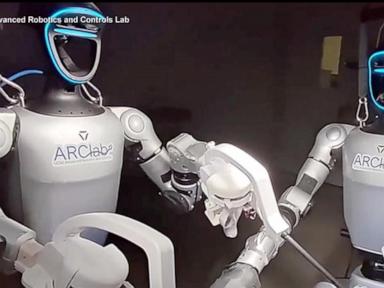
The tech press is swooning over videos of bipedal, metal-skinned humanoids standing at operating tables. They watch a robot gently pick up a scalpel with five-fingered hands, and they declare that the next revolution in medicine has arrived. They are wrong.
The breathless coverage surrounding humanoid robots entering the operating room relies on a fundamentally flawed premise: that the human form is the peak design for performing surgery. It isn't. Human anatomy is a evolutionary compromise of survival mechanics, not an optimized chassis for microsurgery. Recently making news lately: The Pentagon Breaks Its Own Rules to Buy Cheap Hypersonic Missiles.
Chasing the humanoid form factor in medicine is an expensive, ego-driven detour. I have spent years analyzing capital allocation in medical device procurement, and I have watched hospitals blow millions on tech theater while ignoring the boring, non-humanoid automation that actually saves lives. The push to put a C-3PO clone in scrubs is the ultimate example of solving the wrong problem.
The Myth of the Universal Form Factor
Proponents argue that because operating rooms are built for humans, robots must be shaped like humans to navigate them. This is lazy engineering logic. Further details on this are detailed by TechCrunch.
An operating room does not need a robot with legs to walk through the door. It needs a system integrated into the room itself. When you insist on a humanoid shape, you inherit every single physical limitation of the human body without any of our biological advantages.
- Two arms are a limitation. Why restrict a surgical platform to two appendages when a ceiling-mounted array could deploy six, specialized tool-arms simultaneously?
- The wrist is a bottleneck. A human wrist has seven degrees of freedom. An articulated robotic arm on a fixed base can rotate infinitely, bending at angles that would snap a human radius and ulna.
- Bipedal balance is wasted energy. A robot standing on two legs must dedicate immense computational power and battery life just to avoid falling over on a slick operating room floor. A bolted or heavy, low-center-of-gravity wheeled base is infinitely more stable, removing the risk of a kinetic catastrophe mid-incision.
Intuitive Surgical’s da Vinci system succeeded precisely because it does not look like a human. It looks like an industrial loom crossed with a microscope. It sits over the patient like an alien spider because that shape allows for unparalleled stability and access. Trying to replace that elegant design with a bipedal robot holding traditional surgical instruments is a massive step backward. It forces a digital system to use analog interfaces.
Dismantling the "People Also Ask" Delusions
If you look at what hospital executives and tech enthusiasts are searching for online, the misconceptions become glaringly obvious. Let’s address the flawed premises driving this trend.
Will humanoid robots reduce surgical errors?
No. The humanoid form factor actually introduces new vectors for error. When you create a robot with a head, torso, and limbs, you create hundreds of friction points, joint failures, and stabilization lag times. If a humanoid robot loses power or experiences a software glitch, it can collapse onto the patient. A multi-jointed arm attached to a structural column simply locks in place via mechanical brakes.
Can a humanoid robot replace a human surgeon faster than specialized automation?
The opposite is true. Training a humanoid robot to mimic human hand-eye coordination with loose instruments requires massive neural network training for sub-optimal results. Conversely, specialized automated tools—like stereotactic radiosurgery platforms or autonomous bone-milling systems used in orthopedic surgery—operate with sub-millimeter precision because they map the patient directly to a digital grid. They do not need to "see" the tool with eyes or "feel" it with robotic fingers. They are the tool.
The Economics of Tech Theater
Hospital margins are razor-thin. Yet, hospital boards routinely fall for the marketing glare of high-profile tech acquisitions. Acquiring a humanoid robot for a surgical department is an exercise in public relations, not clinical utility.
Consider the actual cost structure of automated surgery:
| Metric | Specialized Surgical Platforms (e.g., Da Vinci, Mako) | Hypothesized Humanoid Surgical Systems |
|---|---|---|
| Capital Expenditure | $1.5M - $2.5M | Expected $3M+ (due to structural complexity) |
| Setup Time | 10-15 minutes (docking arms) | Unknown (navigating, positioning, calibrating balance) |
| Mechanical Failure Points | Low to Moderate (contained within sealed arms) | Extremely High (dozens of actuators per limb) |
| Sterilization Complexity | High (disposable sheaths and instruments) | Near Impossible (exposed joints, wires, and walking gear) |
Imagine a scenario where a hospital acquires a $3 million humanoid robot. To justify that spend to donors and the press, they have to use it. But sterilizing a bipedal robot that just walked down a hallway into a clean room is a nightmare. Humanoids are covered in external hinges, exposed gaps for heat dissipation, and synthetic materials that cannot tolerate the high-temperature steam of an autoclave. You end up wrapping a giant metal man in plastic bags, praying that no particulate matter falls into the open abdominal cavity of the patient below.
Real Automation is Invisible and Ugly
The true future of surgery is not a shiny robot standing at the table; it is the table itself, the lights, and the software running behind the scenes.
We are already seeing incredible leaps in autonomous surgery through systems that don't look like anything from a sci-fi movie. Look at Monarch or Ion platforms used for robotic bronchoscopy. They utilize ultra-thin, steerable catheters that navigate deep into the periphery of the lung. A humanoid robot cannot do this. It cannot shrink its hands to the size of a millimeter to crawl inside a bronchiole.
The value is in the data and the micro-actuation, not the humanoid shell.
If we want to democratize high-end healthcare, we must stop building robots in our own image. We must build them in the image of the problem they are trying to solve. For orthopedic surgery, that looks like a high-precision CNC mill. For cardiac surgery, it looks like an intelligent magnetic navigation array. For trauma, it looks like a rapidly deployable, multi-armed pod that clamps onto a stretcher.
Stop Designing Robots for the Gram
The tech companies building these humanoids are not doing it because it’s the best way to heal patients. They are doing it because humanoid videos go viral on social media. They do it because venture capitalists like investing in things that look like sci-fi movies from their childhood.
It is easy to get funding for a robot that looks like a person. It is hard to get funding for a revolutionary new valve geometry or an algorithmic imaging filter that reduces surgical latency by four milliseconds. But those four milliseconds are what keep a patient from bleeding out on the table—not whether the machine doing the cutting has a face.
Hospital executives need to reject the vanity metrics. Stop buying the hype of the bipedal surgeon. Demand tools that maximize stability, minimize joint complexity, and integrate directly into the digital infrastructure of the modern hospital.
The next time a salesperson shows you a video of a metal humanoid holding a scalpel, ask them one question: "Why did you waste three years building legs when the patient is lying completely still?" Then show them the door.