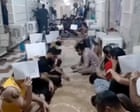
Information doesn't just flow freely behind the heavy walls of Iran's notorious detention facilities. It leaks out in drops, carried by smuggled messages and desperate families waiting outside. Right now, a brutal reality is surfacing from inside Greater Tehran Penitentiary. Inmates are taking drastic measures to protest soaring execution rates, sewing their lips shut in a desperate hunger strike. You need to understand what is actually happening behind those gates, because the headlines only scratch the surface of a rapidly escalating human rights crisis.
Executions in Iran are surging at an alarming pace. International monitors, including organizations like Amnesty International and the United Nations, have repeatedly flagged the dramatic spike in capital punishment. When peaceful dissent is crushed and legal representation is routinely denied, desperate people run out of options. That is the exact context behind the sewing of lips. It's an agonizing, silent scream for attention directed at a global community that often looks away.
The Grim Reality Inside Greater Tehran Penitentiary
Greater Tehran Penitentiary, often referred to locally as Fashafouyeh, is not built for rehabilitation. It is built to contain. Located in an arid desert area south of the capital, the facility routinely faces severe overcrowding, poor sanitation, and a glaring lack of adequate medical care.
Prisoners held here face harsh conditions daily. When you add a wave of political dissidents and ordinary citizens caught up in shifting legal crackdowns into these cramped blocks, the pressure cooker explodes.
- Overcrowding: Cells hold far more people than they were ever designed to accommodate.
- Isolation: Access to outside communication is heavily restricted or entirely cut off.
- Medical Neglect: Basic healthcare is treated as a luxury rather than a fundamental right.
These aren't just administrative flaws. They are systematic tools used to break the human spirit. Yet, the hunger strike proves that spirit hasn't completely shattered.
Why Prisoners Choose Extreme Protests
Sewing your lips shut sounds medieval. It sounds like something out of a fictional dystopia. But for inmates facing imminent execution with zero legal recourse, it represents the only tool left in their arsenal.
When you strip away a person's voice, their body becomes their final platform.
Hunger strikes are dangerous games of chicken with authorities who hold all the cards. In facilities known for brutal guards and institutional apathy, striking inmates risk severe retaliation. Beatings, extended solitary confinement, and denial of family visitation rights are standard responses to prison protests.
Despite these risks, groups of prisoners decided that quiet compliance meant a guaranteed death sentence anyway. They chose to fight back with silence.
The Broader Escalation of Capital Punishment
The timing of this protest aligns with a wider judicial shift inside Iran. Over the last year, human rights groups documented hundreds of executions. Many follow hasty trials that last only minutes and lack basic due process.
The state uses these executions to project absolute control. Following waves of nationwide anti-government protests, the judicial apparatus accelerated its output of death sentences. They target activists, ethnic minorities, and petty criminals alike.
You cannot separate the hunger strikes from this macro-level crackdown. The men and women refusing food are reacting directly to a conveyor belt of state-sanctioned killings. Every time an execution notice is signed, the temperature inside the prison rises.
What the International Community Misses
Media coverage often treats these events as isolated human interest stories. They pop up in your feed for a day, and then the algorithm moves on. That approach lets the systemic machinery continue operating in the dark.
Real accountability requires sustained focus. When foreign governments issue standard statements of condemnation, prison officials inside Tehran rarely flinch. They know that diplomatic pressure often wanes once the news cycle shifts.
The families standing outside the prison gates understand this better than anyone. They share information on encrypted messaging apps, dodging intelligence surveillance to let the world know if their loved ones are still breathing.
Tracking the Path Forward
Ignoring these crises allows them to compound. If you want to grasp the true stability of a regime, look at how it treats its most vulnerable and imprisoned populations. A government resorting to mass executions to maintain order is not operating from a position of strength. It is operating out of fear.
Pay attention to the verified reports coming from human rights defenders on the ground. Support independent documentation efforts. The people sewing their lips shut inside Greater Tehran Penitentiary are gambling with their lives so the world might finally open its eyes.