When a Category 5 monster like Hurricane Polo spins up over sea-surface temperatures climbing past 30 degrees Celsius, the reflexive public panic usually fixes on direct landfalls, catastrophic wind shear, and flattened coastal towns. For Southern California, however, the threat profile of an eastern Pacific titan operates under entirely different rules.
Hurricane Polo did not smash directly into San Diego or Los Angeles. Instead, it tracked south of the border, raking the Baja California Peninsula before degenerating into a moisture-laden trough. Yet the comfortable assumption that the region dodged a bullet ignores the persistent vulnerabilities baked into our coastal engineering, changing ocean temperatures, and historical amnesia. We treat these distant storms as weather curiosities while local infrastructure absorbs the subterranean shocks.
The Oceanographic Mechanism Behind the Swell
To understand why a storm hundreds of miles away can trigger emergency declarations in Long Beach or Ventura, you have to look at the physics of long-period swells. When sustained winds inside a system like Polo exceed 180 miles per hour, they transfer staggering amounts of kinetic energy directly into the water column. That energy doesn't simply dissipate upon striking open ocean. It organizes into coherent trains of waves that radiate outward across thousands of miles of the Pacific basin.
By the time these waves arrive at the continental shelf off Southern California, they compress and steepen. Astronomical high tides frequently compound the danger, aligning with peak wave heights to overwhelm aging seawalls.
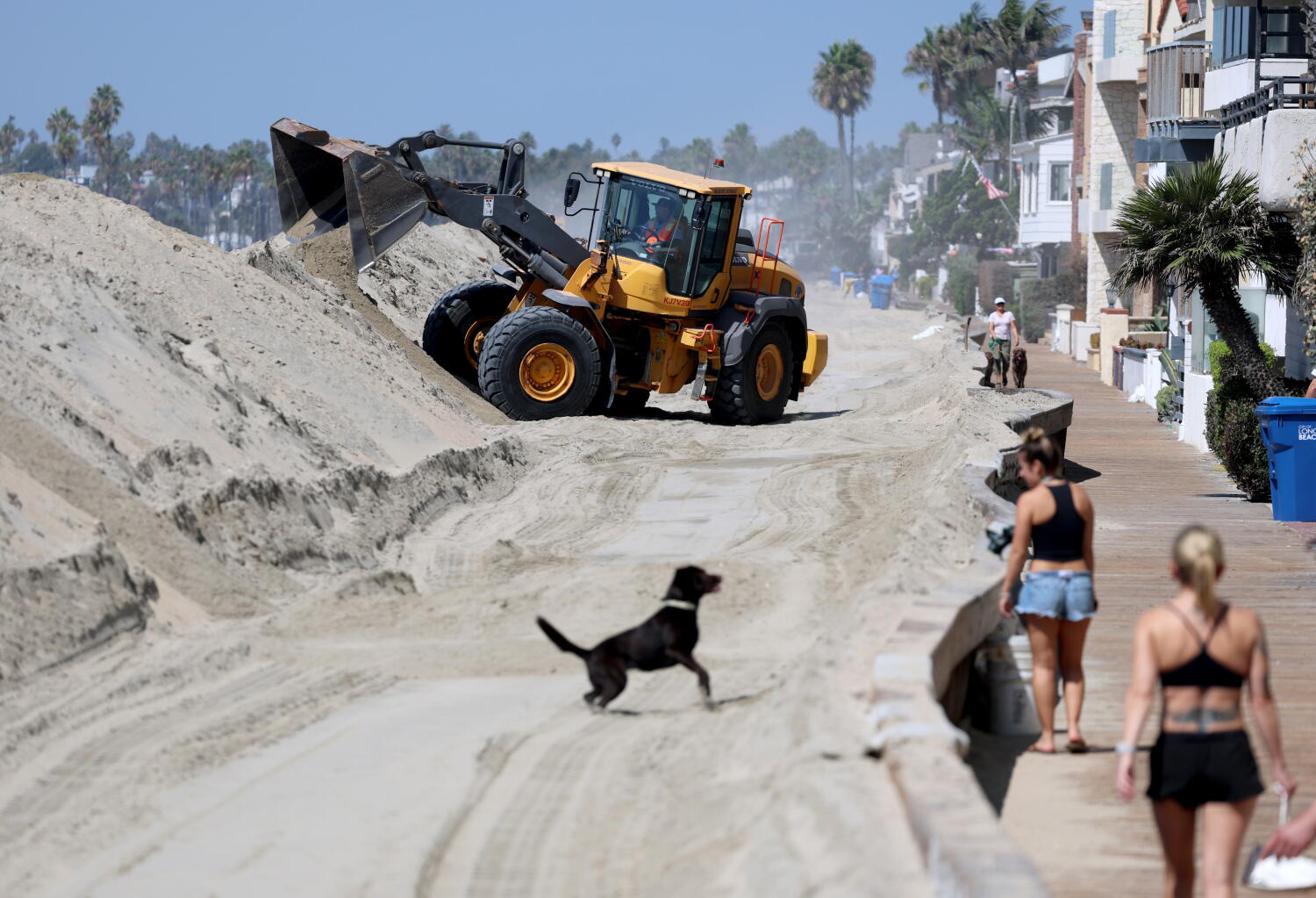
Consider the hypothetical scenario of a high-tide cycle coinciding perfectly with a 14-foot southerly swell train. Seawater routinely breaches concrete barriers, surging into low-lying parking lots, undermining coastal highway foundations, and forcing emergency actions like the preemptive relocation of vulnerable sea turtle nests by marine biologists. The water does not need to fall from the sky as torrential rain to cause millions of dollars in structural damage.
Historical Blind Spots and Infrastructure Realities
Southern California possesses a dangerous institutional memory. Officials react fiercely to immediate anomalies—such as the severe coastal beating handed down by historical analogs like Hurricane Marie—by rushing temporary rock revetments or constructing emergency breakwater reinforcements. But these fixes remain localized patches on a regional highway system and beachfront property grid built decades ago under vastly different climatic baselines.
Many municipal stormwater discharge systems rely on gravity drainage outfalls facing the ocean. When offshore storm surges elevate sea levels at the coast, those outfalls effectively act in reverse. Instead of draining street runoff into the sea, the ocean pushes saltwater backward through the conduits, flooding interior intersections during completely dry weather overhead. This backflow phenomenon catches drivers and municipal planners off guard because it occurs under clear blue skies, completely divorced from local precipitation.
Furthermore, sea-surface temperature anomalies driven by persistent El Niño cycles provide these tropical systems with extra thermal fuel, increasing the frequency with which eastern Pacific storms undergo rapid intensification. A storm that might have fizzled out fifty years ago in cooler waters now maintains its structural integrity much farther north and west, keeping emergency management teams on edge well into autumn.
Rethinking Coastal Resilience
Relying on luck and reactive emergency sandbagging is a failing strategy. True resilience requires shifting away from rigid concrete armor—which often exacerbates erosion on adjacent unprotected stretches of sand—toward dynamic coastal zoning and natural dune restoration. When authorities merely rebuild the same failing seawall after every distant hurricane cycle, they are inviting a larger, more expensive failure down the line.
The real narrative of Hurricane Polo is not about what missed us. It is about how easily our interconnected coastal systems are disrupted by distant meteorological violence, and how poorly prepared our low-lying infrastructure remains for the steady creep of high-energy marine events.
The next big swell is already forming over warming waters down south, and the concrete walls we rely on are only getting older.
Hurricane Polo Hits Baja — Major Southwest Flood Threat
This video provides an in-depth meteorological breakdown of how Hurricane Polo impacted regional weather patterns and triggered widespread flooding across the Southwest.