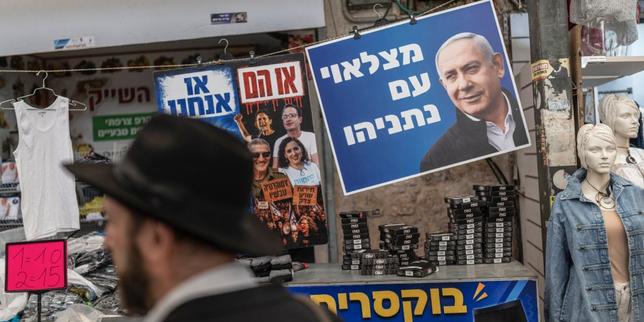
Every major newsroom from London to New York is running the exact same script right now. They look at Benjamin Netanyahu, they look at the International Criminal Court arrest warrant hanging over his head, and they declare him a cornered animal fighting for his political life.
That narrative is pure intellectual laziness. Don't miss our previous coverage on this related article.
Western commentators view the ICC through a lens of international shame. They assume that when The Hague issues a warrant, voters recoil in horror and abandon the accused leader to save their country's global standing. In Tel Aviv, Jerusalem, and Beersheba, that logic operates completely in reverse. International condemnation does not sink a right-wing Israeli prime minister. It acts as rocket fuel.
Having spent the last fifteen years analyzing Middle Eastern electoral mechanics and watching foreign policy pundits repeatedly misread the Knesset, I can tell you that the mainstream press is missing the real story. Netanyahu is not surviving despite the ICC warrant. He is weaponizing it to survive. If you want more about the context here, The Guardian offers an excellent summary.
The Myth of International Isolation as a Political Liability
The standard media framing relies on a fundamental misunderstanding of Israeli domestic psychology. Analysts in Washington assume Israeli voters weigh their ballot choices against how Brussels or the United Nations will react.
They do not.
For a massive segment of the Israeli electorate, international institutions like the UN and the ICC are not neutral arbiters of justice. They are perceived as structurally biased forums that hold Israel to a standard applied to no other nation on earth. When the ICC issued its warrant, it did not trigger a wave of domestic soul-searching. Instead, it validated the exact worldview Netanyahu has spent three decades cultivating—that the world is inherently hostile, and only a strongman willing to defy global pressure can keep the country safe.
Consider the structural reality of the Rome Statute, the 1998 treaty that established the ICC. Israel never ratified it. Neither did the United States. The court claims jurisdiction based on the "State of Palestine" acceding to the treaty in 2015, a legal maneuver that Israeli legal scholars—including vocal critics of Netanyahu's government—view as a massive overreach of treaty law.
When a foreign court asserts jurisdiction over a non-member state's military decisions during an existential conflict, it creates a "rally around the flag" effect that transcends normal party lines. Even Netanyahu’s fiercest domestic rivals, figures like Benny Gantz and Yair Lapid, were forced to denounce the ICC's decision immediately.
Think about what that does to an election campaign. Overnight, the opposition loses its ability to attack Netanyahu on the issue. If you are an opposition leader and you have to agree with the Prime Minister that the international community is attacking your country's right to self-defense, you have just handed him the microphone.
How the Warrant Erases Domestic Scandals
Before the international legal drama took center stage, Netanyahu was bleeding support over tangible, domestic failures. His coalition was tearing itself apart over ultra-Orthodox military conscription exemptions. His domestic corruption trials—Cases 1000, 2000, and 4000—were grinding through the Jerusalem District Court, reminding voters daily of allegations involving bribery, fraud, and breach of trust. Most critically, the catastrophic intelligence and security failures of October 7 remained an open wound that demanded political accountability.
Voters were angry about the cost of living, judicial overhaul chaos, and security lapses. Those are the issues that kill incumbents.
An ICC warrant changes the ballot question entirely. It shifts the election from a referendum on Netanyahu's competence to a referendum on Israeli sovereignty.
Political scientists refer to this as issue ownership. On domestic economic management or coalition stability, Netanyahu is vulnerable. On standing up to foreign pressure, he owns the brand. By framing the election as a choice between a leader who will bow to The Hague and a leader who will tell the international community to go to hell, he neutralizes his biggest weaknesses. Voters who were ready to punish him for domestic mismanagement suddenly hesitate, terrified that replacing him will be seen globally as a capitulation to foreign courts.
Dismantling the Common Misconceptions
If you want to understand how this election actually plays out, you have to throw out the standard Q&A you read in mainstream briefings.
Does the ICC warrant prevent Netanyahu from governing?
No. Practically speaking, the ICC has no police force. It relies entirely on the 124 member states of the Rome Statute to execute arrests. While the warrant restricts Netanyahu's travel to Europe and parts of Latin America, it has zero impact on his ability to sit in the Prime Minister's Office in Jerusalem, command the IDF, or visit Washington—since the United States is not a party to the court and has historically opposed its jurisdiction over Israeli officials. In fact, travel restrictions allow him to stay home, campaign relentlessly, and project the image of a wartime leader focused entirely on the home front rather than glamorous diplomatic summits.
Will the warrant force moderate parties to refuse a coalition with Likud?
Quite the opposite. In Israeli coalition politics, external pressure often provides moderate parties with the exact political cover they need to join a unity government. A centrist leader who previously swore never to sit with Netanyahu can suddenly tell their voters, "The nation is under diplomatic siege; we must put aside personal boycotts to present a united front against The Hague." The warrant gives Netanyahu leverage to fracture the opposition bloc, peeling off center-right factions who fear looking weak on national security.
Are Israeli voters worried about economic sanctions resulting from the warrant?
They are aware of the risk, particularly regarding European defense procurement and academic grants, but economic anxiety rarely overrides security anxiety in Israeli elections. Historical data from the Second Intifada and previous Gaza conflicts shows that when Israeli voters feel physically or diplomatically cornered, economic indicators drop sharply down the list of voter priorities. Survival instinct beats GDP projections every single time.
The Mechanics of the Knesset Math
To see why Western pundits get the electoral math wrong, you have to look at how the Knesset actually functions. Israel uses a pure proportional representation system with a 3.25% electoral threshold. Voters do not vote for a person; they vote for a party list. To form a government, a prime minister must assemble a coalition controlling at least 61 of the 120 seats.
Here is where the mainstream narrative falls apart. Reporters look at overall approval ratings—which frequently show a majority of Israelis want Netanyahu to step down—and assume he is doomed.
Approval ratings mean nothing in a parliamentary system if the opposition cannot form a 61-seat alternative.
Imagine a scenario where 55% of the country wants Netanyahu gone. If that 55% is split among center-left secular parties, right-wing anti-Netanyahu nationalists, and Arab-majority parties that refuse to join a Zionist coalition, that 55% cannot govern. Meanwhile, Netanyahu commands a disciplined, ideologically cohesive bloc of Likud voters, religious Zionists, and ultra-Orthodox parties. Even if his bloc only wins 58 or 59 seats, all he needs is for two or three small opposition parties to fail to cross the 3.25% threshold—wasting tens of thousands of anti-Netanyahu votes—and his 58 seats instantly become a governing majority.
The ICC warrant consolidates his base. It ensures high turnout among Likud voters who might otherwise have stayed home out of frustration with the government's domestic performance. In a low-turnout election, the most motivated base wins. Fear of international imposition is the greatest turnout machine in Israeli politics.
The Heavy Hitters Already Saw This Coming
You do not have to take my word for it. Look at the historical precedent documented by leading analysts of Israeli political behavior, such as Dahlia Scheindlin and Tamar Hermann of the Israel Democracy Institute. Over the past decade, polling from the IDI has consistently demonstrated a massive gap between how Israelis view domestic governance and how they react to foreign criticism.
Whenever international bodies—whether the UN Human Rights Council, the European Union, or the International Court of Justice—issue condemnations, domestic trust in those institutions plummets into the single digits among Jewish Israelis. Simultaneously, support for hardline security policies spikes.
Even former ICC insiders have warned about this exact blowback. Luis Moreno Ocampo, the court's first Chief Prosecutor, noted years ago that international justice operates in a political vacuum at its own peril. When a court steps into an active, unresolved conflict without broad consensus, it rarely deters the targeted leaders; instead, it hands them a powerful nationalist rallying cry.
The Real Risk Nobody Is Talking About
To be clear, this strategy is not without catastrophic long-term downsides for Netanyahu and for Israel. I am not arguing that the ICC warrant is painless.
While it helps him win the election, it severely complicates his ability to govern afterward.
First, it creates a permanent diplomatic ceiling. Even if the United States shields Israel at the UN Security Council, European allies bound by the Rome Statute face domestic legal pressure to enforce the warrant. That means quiet, behind-the-scenes coordination with London, Paris, and Berlin becomes exponentially harder. Intelligence sharing and arms transfers get bogged down in European courts, triggered by human rights NGOs filing lawsuits to block exports.
Second, it accelerates Israel's pivot toward a permanent wartime economy. Relying on a siege mentality to win votes requires maintaining the siege. If Netanyahu campaigns on defying the world, he cannot easily pivot to making the diplomatic compromises required to normalize relations with Saudi Arabia—the grand strategic prize he has chased for years. Riyadh will not sign a historic normalization pact with a prime minister who is actively dodging an international arrest warrant and governing alongside far-right ministers who reject any diplomatic horizon for the Palestinians.
Netanyahu is trading long-term strategic flexibility for short-term electoral survival. He is burning diplomatic bridges to build a domestic fortress.
Stop Watching the Headlines and Watch the Turnout
If you are trying to predict the outcome of this election by reading editorial boards in Western capitals, you are looking at the wrong scoreboard. The pundits who think the ICC warrant is the final nail in Netanyahu's political coffin are projecting their own values onto an electorate that plays by completely different rules.
Watch the voter turnout in Likud strongholds like Ashdod, Netanya, and the southern development towns. Watch how opposition leaders struggle to articulate a foreign policy vision that sounds tough enough to satisfy security-conscious voters without alienating Washington. Watch how quickly domestic scandals disappear from the front pages whenever a new legal filing comes out of The Hague.
The International Criminal Court intended to isolate Benjamin Netanyahu from the world. Instead, they locked him in a room with the Israeli electorate—and handed him the exact argument he needed to keep the keys.