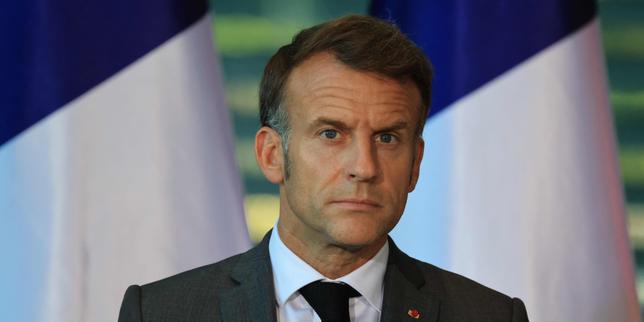
The debate over the death penalty is returning to the global stage, driven by rising political populism and shifting public anxiety. French President Emmanuel Macron recently issued a stark warning against calls to restore capital punishment, reminding the public that no nation is permanently immune to the re-emergence of state-sanctioned executions. While many Western democracies view the abolition of the death penalty as an irreversible milestone of human rights, recent political shifts prove that this consensus is fragile. The push to bring back the gallows is rarely about deterrence; instead, it operates as a powerful emotional tool used during periods of acute social instability.
Beneath the rhetoric of law and order lies a complex web of political strategy, judicial fallibility, and systemic costs that proponents of the death penalty frequently ignore.
The Political Mechanics of the Execution Backlash
Capital punishment has transitioned from a penal tool into a potent political symbol. When citizens feel unsafe or distrustful of institutions, demand for harsh justice surges. Political figures quickly capitalize on these fears, presenting the death penalty as a simple, decisive remedy for complex societal breakdowns.
This strategy relies on public frustration with the judicial system. It offers an illusion of absolute control. By promising the ultimate punishment, leaders signal strength and decisiveness without addressing the root causes of violent crime, such as systemic poverty, mental health crises, or underfunded law enforcement. History shows that when a government faces economic stagnation or social unrest, focusing public attention on high-profile criminals serves as a highly effective distraction.
The reality is that capital punishment does not offer a quick fix. Legal scholars and criminologists have long established that the certainty of being caught is a far more effective deterrent than the severity of the ultimate punishment. Criminals rarely calculate the long-term legal consequences of their actions during the commission of a violent crime. The argument for deterrence falls apart under empirical scrutiny, leaving retribution as the sole remaining justification.
The Financial Reality of the Death Penalty
A common misconception is that executing a prisoner is more cost-effective than housing them for life. The economic data reveals the exact opposite.
+------------------------------------+------------------------------------+
| Stage of Justice Process           | Cost Factor Impact                 |
+------------------------------------+------------------------------------+
| Pre-Trial and Jury Selection       | Extensively prolonged, specialized |
|                                    | juror screening required           |
+------------------------------------+------------------------------------+
| Trial Phase                        | Dual-phase trials (guilt and       |
|                                    | sentencing handled separately)     |
+------------------------------------+------------------------------------+
| Appeals and Post-Conviction        | Decades of mandatory state and    |
|                                    | federal reviews                    |
+------------------------------------+------------------------------------+
| Incarceration                      | High-security death row housing    |
|                                    | with isolated maintenance          |
+------------------------------------+------------------------------------+
Maintaining a capital punishment system strains public finances significantly more than a system centered on life imprisonment without parole. The heightened costs begin at the indictment phase. Capital cases require dual-phase trials, separate juries for guilt and sentencing, a massive influx of expert witnesses, and heavily front-loaded investigation expenses.
The post-conviction phase extends these expenses across decades. Because the penalty is irreversible, the legal system mandates an exhaustive appeals process to minimize errors. This means taxpayers fund both the defense and the prosecution through multiple rounds of state and federal appeals. These protracted legal battles keep victims' families trapped in a perpetual state of legal limbo, preventing the closure that proponents of the death penalty promise to deliver.
The Permanent Shadow of Judicial Fallibility
The most compelling argument against capital punishment is the absolute certainty of human error within the legal apparatus. No judicial system is perfect. Judges err, witnesses lie, forensic science evolves, and police misconduct occurs. When these variables collide in a capital case, the result is catastrophic and entirely unfixable.
"To sentence someone to death is to assume that our investigative and judicial tools are flawless. They are not."
Since 1973, over 190 people have been exonerated from death row in the United States alone, often decades after their initial conviction. These individuals were saved not by the efficiency of the system, but frequently by the independent work of investigative journalists, pro-bono legal clinics, and advances in DNA testing.
The reliance on older forensic methods has repeatedly compromised the integrity of older convictions. Techniques once considered foolproof, such as bite-mark analysis, hair microscopy, and even certain types of arson investigation, have been thoroughly debunked by modern scientific standards. If a state executes an individual based on flawed forensic science, the state commits an irreversible error. The risk of executing an innocent person remains a statistical certainty as long as the death penalty exists.
The International Standpoint and Geopolitical Consequences
The global trend toward abolition remains steady, but it faces significant headwinds. The majority of nations have abolished the death penalty either in law or in practice. This shift is codified in international frameworks like the European Convention on Human Rights, which explicitly bans capital punishment among its member states.
For nations contemplating a return to executions, the geopolitical consequences are severe. Reinstating the death penalty typically isolates a country from its democratic allies. It complicates international extradition treaties, as many abolitionist nations refuse to extradite suspects to countries where they might face execution. This creates safe havens for international fugitives and disrupts cross-border law enforcement cooperation.
Furthermore, the domestic use of capital punishment severely undermines a nation's ability to advocate for human rights on the international stage. It weakens diplomatic leverage and invites scrutiny from global monitoring bodies, reducing international relations to a transactional level devoid of moral authority.
Shifting Public Perception and the Real Alternatives
Public support for the death penalty is often highly conditional. When pollsters offer respondents a clear alternative, such as life imprisonment without the possibility of parole combined with mandatory restitution to the victims' families, support for capital punishment drops significantly. The desire for justice is universal, but the desire for state-sanctioned killing diminishes when the public understands the practical alternatives.
Life without parole protects society just as effectively as an execution. It removes dangerous individuals from the community permanently while preserving the opportunity to correct a wrongful conviction if new evidence emerges. It avoids the moral hazard of turning the state into an executioner and denies high-profile criminals the martyrdom they often seek.
The push to restore the death penalty is a symptom of deeper social anxieties, not a viable solution to violent crime. Civilizations are defined by their restraint, especially when dealing with those who have broken the social contract. succumbing to the demand for retribution compromises the foundational principles of a just society, replacing a flawed search for justice with a permanent act of violence.


