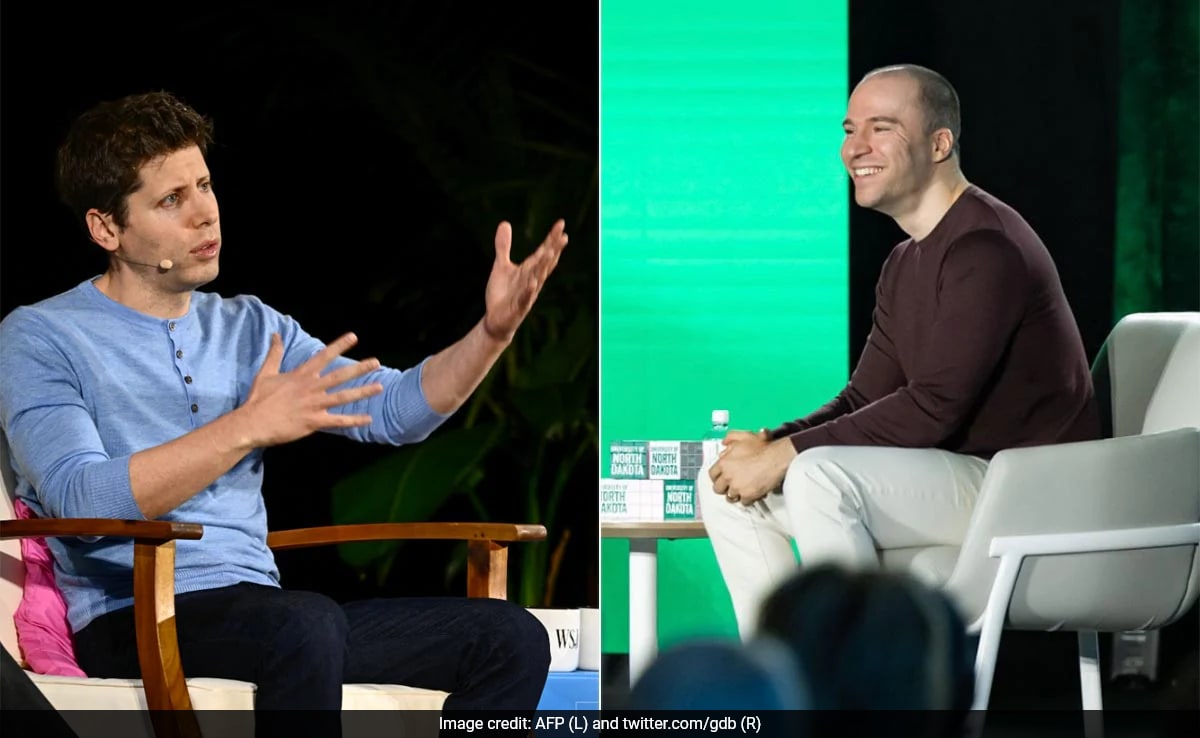
Ilya Sutskever's departure from OpenAI wasn't just the end of an era for artificial intelligence research. It was a massive financial event that most people missed because they were too busy focused on the boardroom drama. While the world watched the power struggle between Sam Altman and the board, a series of filings and internal valuations started to paint a picture of just how much wealth was at stake. We're talking about a $30 billion stake tied to one of the most influential scientists of our generation.
It's easy to get lost in the hype of ChatGPT or the race for AGI. But follow the money. When Sutskever helped start OpenAI as a non-profit, nobody expected it to become a trillion-dollar-adjacent behemoth. Yet here we are. Recent evaluations of his holdings and the secondary market sales of OpenAI employee shares suggest his equity—acquired through various restructurings and the shift toward a capped-profit model—is worth a staggering amount. This isn't just "tech rich." This is "found a small country" rich. Meanwhile, you can find other events here: The Pulitzer Prize for Reporting on Meta is a Participation Trophy for Legacy Media.
The Reality of the Thirty Billion Dollar Figure
Let's be clear about where these numbers come from. OpenAI’s valuation has skyrocketed through successive funding rounds, including the massive infusions from Microsoft. When you look at the ownership structure, the founding team held significant chunks of the equity that transitioned into the profit-making arm. Sutskever, as a co-founder and the Chief Scientist, was at the heart of this.
Investors don't just hand out $80 billion or $100 billion valuations for fun. They do it because they see a path to dominance. Sutskever's stake reflects that value. If you look at the latest tender offers where employees sold shares, the price per share has reached levels that make early grants worth tens of billions on paper. It's a far cry from the $1 billion initial commitment the group made back in 2015. To see the complete picture, check out the recent report by ZDNet.
It's actually kind of wild when you think about it. A guy who spent his life thinking about deep learning and neural networks is now sitting on a fortune that rivals the world’s most established industrial titans. But it’s not all liquid cash. Much of this is tied up in the "capped-profit" structure, which means there are limits on how much return early investors and employees can actually see. Or at least, that was the theory. In practice, as the cap rises and the valuation explodes, those limits feel more like a suggestion than a barrier.
The Complicated Bond Between Sutskever and Sam Altman
You can't talk about Ilya's stake without talking about Sam Altman. Their relationship is the definition of "it's complicated." For years, they were the two pillars of the company—Sam handled the business and the world-building, while Ilya handled the science and the soul of the machine.
Then came the attempted ouster.
When Sutskever initially sided with the board to remove Altman, he wasn't just making a move for "AI safety." He was risking the very stability of the company that held his $30 billion fortune. That's a level of conviction you don't see often in Silicon Valley. Most people would shut up and play nice to protect a net worth that high. Ilya didn't. He flipped back, of course, expressing deep regret for his role in the firing, but the damage was done.
The ties between them are now more about the legacy of what they built. Even though Sutskever has moved on to start Safe Superintelligence Inc. (SSI), his financial interests remain deeply embedded in the house that Altman still runs. It's a strange dynamic. You have two men who clearly have different visions for how AI should be deployed, yet they're financially tethered to the same success.
Why the Science Matters More Than the Money
Ilya isn't a suit. He's a researcher. If you've ever heard him speak, you know he cares more about the "feeling" of the neural network than the quarterly earnings report. This is why his $30 billion stake is so fascinating. Usually, when someone hits that level of wealth, they become a professional investor or a philanthropist. Sutskever just went right back to the lab.
His new venture, SSI, is proof that the money was a byproduct, not the goal. He's trying to solve the problem he thinks OpenAI moved away from—true, safe, superintelligent systems.
The Capped Profit Loophole
OpenAI’s structure is a weird hybrid. It was designed to prevent the company from becoming a typical profit-hungry tech giant. Investors and employees have a "cap" on their returns. Anything beyond that cap goes back to the non-profit.
Here’s the catch. The cap is often set at a multiple that is so high—sometimes 100x or more—that for all practical purposes, it doesn't exist for a long time. For someone like Sutskever, whose early equity was "cheap," the cap is basically irrelevant at today's prices. He could potentially see nearly all of that $30 billion before the non-profit side sees a dime of the "excess."
This structure was supposed to be a safeguard. Instead, it’s become a way for a non-profit to mint billionaires while keeping a tax-advantaged aura. It's brilliant from a business perspective, but it's also why there's so much tension. The public sees a mission to save humanity; the markets see the most lucrative equity play in history.
What This Means for the AI Industry
When one scientist holds this much wealth, it changes the talent market. Every top-tier AI researcher now looks at Sutskever and thinks, "I don't just want a high salary. I want a stake in the future of the species." This has led to the current "talent wars" where OpenAI, Google, and Meta are throwing around compensation packages that look like small-town budgets.
- Equity is king. Salaries are for the middle managers. The real players want a piece of the model.
- Independence is the new status symbol. Like Sutskever, if you're good enough, you don't stay at the big firm. You take your billions and your brain and start something "pure."
- Safety is a brand. Whether it's true or not, talking about safety is how you justify holding $30 billion while running a non-profit.
The ripple effects are everywhere. We see it in the way startups are being funded. VCs are no longer looking for "the next Facebook." They're looking for the next researcher who can command a $30 billion valuation before they even have a finished product.
The Internal Friction at OpenAI
Sources close to the company have often mentioned that the wealth gap between the early founders and the newer hires created a lot of friction. When you're working 80 hours a week on GPT-5 and you know the guy in the office next to you is worth $30 billion because he was there three years earlier, it stings.
Sutskever’s departure was partly a result of this friction. Not just about the money, but about what that money represented—a shift from a research lab to a product factory. He chose the research. He chose to walk away from the day-to-day of the $30 billion machine to build something new.
Tracking the Secondary Markets
If you want to know what Sutskever’s stake is really worth on any given Tuesday, don't look at OpenAI’s press releases. Look at the secondary markets like Forge Global or Hiive. This is where private shares are traded by former employees and early investors.
The price of OpenAI shares in these "grey markets" has stayed remarkably resilient even during the Altman firing scandal. That tells you the market believes the technology is bigger than the people. It also confirms that Sutskever's stake isn't just a paper valuation—there’s real, hungry capital waiting to buy those shares if he ever decides to liquidate.
Most of us will never see that kind of money. We won't even see the "cap" that OpenAI put on its profits. But we’re living in the world that money built. Every time you use an LLM, you're interacting with a system that was fueled by the most aggressive capital accumulation in tech history.
The Next Step for Observers
Stop looking at AI as just "software." Start looking at it as the most valuable asset class in the world. If you're tracking the industry, don't just watch the model releases. Watch the equity shifts.
If you're an investor or just someone interested in the business of tech, keep an eye on how Sutskever handles his OpenAI holdings while building SSI. If he starts offloading shares, it could signal a shift in how the founders view the company's long-term ceiling. If he holds, he’s betting that the $30 billion is just the beginning.
Pay attention to the next round of OpenAI funding. It will likely happen at a valuation exceeding $150 billion. When that happens, do the math on a 10% or 15% founder stake. The numbers stop looking like math and start looking like science fiction.
The real takeaway here is that the "co-founder" title at OpenAI is currently the most valuable resume line in the history of labor. Whether you agree with their methods or their vision, you have to acknowledge the sheer scale of the wealth they've created in less than a decade. It's unprecedented. It's messy. And it's far from over.