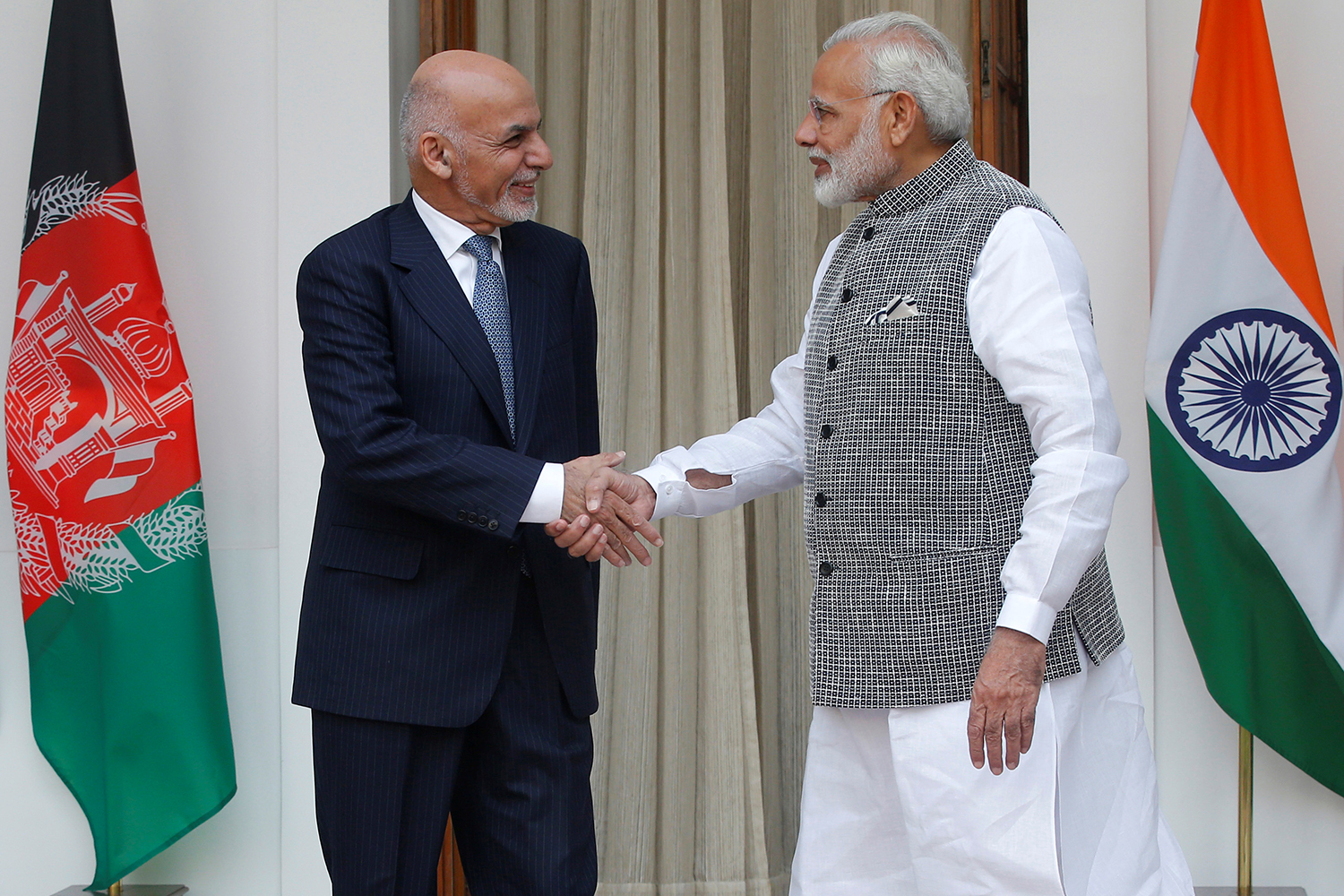
India has quietly crossed a significant diplomatic threshold. By sending a senior Ministry of External Affairs official to the fifth anniversary of the Taliban return to power in Kabul, New Delhi moved beyond the ambiguity that has defined its Afghanistan policy since 2021. The event, held at the Afghan embassy in New Delhi, saw Anand Prakash—the joint secretary heading the Pakistan, Afghanistan, and Iran division—represent the Indian government. This was not a private visit. It was a calculated, state-sanctioned signal.
The core premise of this shift is pragmatic survival. India is not offering formal recognition of the Taliban regime. Instead, it is practicing a cold, hard-headed form of influence that prioritizes regional stability and counter-terrorism over ideological purity. For the better part of five years, India walked a tightrope. It needed to maintain humanitarian and developmental interests in a country where its historical footprint was heavy, yet it refused to legitimize a group that seized power through the barrel of a gun. The decision to send a representative to a "Victory Day" reception indicates that the tightrope has become too thin for comfort.
New Delhi’s approach is guided by what officials call "developmental priorities" and "long-standing ties" with the Afghan people. This framing provides enough diplomatic cover to avoid the ire of global partners while allowing India to lock in its interests on the ground. The reality is that nature abhors a vacuum. If India does not engage the administration in Kabul, others—historically Pakistan, and increasingly China or Russia—will fill the space with their own security and economic architectures. By maintaining a presence, India ensures it has a seat at the table, however uncomfortable that table might be.
The Geography of Interest
Why would India, a nation deeply invested in its own democratic credentials, lean into a relationship with a regime defined by its restrictive stance on women and civil liberties? The answer lies in the map. Afghanistan remains a vital transit point for connectivity to Central Asia. Without a functioning, somewhat predictable relationship with the authorities in Kabul, India’s ambitions for the International North-South Transport Corridor and other regional integration projects are effectively dead.
Furthermore, the intelligence calculus cannot be ignored. The security of the region is interconnected. India’s decision to elevate its technical mission in Kabul to embassy status in late 2025 was a precursor to this current alignment. It allows for real-time monitoring and a direct line of communication that is vital for tracking non-state actors who have historically used Afghan territory to stir unrest across the subcontinent.
Pragmatism Over Recognition
Critics argue that attending a victory celebration for the Taliban amounts to a moral surrender. That is a surface-level critique. The Ministry of External Affairs has maintained a consistent stance that its engagement is based on a "constructive understanding" rather than a political endorsement. The distinction is thin, but it is operational. By engaging, India creates the possibility of influence. By remaining on the sidelines, it guarantees irrelevance.
The Taliban leadership in Kabul understands this dynamic well. They are desperate for economic partnership and political trust to solidify their hold on power. During the event in New Delhi, the Afghan charge d'affaires, Mufti Noor Ahmad Noor, made a direct appeal for greater support, explicitly thanking the Indian government for its advocacy at international forums regarding the legitimate rights of his administration. This is a transactional relationship in its rawest form. India wants stability and a counterweight to regional adversaries; the Taliban wants legitimacy and economic oxygen.
The Internal and External Balancing Act
India faces a domestic audience and an international coalition that remain deeply skeptical of the Taliban. The Ministry of External Affairs has carefully navigated this by emphasizing humanitarian assistance—food, medicine, and support for Afghan infrastructure—as the pillar of its activity. This keeps the focus on the people of Afghanistan rather than the ideology of the governing body.
Yet, this balancing act is fraying. The optics of a senior Indian official standing near the flag of the Islamic Emirate are difficult to reconcile for some segments of the foreign policy establishment. The choice to attend the anniversary celebration—rather than merely interacting on administrative or humanitarian grounds—marks a departure from the cautious "wait and see" strategy of previous years. It signals that New Delhi has accepted the current reality in Kabul as a long-term fixture.
The Cost of Disengagement
If India were to pull back or refuse such invitations, the consequences would be immediate. The loss of diplomatic access would weaken India's ability to advocate for its specific security concerns. Moreover, it would cede the narrative entirely to regional rivals who are eager to paint India as an outlier that cannot engage with the ground reality.
The presence of diplomats from nations like Iran, Russia, and China at the same event underscores a regional consensus forming around the necessity of dealing with the de facto rulers of Afghanistan. These countries have their own strategic objectives, but they share a common fear of a collapsed or chaotic Afghanistan. India is now moving in lockstep with these powers, despite its strategic competition with many of them.
There is no perfect path forward here. Every move involves compromise. A policy of non-engagement risks the rise of hostile entities in India’s immediate neighborhood, while a policy of engagement risks providing a veneer of normalcy to a regime that remains at odds with global human rights standards. New Delhi has clearly decided that the former is the greater threat.
The strategy moving forward appears to be a slow-burn normalization. Do not expect formal recognition anytime soon, as that would trigger a firestorm of international pressure that India does not need. Instead, look for a steady increase in the depth of cooperation, more frequent visits by officials, and a continued emphasis on "practical priorities." The era of isolation is over. The era of cold, transactional management has begun. The embassy is open, the lines of communication are active, and the flags are flying side by side. India has made its choice. The region will react accordingly.