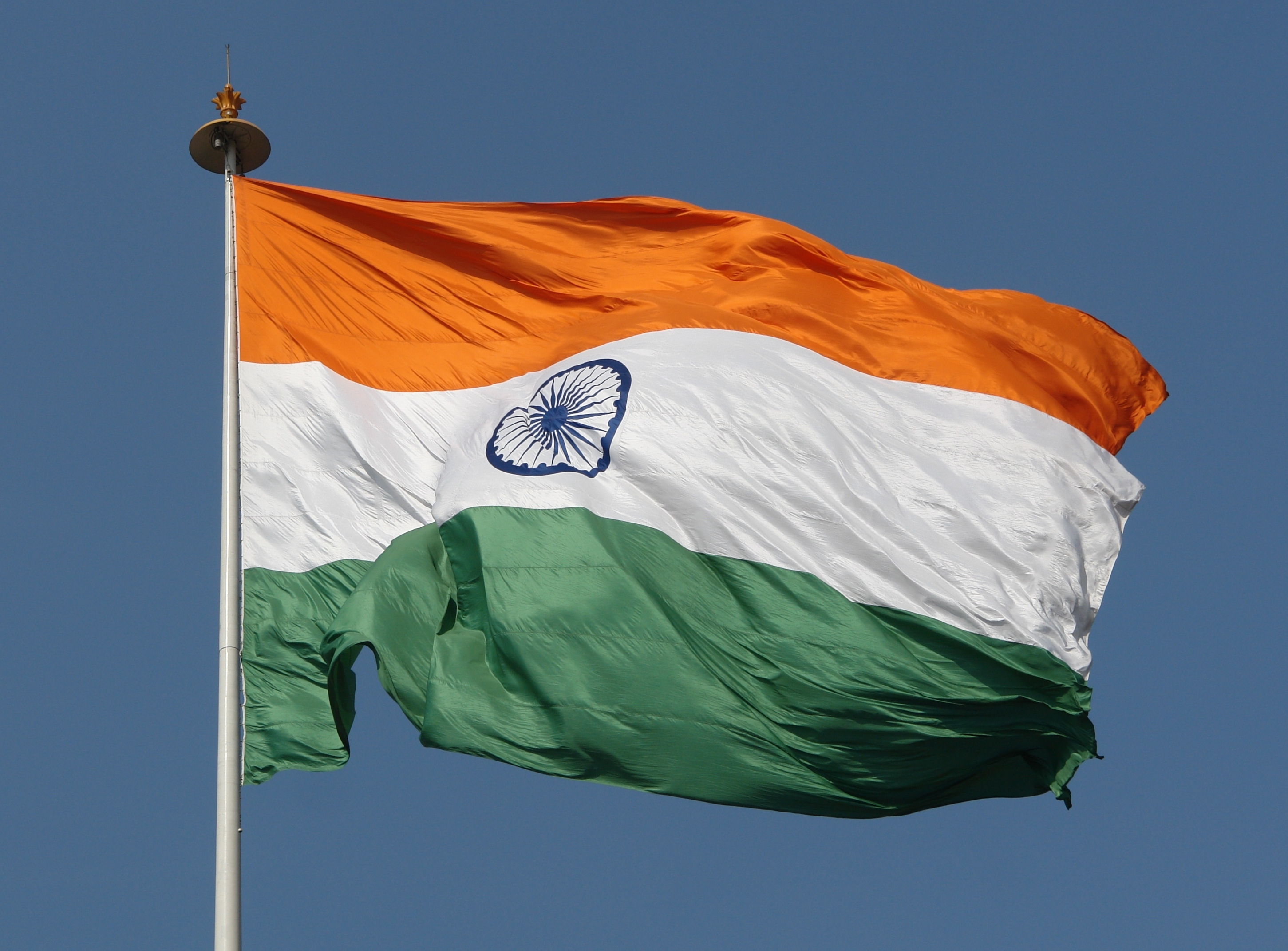
India has officially rejected a Permanent Court of Arbitration ruling ordering the revival of the Indus Waters Treaty framework with Pakistan. New Delhi refuses to engage with a legal mechanism it considers structurally compromised. This stance marks a definitive shift away from bilateral water sharing protocols forged over six decades ago.
Water is no longer just a shared resource on the subcontinent. It is strategic leverage.
For seventy years, the Indus Waters Treaty survived wars, border skirmishes, and diplomatic freezes. Bureaucrats in Islamabad and New Delhi managed to keep the taps flowing while soldiers exchanged artillery fire across the Line of Control. That era is over. New Delhi argues that changed geopolitical realities, persistent cross-border security challenges, and institutional flaws within international arbitration demand a complete rewrite of how the river basin is managed.
Understanding this breakdown requires looking past standard diplomatic communiques. The dispute is not merely about cubic feet of water or hydroelectric dam designs. It is a collision between India's emerging posture as a regional superpower and Pakistan's existential vulnerability downstream.
The Broken Blueprint of 1960
The Indus Waters Treaty signed in Karachi divided six rivers. India received rights over the eastern rivers while Pakistan secured the western rivers. World Bank mediation made the arrangement possible. The agreement established a Permanent Indus Commission to handle technical data sharing and dispute resolution.
For decades, the system functioned because both sides treated technical water management as a quarantined zone. When disagreements arose over run-of-the-river hydroelectric projects like Kishenganga or Ratle, the treaty provided a step-by-step escalation ladder. Expert committees, neutral experts, and international arbitration tribunals formed the rungs of this ladder.
Pakistan frequently utilized these legal avenues to contest Indian infrastructure projects on the Chenab and Jhelum rivers. Islamabad argued that pondage levels, turbine designs, and water storage capacities violated treaty restrictions designed to protect downstream flow. India viewed these legal challenges as weaponized obstructionism. New Delhi maintained that Pakistan used international arbitration to stall legitimate energy generation in Jammu and Kashmir.
Frustration mounted inside the Indian foreign ministry. Officials concluded that an international legal framework designed during the Cold War could not handle modern security realities or climate-induced hydrological shifts.
Why New Delhi Walked Away
International arbitration lost its credibility in New Delhi's eyes following procedural maneuvers over the Kishenganga and Ratle hydroelectric projects. Pakistan initiated proceedings through the Permanent Court of Arbitration in The Hague. Simultaneously, Islamabad demanded the appointment of a neutral expert through the World Bank.
Running two parallel proceedings created institutional chaos. India argued that the treaty did not permit concurrent processes and refused to participate in the court hearings at The Hague. The court proceeded anyway, ruling that it possessed competence to adjudicate the dispute.
New Delhi viewed this ruling as judicial overreach. Indian diplomats stated that an arbitration panel created outside the explicit consensus of both parties holds no binding authority. By rejecting the recent Hague order, India has signaled a broader institutional pivot. Bilateral frameworks must replace international third-party mediation.
This policy change aligns with India's wider foreign policy doctrine. New Delhi avoids external mediation in South Asian affairs. Whether dealing with maritime boundaries in the Indian Ocean or land borders in the Himalayas, India insists on bilateralism. Water diplomacy is no exception.
Downstream Vulnerabilities in Pakistan
Pakistan faces an acute crisis. The country is an agrarian economy heavily dependent on the Indus basin for food security. Over eighty percent of Pakistan's irrigated agriculture relies on waters originating in or flowing through Indian territory.
Islamabad views the treaty as a vital safeguard against upstream manipulation. Without binding international arbitration, Pakistan loses its primary diplomatic tool to contest Indian dam construction. Pakistani water analysts warn that unmonitored upstream storage gives India the technical capacity to restrict flows during critical sowing seasons or trigger sudden floods during monsoon peaks.
While complete diversion of the massive Indus system is physically implausible, targeted water withholding or manipulation during dry spells remains a persistent fear in security circles. Pakistan's water scarcity index already sits at alarming levels. Climate change accelerates glacial melt in the Himalayas, initially increasing runoff but threatening catastrophic long-term depletion.
When international courts issue orders that India ignores, Pakistan is left with few diplomatic options. Escalating military tensions over water is a perilous prospect between two nuclear-armed states. Taking the matter back to the United Nations Security Council yields limited results given India's diplomatic leverage and permanent member opposition to outside intervention.
The Climate Factor and the Future of the Basin
Legal arguments ignore the physical reality of the river basin itself. Climate change is rewriting the hydrology of the Himalayas. Glaciers feeding the Indus, Jhelum, and Chenab rivers are retreating at unprecedented rates. Monsoons are erratic. Extreme weather events alternate between severe droughts and devastating floods.
A treaty negotiated in the middle of the twentieth century operates on historical baseline data that no longer exists. Seasonal flow patterns have shifted. Water demand for urban centers and industrial corridors has multiplied exponentially on both sides of the border.
Both nations need structural modernization. India needs flexibility to optimize clean energy generation through hydropower to meet net-zero carbon commitments. Pakistan needs predictable seasonal flows to feed a rapidly growing population.
Yet, cooperation has been replaced by technical silence. The Permanent Indus Commission rarely meets for substantive negotiations. Data sharing mechanisms have degraded into routine bureaucratic exchanges rather than transparent hydrological collaboration.
The Broader Geopolitical Ripple Effect
This water dispute sends shockwaves beyond the immediate region. China watches closely. As the upstream riparian state for the Brahmaputra and Mekong rivers, Beijing frequently utilizes similar arguments regarding sovereignty and international arbitration. China's massive dam-building projects on the Tibetan plateau mirror some of the strategic approaches India employs in Kashmir.
If major powers discard international legal rulings on shared resources, global water governance weakens. Treaties depend on voluntary compliance and institutional trust. Once that trust shatters, rebuilding it requires immense political capital.
India's rejection of The Hague order proves that sovereignty trumps international jurisprudence when vital national interests are perceived to be at stake. Islamabad cannot force New Delhi back to the negotiating table through legal declarations alone.
The Indus flows south toward the Arabian Sea through fields of wheat and cotton, carrying millions of lives with it. No court order can alter its course, but the diplomatic barriers rising along its banks threaten to choke the millions who depend on its waters.