Neighbours rarely show up when things get ugly. Borders divide, policies clash, and diplomatic red tape usually strangles urgency. Yet, when catastrophic floods tear through Nepal, New Delhi doesn't wait for a formal invitation to move.
Planes load up. Relief material starts rolling across the open border. It happens every single time. Why? Because geography forces a bond that paperwork can't erase, and India’s continuous rescue operations in Nepal reveal a tactical and humanitarian rhythm few outside observers actually understand. Meanwhile, you can find related stories here: Inside the European Right Wing Paradox Nobody Wants to Talk About.
Let's look past the diplomatic handshakes and examine what happens on the ground when the monsoon turns brutal.
The Real Scale of India Rescue Operations in Nepal
When disaster strikes a mountainous terrain like Nepal, logistics turn into an absolute nightmare. Roads wash away. Bridges snap like toothpicks. Whole communities vanish under mudslides. To explore the complete picture, we recommend the detailed report by Associated Press.
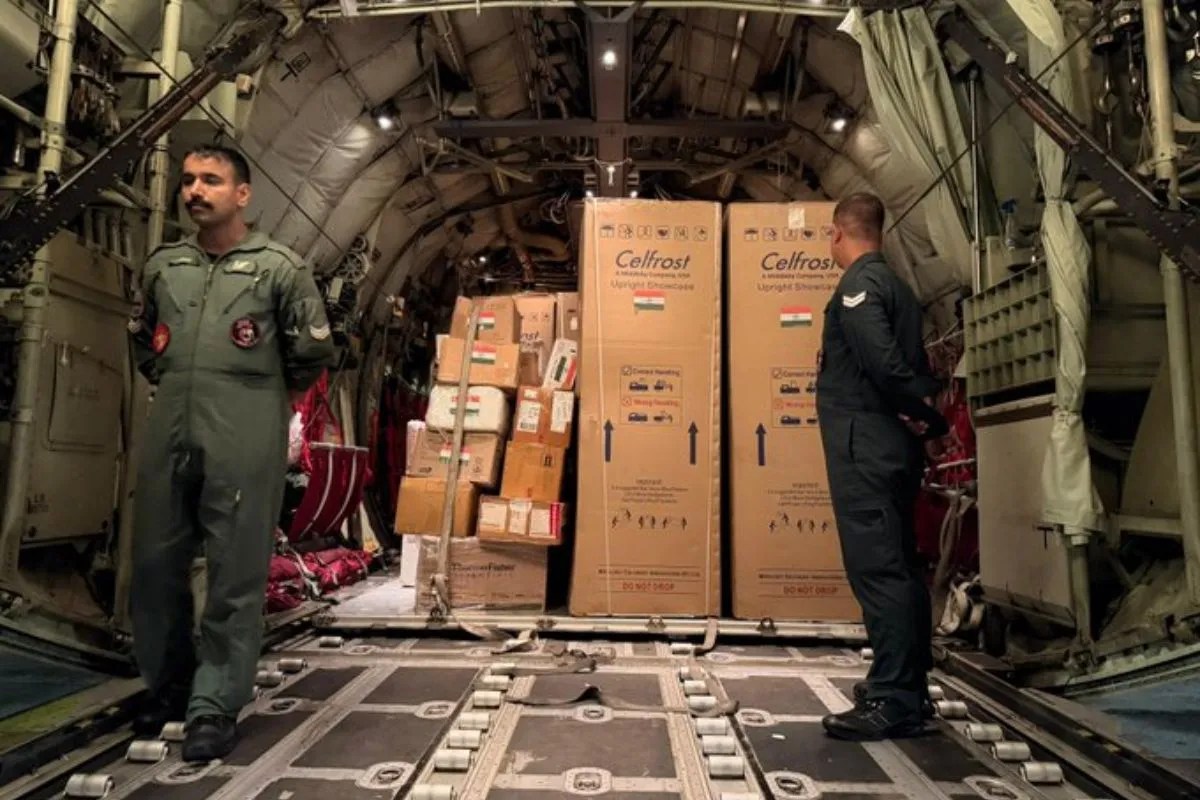
India's recent deployment of roughly 95 tons of relief material wasn't just a PR stunt. It was a massive logistical feat designed to hit hard-to-reach pockets instantly. We aren't just talking about bags of rice tossed off the back of a truck. This shipment involved critical supplies:
- High-capacity water purification units to stop waterborne cholera outbreaks.
- Life-saving medical kits and essential emergency drugs.
- Heavy-duty shelter materials, tarpaulins, and durable blankets.
- Ready-to-eat meals for families stranded on rooftops and elevated strips of mud.
When people ask why India always leads the regional response, the answer is simple. Proximity dictates speed. Indian Air Force transport aircraft and specialized National Disaster Response Force teams can mobilize before international organizations even finish drafting their initial assessment reports. You can't wait weeks for committee approvals when rivers swallow entire villages.
Geography Dictates Destiny
Let's talk about the terrain. Nepal sits in a precarious geological zone. The Himalayas are young, fragile, and prone to massive landslides. When heavy monsoon rains lash the upper catchments, rivers like the Kosi, Narayani, and Karnali surge south into the plains of India.
Water doesn't check passports.
A flood that starts in the hills of central Nepal inevitably threatens millions living downstream in Bihar and Uttar Pradesh. That means disaster management in Nepal is, by default, disaster management for northern India. Helping Nepal isn't purely an act of charity. It’s an exercise in regional survival. If infrastructure collapses in the hills, the downstream consequences on the plains are catastrophic.
I’ve watched analysts try to spin humanitarian aid into purely cold-blooded geopolitical chess. Sure, strategic influence matters. Soft power matters. But walk through a flooded village in the Terai region, and you won't find villagers debating bilateral trade treaties. You'll find families searching for clean drinking water. India's swift dispatch of those 95 tons of supplies hits the immediate human target first. The geopolitics can sort themselves out later.
What Most Media Coverage Misses
Most news outlets report the tonnage, nod politely, and move on to the next crisis cycle. They miss the gritty mechanics of cross-border disaster response.
Operating in foreign airspace under emergency conditions requires deep institutional muscle memory. The coordination between the Nepalese Army, local civil authorities, and Indian agencies has been built over decades of shared catastrophes. It isn't improvised on the fly. Pilots know the treacherous wind pockets of the valleys. Liaison officers know who to call when a truck convoy gets stuck at a washed-out checkpoint.
Take a close look at past crises, like the devastating 2015 earthquake. The immediate responders on the ground were overwhelmingly Indian teams equipped with heavy earthmovers, canine squads, and mobile field hospitals. That institutional trust takes years to build and seconds to destroy. Showing up with 95 tons of relief gear right when the water peaks keeps that trust alive.
The Hidden Costs of Himalayan Flooding
Climate shifts are turning standard monsoons into extreme weather events. The traditional weather patterns are breaking down. We are seeing cloudbursts that drop a month's worth of rain in a single afternoon.
This changes everything for disaster response. Traditional relief methods—waiting for waters to recede before assessing damage—are dead. You have to preposition supplies before the rivers crest. India’s recent operations reflect this shift toward early intervention. Instead of reacting to a post-flood wasteland, military and civilian logistics wings are pushing resources closer to the border ahead of time.
If you're watching regional stability in South Asia, keep your eyes on water management and climate resilience. Building resilient infrastructure across the open border is the only permanent fix. Until then, cargo planes will keep rolling, and ground crews will keep pushing through the mud.
Support doesn't stop when the cameras turn off. The real test is the long rehabilitation phase—rebuilding washed-out bridges, restoring agricultural soil, and stopping disease outbreaks before they take root. India's ongoing presence in these zones proves that when the mountains bleed, the response has to cross borders without hesitation.


