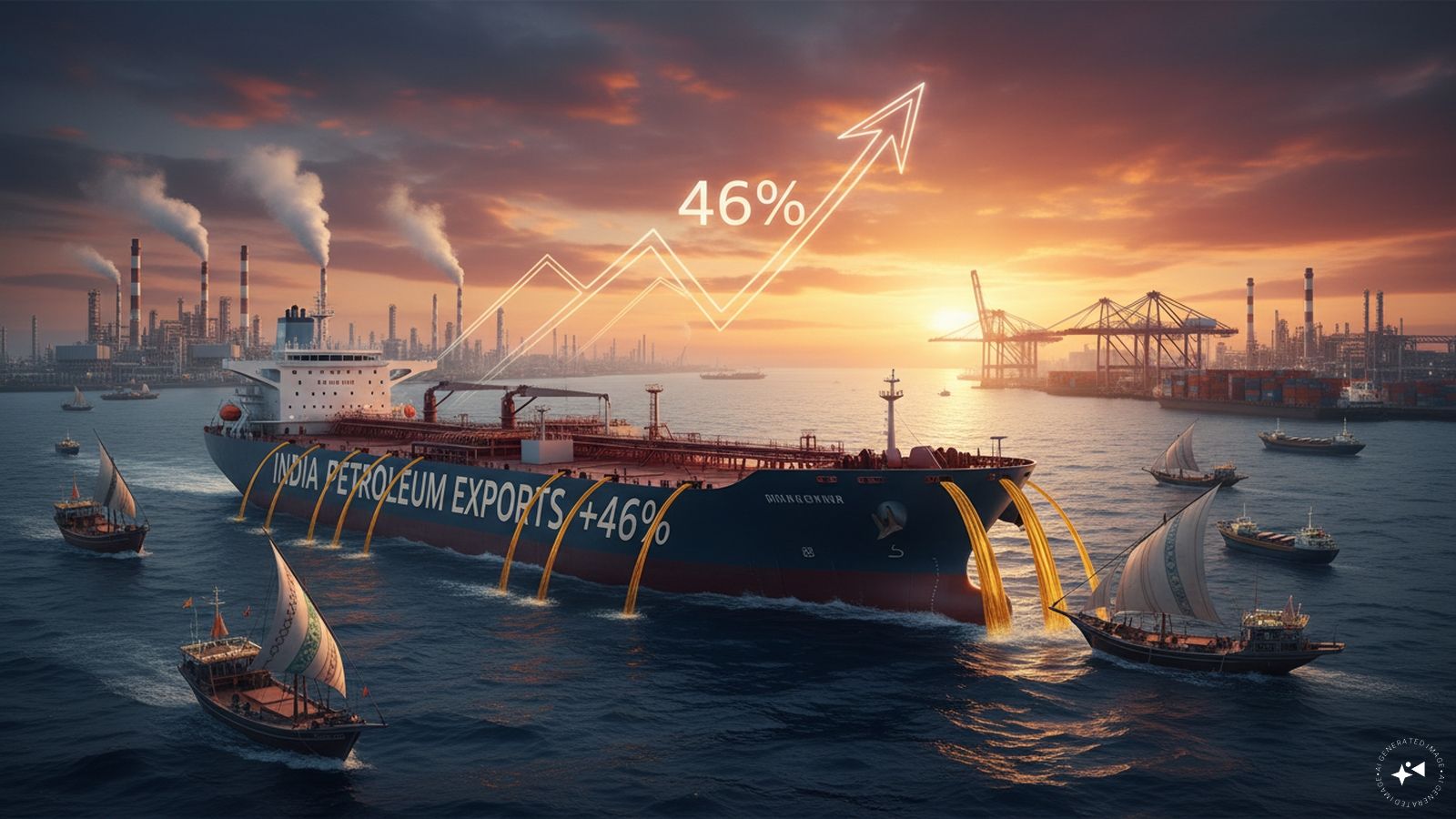
Global energy markets move fast. When traditional buyers pull back, suppliers either bleed money or find new buyers. India chose the second option. Petroleum exports surged forty-six percent during the April to August period. That figure isn't just a random data point. It marks a fundamental shift in how refined products travel across the planet.
If you watch international trade closely, you already know traditional demand centers in Europe and parts of Asia have cooled down. Economic stagnation hits energy consumption first. Refineries usually panic when domestic or legacy overseas demand softens. Instead of cutting production, Indian refiners looked at empty spots on world maps. They packed tankers and sent refined petroleum products to emerging destinations.
Traffic shifted overnight. Buyers who barely bought refined fuel from South Asia suddenly became regular customers. Refiners adapted quickly because standing still means losing market share.
The Shift in Global Energy Routes
Oils flow where margins lead. For decades, established trade lanes dictated everything. Refineries in the Middle East and the West held monopolies over major consumer bases. Then global supply chains fractured. Sanctions, shifting geopolitical alliances, and changing price caps created massive gaps in the market.
Indian refiners stepped right into those gaps. They bought crude oil at discounted rates when available, processed it in massive coastal complexes, and turned around to export high-value petroleum products. This strategy turned refineries into profit powerhouses.
You cannot ignore the sheer scale of the infrastructure required to pull this off. Private and state-owned refiners operate some of the largest processing units on earth. When April rolled around, production schedules ramped up rather than slowing down. Management teams saw the writing on the wall. Traditional European demand looked shaky due to sluggish industrial output and mild weather conditions. So they targeted new shores.
African nations, Latin American buyers, and various Asian economies outside the usual suspects started placing bulk orders. Refined diesel, aviation turbine fuel, and gasoline began arriving at ports that previously sourced fuel elsewhere. This geographical diversification saved refiners from domestic oversupply and sluggish legacy markets.
How New Markets Reshaped Trade Flows
Trade routes change because buyers chase reliability and price. When traditional suppliers faced domestic shortages or diversion policies, importers panicked. They needed secure energy supplies without political friction. India offered a pragmatic alternative.
Take African economies as a prime example. Growing urban centers require consistent diesel supply for transportation and backup power generation. Traditional suppliers often tied shipments to restrictive conditions or high spot prices. Indian exporters offered competitive pricing and flexible contract terms.
Latin America presented another unexpected win. Several nations in that region experienced refinery maintenance bottlenecks or domestic supply shortfalls. Instead of waiting weeks for delayed shipments from North America or Europe, buyers turned toward Asian refiners.
Logistics teams had to solve complex routing puzzles. Shipping fuel thousands of miles requires precise tanker management and risk assessment. Insurance costs, changing maritime regulations, and fluctuating freight rates chew into profit margins if you aren't careful. Experienced traders managed these hurdles by locking in long-term charter rates and optimizing vessel speeds.
You might wonder how refiners handle such rapid expansion without bottlenecking local fuel supplies. The answer lies in massive surplus capacity. India built its refining sector with export orientation baked into the business model. When local demand plateaus, export channels absorb the surplus.
Decoding the April August Surge
Data tells a clear story. A forty-six percent surge between April and August doesn't happen by accident. It reflects aggressive commercial strategy meeting surging external appetite.
Let's look at the numbers driving the conversation. While exact month-by-month breakdowns fluctuate based on maintenance turnarounds, the cumulative growth rate caught many analysts off guard. Industry consensus predicted flat export numbers due to global economic cooling. Refiners proved the consensus wrong.
Why did this happen during these specific months? April kicks off the maintenance cycle for many global refineries, temporarily tightening supply. Indian plants timed their overhauls efficiently, keeping maximum capacity online while competitors sat idle.
Diesel cracks—the profit margin between crude oil and refined diesel—remained favorable enough to incentivize high utilization rates. Refineries ran at near-maximum capacity day and night. Storage tanks filled up quickly, forcing marketing desks to aggressively bid for international tenders.
Winning international tenders requires sharp bidding strategies. Competitors from the Middle East and Asia-Pacific fought hard for market share. Indian firms won by offering prompt delivery schedules and consistent fuel specifications that met strict international environmental standards.
The Reality Behind Traditional Demand Weakness
Europe used to buy massive amounts of refined products from whoever offered the lowest freight cost. Industrial powerhouses in Germany and manufacturing hubs across the continent consumed steady streams of diesel and jet fuel.
That dynamic changed. High energy costs forced factories to shut down or reduce shifts. Green transition policies also began chipping away at fossil fuel demand in passenger transport. Traditional demand weakness isn't a temporary dip; it is a structural trend.
Smart energy companies saw this coming years ago. Relying solely on wealthy Western nations for export revenue became a risky gamble. Diversification went from being a buzzword to a survival tactic.
When European imports dropped, Indian refiners didn't panic. They simply redirected tankers eastward and southward. This flexibility proved that modern refining is about agility, not just scale.
If you talk to veteran petroleum traders, they will tell you that regional demand swings used to spell disaster. Today, global arbitrage keeps tankers moving. If one continent cuts back, another increases intake. The forty-six percent export spike proves that new demand pockets easily offset old losses.
Operational Realities of Refining Giants
Running a massive refinery complex is brutal work. Extreme heat, corrosive chemicals, and high-pressure distillation units demand constant maintenance. One unexpected pipe rupture can cost millions in lost output.
State-owned giants and private refiners poured capital into upgrading their processing units. They installed secondary and tertiary conversion units capable of turning heavy, cheap crude into premium, low-sulfur products.
Quality control matters immensely. International buyers test fuel batches rigorously before offloading. Any deviation in sulfur content or flash point leads to rejected cargoes and ruined reputations. Indian refineries maintained strict quality control protocols, earning the trust of picky foreign regulators.
Labor costs and engineering talent also played a quiet role. Engineers trained in domestic technical institutes manage complex distillation columns with surgical precision. They troubleshoot mechanical anomalies before minor issues escalate into plant shutdowns.
You also have to consider financing and credit lines. Exporting petroleum requires massive working capital. Banks stepped in with short-term trade finance facilities, allowing refiners to purchase crude cargo ships without liquidity pinches.
Navigating Logistics and Supply Chain Pressures
Moving millions of barrels of refined products across oceans is an administrative nightmare. Port congestion, bunker fuel price spikes, and shifting weather patterns test the patience of any logistics manager.
During the April-August surge, port terminals handled record throughput. Tugboat operators, harbor pilots, and customs officials worked around the clock to clear tankers. Delays cost money, so turnaround times at major export terminals dropped significantly.
Insurance underwriters also adjusted their risk models. Shipping routes near conflict zones or volatile straits require specialized coverage. Exporters worked closely with maritime insurers to secure competitive premiums without sacrificing safety compliance.
Storage infrastructure at ports expanded over the past few years. Large tank farms allow refiners to buffer production spikes, waiting for the right spot market price before loading vessels. This inventory buffer prevents forced selling during sudden price crashes.
What This Means for the Broader Economy
Energy exports drive foreign exchange inflows. When petroleum shipments jump by nearly half over a four-month stretch, the macroeconomic impact is massive.
Strong export revenue helps stabilize trade balances. It cushions the local currency against external shocks and depreciating pressures. Central bank reserves benefit from steady dollar inflows generated by private and public refiners.
Employment figures in coastal manufacturing hubs also received a boost. Allied industries—ranging from marine transport services to industrial chemical suppliers—saw increased activity. Port cities experienced higher demand for warehousing, ship repair yards, and logistical support personnel.
Critics sometimes argue that exporting refined fuel while domestic consumption grows is risky. However, domestic fuel pricing mechanisms and mandatory supply obligations ensure local pumps never run dry. Refiners balance domestic quotas with export commitments smoothly, keeping the local economy supplied while capturing lucrative foreign margins.
Practical Takeaways for Industry Observers
If you analyze energy markets or trade policy, several lessons stand out from this export surge.
First, never assume traditional demand weakness spells doom for efficient producers. Nimble suppliers find new consumption centers.
Second, infrastructure investment pays off during market dislocations. Companies that spent capital upgrading conversion units reaped the rewards when global product markets tightened.
Third, geography is no longer a permanent barrier. Modern shipping economics allow fuel to travel halfway across the world if the pricing math works out.
Keep an eye on emerging economies across Africa and Latin America. Their appetite for refined petroleum products will continue to grow as urbanization accelerates. Suppliers who build strong relationships in these regions today will dominate global energy trade for the next decade.
Watch how refiners manage crude sourcing as well. Access to discounted feedstocks gives exporters a structural price advantage that legacy suppliers struggle to match.
Energy trade patterns will keep shifting. Adaptability remains the ultimate competitive advantage in a volatile world. Those who cling to old playbooks will get left behind while agile operators sail past them.