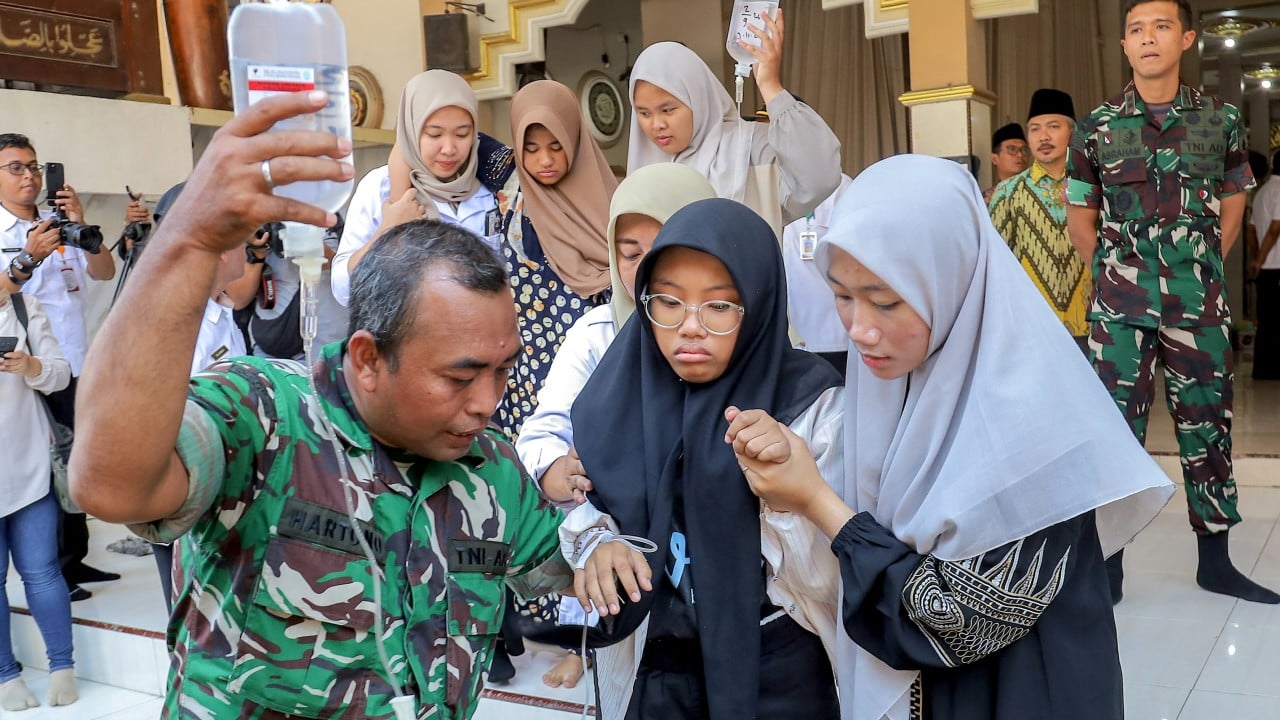
When President Prabowo Subianto launched the multi-billion dollar Free Nutritious Meals program, the vision was straightforward. Feed roughly 90 million school children, pregnant women, and toddlers, crush childhood stunting rates, and build a healthier generation. It sounds like a noble policy win. Yet, the reality on the ground tells a terrifyingly different story.
Instead of being celebrated as a triumph of public health, the Makan Bergizi Gratis (MBG) initiative has been darkly rechristened by locals as "Makan Beracun Gratis"—the free poisonous meal program. Thousands of students across the archipelago have repeatedly landed in hospital beds with severe diarrhea, vomiting, and acute food poisoning.
The government has rushed out new safety protocols, tightened guidelines, and even mandated that food be consumed within four hours of cooking. So why are Indonesian students still falling ill in droves?
The Logistical Nightmare of Feeding Millions
You cannot scale mass catering overnight without breaking things. The Indonesian government established thousands of central kitchen distribution hubs, known as Satuan Pemenuhan Pelayanan Gizi, to prep and ship out millions of daily boxes. Scaling up a massive logistics network across thousands of islands creates a massive margin for error.
Food safety isn't just about writing a rulebook. It requires constant refrigeration, spotless sanitation, reliable transport, and strict temperature control. When meals are cooked hours in advance in tropical heat and shipped across congested roads without proper cold-chain infrastructure, bacteria multiply rapidly.
Data from health ministries and independent watchdogs reveal a grim pattern. According to surveillance tracking, tens of thousands of people have suffered from food poisoning symptoms linked to the program since its rollout. When massive outbreaks hospitalize hundreds of students at once—like the recent incidents in Central Java's Rembang regency and East Java's Sidoarjo—it becomes glaringly obvious that paper-thin regulations mean nothing without enforcement.
Where the New Rules Fall Short
The National Nutrition Agency claims that the vast majority of past outbreaks stem from simple failures to follow standard operating procedures. Kitchen operators miss hygiene steps, skip storage protocols, or fail to inspect raw ingredients properly.
Blaming the kitchens is easy, but it misses the systemic cracks. Inspectors have discovered hundreds of ghost or fictitious facilities, alongside hundreds of active kitchens that blatantly fail basic sanitation standards. When you rush a massive welfare rollout to fulfill a political promise, vetting takes a backseat to speed.
Independent human rights groups and public health NGOs have pointed out that guidelines alone won't fix structural corruption and poor oversight. When procurement contracts are handed out based on connections rather than catering capability, you end up with substandard ingredients and corners being cut on safety measures.
The Human Cost and Public Backlash
Parents aren't buying the government's excuses anymore. Across regions like West Java and Yogyakarta, concerned mothers have staged protests, banging pots and pans to demand accountability and better safety measures. Trust is fragile. When sending a child to school becomes a gamble on whether they will return home with severe food poisoning, public support evaporates fast.
Local leaders have started suspending meal distributions in affected regions just to stop the bleeding and calm panicked parents. Independent bodies like Komnas HAM have stepped in, calling for formal police investigations and demanding that non-compliant kitchens be shut down permanently.
Fixing this crisis requires more than issuing another memo or shifting the blame onto kitchen workers. The government needs to halt unchecked expansion, purge fraudulent suppliers, and build a transparent, independent auditing system that prioritizes child safety over political milestones. Until accountability matches ambition, the free meal program will remain a dangerous liability.


