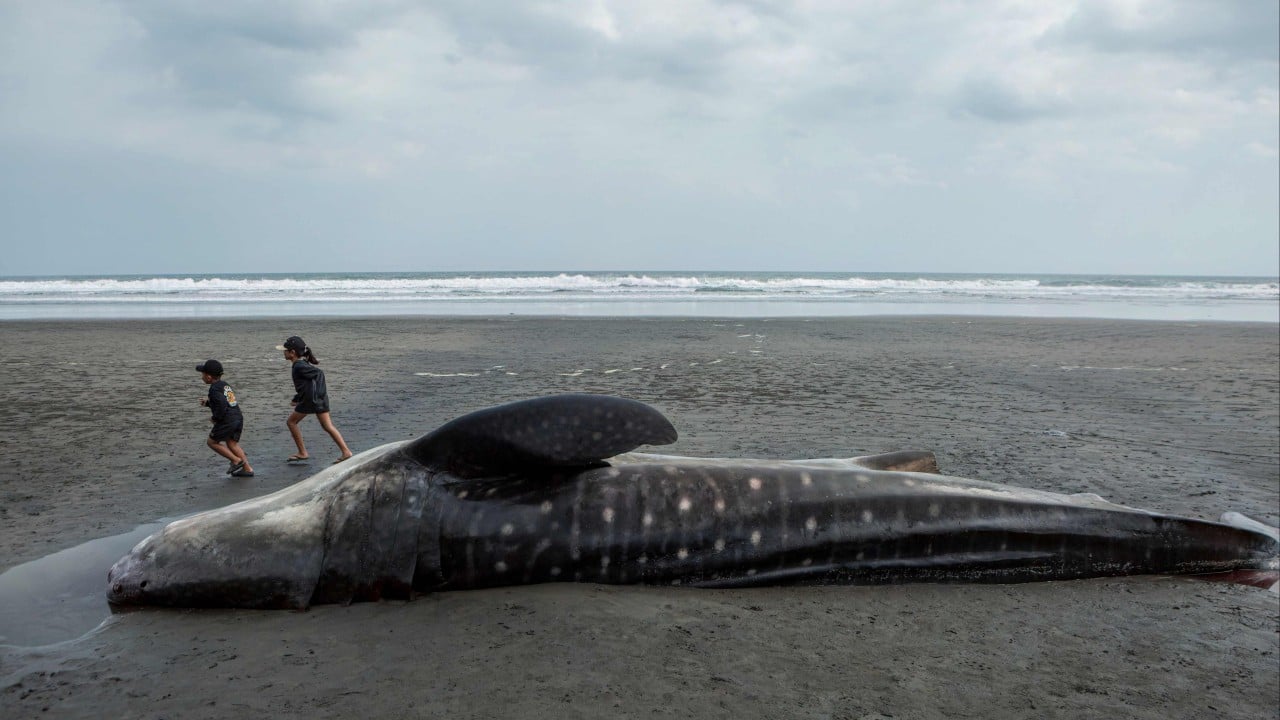
When multiple massive marine mammals wash ashore lifeless within a compressed window, people naturally start asking questions. A cluster of whale and whale shark strandings across Indonesia—hitting severe numbers like five deaths in a span of just three weeks—brings a grim reality to the surface. It is easy to look at these events as isolated tragedies. They rarely are.
Instead, these recurring coastal disasters point toward deeper ecological stress points in the world's largest archipelagic state. If you want to understand why these majestic creatures are ending up on beaches, you have to look past simple bad luck and examine what is actually happening in Indonesian waters.
The Reality Behind the Numbers
Marine strandings aren't entirely new to Indonesia, but the frequency and density of recent events have alarmed local biologists and conservation networks. Long-term spatial data analyzed by researchers from institutions like the National Research and Innovation Agency (BRIN) alongside international marine experts show that Indonesia sits right in a global hotspot for cetacean stranding events.
Take the recent data regarding whale sharks and pilot whales. Studies tracking historical trends indicate a sharp upward tick in reported cases over the past decade. Before 2020, annual strandings hovered at lower baselines, but recent years have regularly shattered those figures. When a handful of giant marine animals wash up dead within weeks of each other, it usually signals an underlying disruption in their marine environment.
Why Are Whales Beached So Often Here
You might wonder how a creature built for the open ocean ends up trapped on a shallow beach. The causes are rarely simple. Marine biologists point to a complex cocktail of natural and human-induced triggers.
Anthropogenic Noise and Navigation Failures
Whales rely heavily on sophisticated biosonar to navigate, communicate, and hunt across vast oceanic trenches. When intense underwater noise pollution hits, their internal mapping systems fail. High-intensity military sonar, seismic airgun testing for oil and gas exploration, and congested commercial shipping lanes create chaotic acoustic environments. Disoriented by these artificial soundscapes, deep-diving whales can mistake shallow coastal shelves for open water or surface far too quickly, suffering disorientation and severe physiological trauma.
Plastic Pollution and Ingestion
Indonesia remains one of the world's hotspots for marine plastic debris. Autopsies performed on stranded whales frequently reveal staggering amounts of non-biodegradable trash packed into their digestive tracts. When a sperm whale or a pilot whale ingests kilograms of plastic bags, packaging, and discarded fishing gear, it blocks their digestive system. The animal slowly starves to death while feeling full, eventually growing too weak to swim against currents, which inevitably drifts them toward the shore.
Entanglement and Maritime Traffic
Busy fisheries and dense maritime traffic corridors crisscross Indonesian waters. Accidental entanglement in commercial fishing nets causes severe physical trauma, infections, or drowning. Furthermore, blunt-force trauma from collisions with large cargo vessels can kill a whale outright or leave it badly injured, ensuring that wave action eventually pushes the carcass onto a beach.
Natural Disruptions and Disease
Human activity doesn't take all the blame. Natural environmental pressures play a massive role in these tragedies.
Pathogens and infectious diseases can tear through pods of social cetaceans. Researchers have identified various viral, bacterial, and parasitic infections in stranded southern hemisphere species. When an individual whale falls seriously ill or reaches old age, its navigation falters. It lags behind the pod, loses its directional sense, and gets pushed onto coastal shallows by rough tides.
Sudden shifts in oceanographic conditions, harmful algal blooms, and even natural seismic activity—such as underwater earthquakes common around Indonesian tectonic boundaries—further scramble the sensory environment of sensitive marine mammals.
What Needs to Change
Handling a stranded whale is a logistical nightmare, requiring coordinated efforts between local governments, academic researchers, and coastal communities to execute rapid necropsies or safe burials. Yet burying the dead doesn't solve the crisis.
Protecting Indonesia's marine ecosystems requires strict regulation of coastal development, aggressive reduction of single-use plastics entering the ocean, and better spatial planning for shipping lanes and energy exploration zones. Until marine habitats receive active, enforceable protection along their primary migration routes, these tragic beachings will continue to serve as a loud, undeniable warning from the ocean.