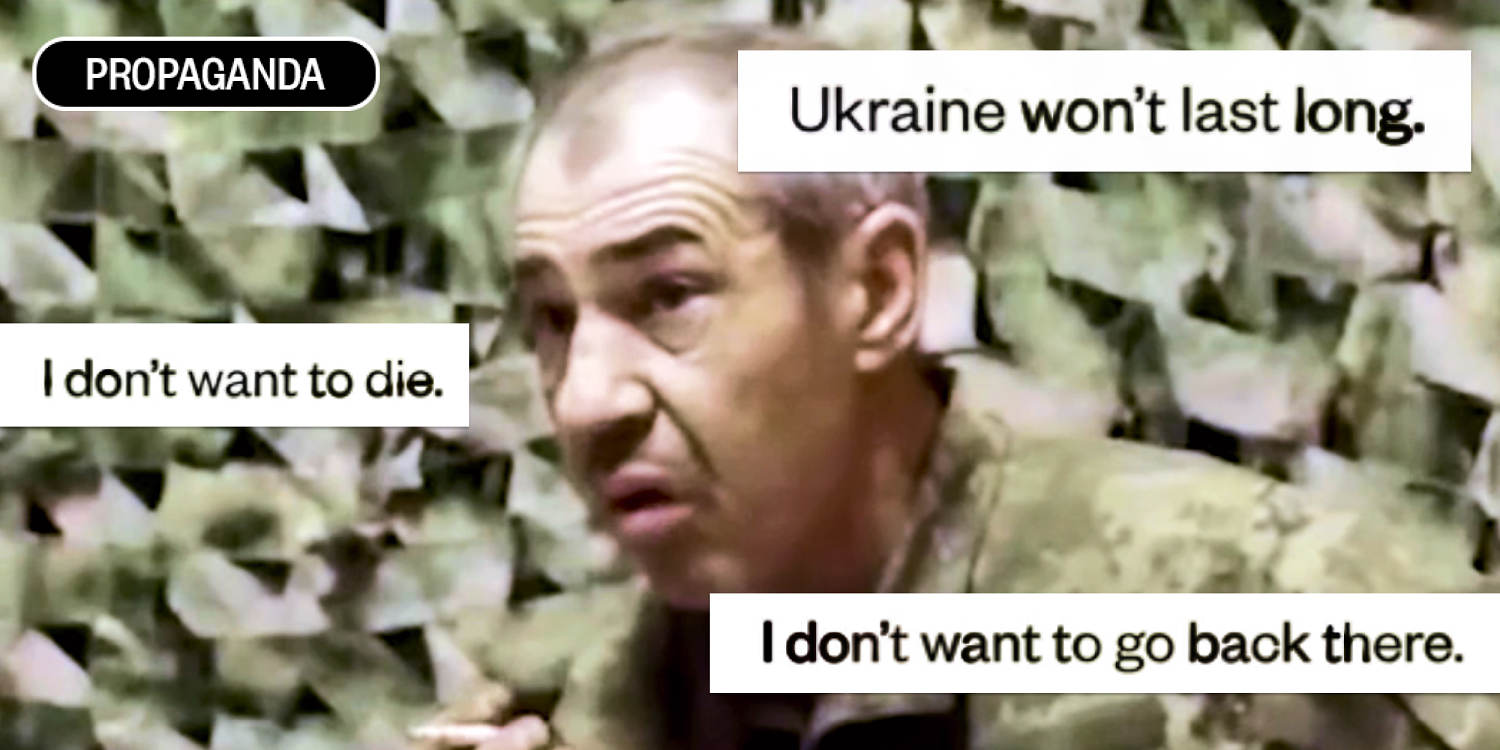
The camera light blinks red. A man sits upright in a drab, standardized room, reciting a script about fair treatment, human rights, and the cruelty of his own government. Behind the lens stand operatives from security services who understand how to break a human mind without leaving visible marks. Russian prisoner of war propaganda is not a series of isolated incidents or amateur productions. It is a systematic industrial apparatus designed to weaponize captivity against morale on the front lines and distort perceptions across the globe.
State-aligned media channels and military information operations units run these recordings through a standardized pipeline. Captives are processed, evaluated, conditioned, and filmed. The primary objective is twofold. Domestically, the broadcasts reinforce the state narrative regarding military operations. Internationally, they aim to sow confusion, exploit legal frameworks governing wartime conduct, and demoralize civilian populations supporting the defense. Understanding this mechanism requires looking past the individual faces on the screen and examining the institutional architecture that produces them.
The Mechanics of Production Behind Closed Doors
Propaganda footage featuring captured personnel relies on predictable stages of psychological softening and physical deprivation. Detainees arrive at transit facilities or permanent detention camps in states of severe shock. Months of interrogation, isolation, and uncertainty create an environment where compliance becomes a survival strategy.
Security officers do not always need blunt force to secure a performance. Sleep deprivation, restricted access to basic hygiene, and the constant threat of transfer to harsher penal colonies erode resistance far more efficiently than physical beatings. Once a captive reaches a point of psychological compliance, directors step in. Scripts are drafted by officers fluent in military terminology and political talking points. The captive rehearses lines until the delivery mimics spontaneity.
Reporters from state-controlled networks or sympathetic foreign vloggers frequently handle the final recording phase. This gives the material a veneer of journalistic independence. The interviewer asks leading questions designed to elicit specific admissions regarding supply shortages, command corruption, or battlefield abandonment. If the captive stumbles, the take is discarded and repeated.
The resulting video is edited to remove long pauses, signs of editing cuts, or visible distress. Lighting is carefully managed to obscure pallor or weight loss. What reaches public platforms like Telegram, YouTube, and state television is a polished artifact of coercion masquerading as a voluntary statement.
Breaking Down International Legal Frameworks
The Geneva Conventions contain explicit protections for prisoners of war against acts of intimidation, public curiosity, and insults to personal dignity. Article 13 of the Third Geneva Convention mandates that prisoners must at all times be protected, particularly against acts of violence or intimidation and against public curiosity.
Publishing coerced confessions directly violates these foundational tenets. Yet, perpetrators exploit loopholes in digital enforcement and international jurisdiction. By hosting content on decentralized messaging applications and state-controlled web domains, producers bypass traditional platform moderation policies. When major social media companies flag and remove these videos, new channels emerge within hours under different names.
Legal experts argue that prosecuting these violations remains exceptionally difficult while active hostilities continue. International tribunals lack direct enforcement mechanisms to seize digital assets or arrest individuals responsible for staging these recordings. The Geneva framework assumes a degree of good faith adherence by signatory states. When a belligerent nation treats international humanitarian law as a tactical inconvenience, existing enforcement mechanisms stutter and stall.
Legal accountability often relies on post-conflict documentation. Investigators collect metadata, cross-reference locations, and identify military personnel involved in the production chain. This groundwork ensures that even if immediate intervention is impossible, a permanent record exists for future war crimes tribunals and human rights accountability proceedings.
Psychological Warfare and Frontline Impact
The psychological fallout of these broadcasts extends far beyond television screens in Moscow or Western capitals. Soldiers in active combat zones know their comrades are missing or captured. Seeing a familiar face reciting enemy talking points on a smartphone screen inflicts a distinct form of psychological trauma on units holding the line.
Commanders face the challenge of maintaining operational security and morale when subordinates consume manipulated media. Countering this effect requires proactive briefings and psychological resilience training. Troops must understand that statements made under duress carry no intrinsic truth value and represent the product of systematic coercion.
Intelligence agencies track these broadcasts to gauge shifts in enemy propaganda priorities. Changes in the script—such as shifting emphasis from poor equipment to political corruption within the leadership—reveal what themes psychological operations units believe are gaining traction.
The proliferation of digital communication tools accelerates the delivery of this material to the front lines. A video recorded in a detention facility can circulate among active combat units via messaging applications within minutes. This speed presents a persistent challenge for military information security officers who must counter psychological pressure in real-time without cutting troops off from essential communication channels.
The Global Information Ecosystem and Amplification
Modern information warfare relies on echo chambers and algorithmic amplification. When coerced videos enter the global ecosystem, they find receptive audiences among political fringe groups, state-funded influencers, and contrarian commentators. These actors often present the footage as hidden truths uncovered by independent media, stripping away the context of captivity.
Platform algorithms, designed to reward high engagement and emotional reactions, frequently give visibility to controversial war footage before content moderators can review and remove it. State actors utilize bot networks to artificially inflate view counts and manipulate trending topics, ensuring the material reaches mainstream feeds.
Media literacy organizations attempt to educate the public on the markers of coerced statements. Common indicators include unnatural eye movements, scripted phrasing, mismatched audio tracks, and signs of environmental staging. However, forensic analysis takes time, and viral misinformation often spreads faster than official retractions or expert breakdowns.
The persistence of these operations highlights a sobering reality about modern conflict. The battlefield is no longer confined to trenches and armored columns. It encompasses the screens in every pocket, where the capture of a single human being becomes a lever to move public opinion across continents.
The red light on the camera stays on. Another script is handed across a metal table. The machinery of state coercion continues to grind forward, turning human vulnerability into a digital weapon.