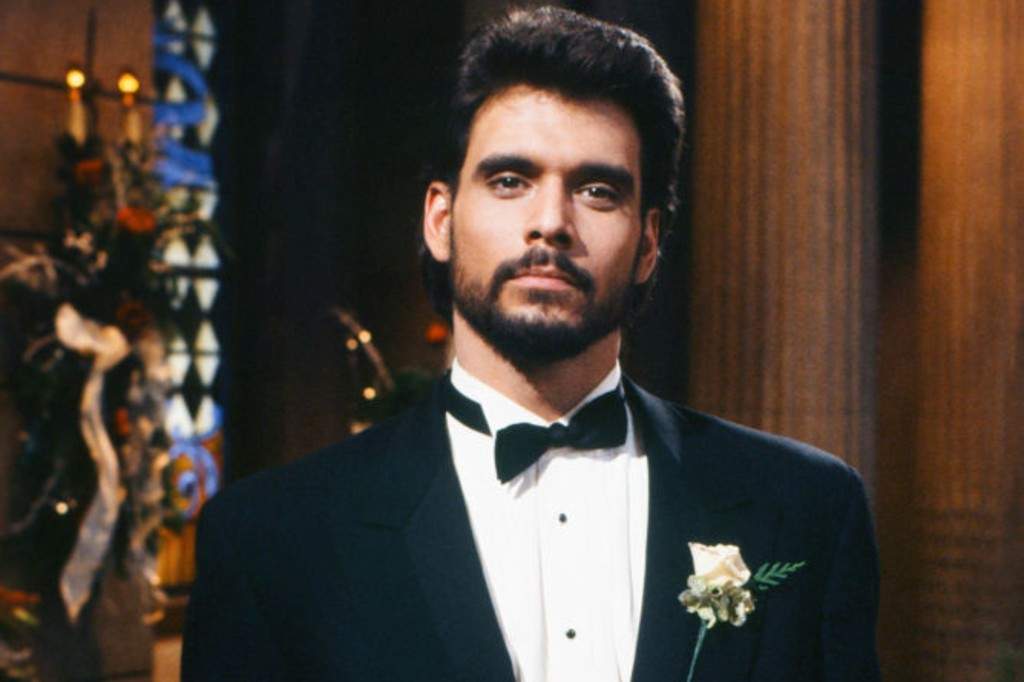
Standard entertainment journalism operates on an asymmetric incentive structure where speed of publication overrides verification of primary records. When a headline claims to reveal the cause of death for former Days of Our Lives and Another World actor Robert Kelker-Kelly, the underlying mechanism is rarely a newly unsealed medical examiner report; rather, it is a classic search-arbitrage loop exploiting public curiosity around a reclusive public figure who stepped away from the television industry decades ago.
Analyzing the lifecycle of celebrity mortality reporting requires separating verified biographical records from algorithmic content generation. To evaluate any claim regarding Kelker-Kelly’s status or medical history, an analyst must audit three distinct operational layers: primary public documentation, the mechanics of soap opera fandom rumors, and the structural vulnerabilities of automated news aggregation. If you found value in this piece, you might want to look at: this related article.
The Structural Anatomy of Verification Failure
In legitimate journalistic operations, confirming a death and its physiological cause relies on a strict chain of custody. Without this chain, any published narrative defaults to speculation.
- Primary Legal Documentation: A verified cause of death originates from a county coroner, a medical examiner’s office, or an official vital statistics registry. These documents establish exact dates, locations, and clinical classifications (such as acute cardiac arrest, metastatic disease, or accidental trauma).
- Authorized Estate Representation: For actors who have exited the guild system or ceased active representation, confirmation falls to immediate family members, legal executors, or verified talent managers.
- Trade Publication Cross-Verification: Legacy entertainment trades—specifically Variety, The Hollywood Reporter, and Deadline—maintain strict two-source verification protocols before publishing obituaries.
When a competitor article publishes a headline promising a revealed cause of death without citing a county jurisdiction, a family spokesperson, or a major trade outlet, the piece is exhibiting a structural failure known as circular attribution. One low-tier content farm publishes a speculative query-based post, and secondary scrapers cite the first post as an established source. For another perspective on this development, see the latest coverage from Rolling Stone.
The Reclusiveness Multiplier in Daytime Television
Robert Kelker-Kelly represents a specific archetype in media analysis: the high-visibility daytime television lead who executes a complete exit from public life. Between 1987 and 1998, Kelker-Kelly held prominent roles across major daytime dramas, portraying Sam Fowler on Another World, Bo Brady on Days of Our Lives (replacing Peter Reckell from 1992 to 1995), and Stavros Cassadine on General Hospital.
Following his departure from daytime television and subsequent transition into aviation as a commercial pilot, Kelker-Kelly maintained zero public social media footprint and declined participation in retrospective fan conventions. In information economics, this creates a high-friction data environment.
When a public figure ceases generating new primary data—no interviews, no public appearances, no union credits—the signal-to-noise ratio collapses. Fan forums and social media groups inevitably fill this vacuum with unsubstantiated rumors regarding illness, retirement, or mortality. Content algorithms detect spikes in search volume for terms pairing the actor's name with mortality queries and automatically generate headlines designed to capture that traffic, regardless of whether an underlying factual event occurred.
Mechanisms of Search Arbitrage and Headline Engineering
Competitor articles built around the title template "[Celebrity Name] cause of death revealed" rely on specific psychological and algorithmic triggers to maximize click-through rates while minimizing editorial liability.
- The Curiosity Gap Exploitation: The headline implies a definitive resolution to an ongoing mystery. By using the passive verb "revealed," the author suggests an investigative breakthrough or an official release of previously withheld medical information.
- The Bait-and-Switch Body Structure: Once the reader enters the page, the text systematically delays addressing the headline's premise. The first 400 words typically recite publicly available biographical trivia—his birth in Wichita, Kansas, his tenure replacing Peter Reckell as Bo Brady, and his villainous run as Stavros Cassadine.
- The Ambiguous Pivot: Rather than providing a medical cause of death, the text pivots to clarifying that no official cause has been released, or it conflates Kelker-Kelly with other deceased Days of Our Lives cast members (such as Joseph Mascolo, John Aniston, or Drake Hogestyn) to satisfy keyword density requirements.
This structural deception works because search engine crawlers index the semantic relationship between the entity name and the mortality keywords, rewarding the page with temporary visibility before user bounce rates depress its ranking.
Distinguishing Confirmed Cast Mortality from Algorithmic Hoaxes
Evaluating the validity of health or mortality reports within the daytime television sector requires applying a strict filtering framework. The soap opera genre spans decades and features sprawling ensemble casts, creating frequent statistical overlap between active performers, retired actors, and legitimate passings.
A rigorous audit of any breaking claim regarding a legacy soap actor involves checking four specific variables:
- SAG-AFTRA In Memoriam Registries: The Screen Actors Guild maintains quarterly and annual records of deceased members. Even actors who have transitioned to inactive status or retired to private aviation leave a verifiable administrative trail when estate benefits or pension distributions are triggered.
- Co-Star Tribute Synchronization: Daytime television casts operate as tight-knit professional networks. When a former lead actor passes away, verified co-stars—such as Kristian Alfonso, Eileen Davidson, or Stephen Nichols—inevitably post synchronized tributes within hours. The complete absence of peer acknowledgment alongside a viral "cause of death" headline is a primary indicator of fabricated or misattributed reporting.
- Geographic Jurisdiction Alignment: Authentic death reports anchor the event to a specific municipality or state. Vague references to "passing away peacefully" without a corresponding city, hospital system, or funeral home notice indicate synthetic text generation.
- Temporal Recurrence Patterns: Death hoaxes and misleading obituary articles follow predictable seasonal cycles, often resurfacing every 18 to 24 months using identical phrasing. Checking the publication dates of identical headlines across secondary domains exposes the automated recycling of the narrative.
Limitations of Automated Fact-Checking Systems
Relying solely on surface-level search results to verify the status of private individuals carries inherent operational risks. Modern search engines increasingly synthesize top-ranking web pages into automated summaries. If three low-authority entertainment blogs publish synchronized articles claiming a celebrity's cause of death has been revealed, an automated summarization engine may ingest those claims as consensus reality, amplifying the misinformation before human editors can intervene.
Furthermore, privacy laws—specifically HIPAA regulations in the United States—strictly prohibit medical institutions from confirming or denying patient status or causes of death without explicit next-of-kin authorization. Even when a public figure does pass away, the exact physiological cause frequently remains permanently sealed unless a public inquest is mandated by law.
Operational Protocol for Media Verification
To eliminate exposure to fabricated mortality reporting and low-value search arbitrage, media analysts and readers must bypass aggregator headlines entirely and execute a direct verification sequence. First, cross-reference the subject's name exclusively against primary trade databases (Variety, The Hollywood Reporter) and official guild announcements. Second, treat any headline promising a "revealed" cause of death without an immediate, named primary source in the opening sentence as a non-credible asset. Until an authorized family representative, legal executor, or official municipal registry issues a formal statement, any narrative claiming to detail the medical circumstances of Robert Kelker-Kelly remains an unverified artifact of digital content farming.