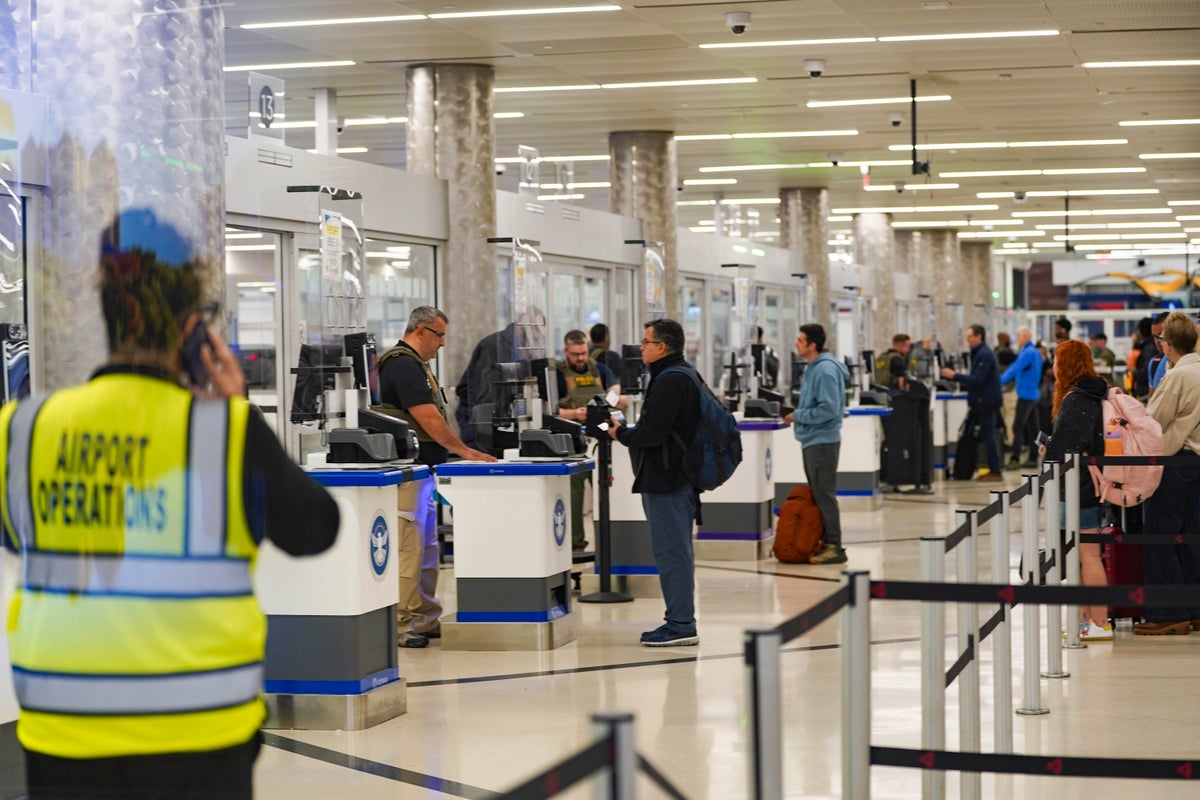
The federal government is drafting an unprecedented executive mechanism to halt the processing of international travelers at major airports located in Democratic-led sanctuary cities. Homeland Security Secretary Markwayne Mullin confirmed that the administration is actively drawing up plans to pull U.S. Customs and Border Protection personnel from hubs that refuse to cooperate with federal immigration crackdowns. By targeting the federal labor force that validates passports and inspects cargo, the administration can effectively ground international arrivals without passing a single new law.
It is a direct bureaucratic chokehold. If implemented, the policy would bypass traditional legislative battles and strike directly at the economic lifelines of municipal governments resisting mass deportation mandates. Recently making news lately: Cambodia Scam Factory Convictions Miss the Real Corporate Pipeline.
The Border Protection Lever
To understand how the White House can stop a Boeing 777 from landing in Newark or Los Angeles without technically closing the airspace, you have to look at the logistical plumbing of international transit.
Federal law mandates that every passenger and piece of cargo arriving from outside the United States must clear a customs checkpoint staffed by federal officers. Airlines cannot legally deplane international passengers without them. By transferring these federal workers out of specific locations, the Department of Homeland Security creates an immediate operational vacuum. More details on this are covered by BBC News.
The strategy emerged into public view following intense friction at Delaney Hall, an Immigration and Customs Enforcement detention facility in New Jersey. Local demonstrators and political gridlock have frustrated federal agents attempting to execute transport orders. The administration's response shifted from local law enforcement clashes to systemic retribution.
The list of potential targets spans the engine rooms of the American aviation economy.
- Newark Liberty International
- John F. Kennedy International
- Los Angeles International
- O'Hare International
- San Francisco International
- Boston Logan
The core of the legal strategy relies on executive discretion over agency staffing. While the executive branch cannot easily rewrite city laws or unilaterally strip away Congressionally mandated municipal grants—a lesson learned during court defeats in the previous decade—it retains massive authority over where it deploys its own federal workers. If the Department of Homeland Security decides it lacks the resources or the political compliance required to maintain a full complement of officers at JFK or LAX, it can redeploy them to compliant jurisdictions.
The World Cup Collision Course
The timing of this bureaucratic escalation introduces a massive economic variable. Next month, tens of millions of international tourists and sports fans will descend on the United States for the FIFA World Cup. A significant portion of those travelers hold tickets for matches scheduled at MetLife Stadium in New Jersey, with flights booked directly into Newark and New York hubs.
Aviation trade groups are panicking behind closed doors. The U.S. Travel Association and Airlines for America have issued warnings detailing the severe fallout of a sudden personnel withdrawal. The airline industry operates on razor-thin margins and rigid logistical schedules. If a flight from London or Tokyo cannot land in New York, it cannot simply be rerouted to a smaller regional airport without triggering a cascading collapse of crew schedules, aircraft availability, and baggage networks across the globe.
Airlines are not equipped to absorb the financial shock of localized international bans. Cargo transport complicates the math further. A huge percentage of high-value international freight travels in the bellies of commercial passenger planes. Halting customs processing at O'Hare or Los Angeles doesn't just stranded tourists; it severs supply chains for electronics, pharmaceuticals, and manufacturing components that keep domestic factories running.
Internal Fractures and Legal Hurdles
The strategy is bold, but it faces substantial internal resistance from within the administration's own transportation apparatus. Transportation Secretary Sean Duffy broke ranks during a recent Congressional hearing, openly questioning the wisdom of weaponizing aviation infrastructure over political disputes. Duffy pointed out that shutting down air travel based on the shifting political alignment of a state or city sets a dangerous precedent that could easily be turned against conservative regions when power changes hands in Washington.
The administration faces a dual challenge. On one hand, the political base demands visible, punishing action against cities that declare themselves sanctuaries. On the other hand, corporate stakeholders, airline executives, and tourism boards represent a powerful constituency that usually enjoys a warm relationship with conservative policymakers.
The legal battleground will hinge on the concept of arbitrary and capricious agency action. If the administration pulls workers out of Newark solely because local officials protested an ICE facility, a federal judge could issue an injunction arguing the move lacks a legitimate administrative or security rationale. To survive a court challenge, the Department of Homeland Security must frame the personnel shifts as a matter of resource optimization or operational necessity.
Cities are already preparing their legal defenses. Municipal lawyers in California and New York are studying federal labor statutes and airport operating agreements to see if a forced withdrawal of federal screening services violates the government's statutory obligations to maintain interstate commerce.
The Re-Route Reality
If the plan moves from a drafting table to active enforcement, international airlines will have to make hard choices. Carriers will likely be forced to divert flights to hubs in politically cooperative states. A traveler heading to a soccer match in New Jersey might find themselves landing in Atlanta or Miami, forced to take a domestic connecting flight or a train north.
The additional friction would instantly deflate international tourism numbers. Visitors facing long delays, unpredictable entry points, and erratic customs processing will choose alternative global destinations. The immediate result will be a stark bifurcation of the American aviation system, where geographic entry depends entirely on the local mayor's relationship with federal immigration authorities.
The administration is betting that the mere threat of this economic disruption will force blue-city mayors to quiet their opposition and assist federal deportation teams. It is a high-stakes game of chicken using the world’s most interconnected transportation network as asphalt leverage.
The travel industry has characterized the proposal as an economic self-inflicted wound. The administration views it as an underutilized constitutional tool to enforce federal supremacy over municipal resistance. The true test will come when the first international flight is turned away from a gate, transforming an abstract policy debate into a very real, very expensive corporate nightmare.
Sanctuary cities vs. DHS: Could airport operations be cut?
This broadcast examines the administrative mechanisms the Department of Homeland Security is evaluating to scale back customs operations at major hubs, detailing the friction between federal immigration mandates and municipal sanctuary policies.


